Virtual reality (VR) offers significant opportunities to improve society—whether by sparking social change or enabling surgeons to practice intricate operations. However, every new technology comes with risks, and it's crucial to anticipate ethical dilemmas that could evolve into major societal issues down the road. Below, I outline several key concerns worth addressing before we proceed with unchecked enthusiasm.
1) Sensory vulnerability
When we picture virtual reality, bulky headsets that cover users' eyes—and often ears—come to mind, creating a fully absorbing experience. Add VR gloves and a growing array of accessories, and the sensation can feel incredibly lifelike. Yet, we must worry about people using these devices at home, especially alone. Limited access to sensory input makes users susceptible to accidents, intrusions, or other misfortunes that arise from total distraction.
2) Social isolation
The debate over whether VR fosters social isolation is ongoing. On one side, the experience is confined to a single user's view, shutting out others from physical participation. On the other, companies like Facebook have developed communal spaces such as Spaces, enabling VR users to meet and interact in a virtual social setting. While this could benefit introverted or lonely individuals (e.g., seniors), there's a risk it becomes a lazy, dismissive solution to these challenges.
Moreover, platforms like Spaces might actually "detach" users by encouraging them to overlook real-world social ties. Research already shows that heavy social media use often leads to feelings of isolation, guilt, and depression. Evidence also highlights the importance of face-to-face interactions for mental well-being. Replacing them with VR without thorough study would be unwise.
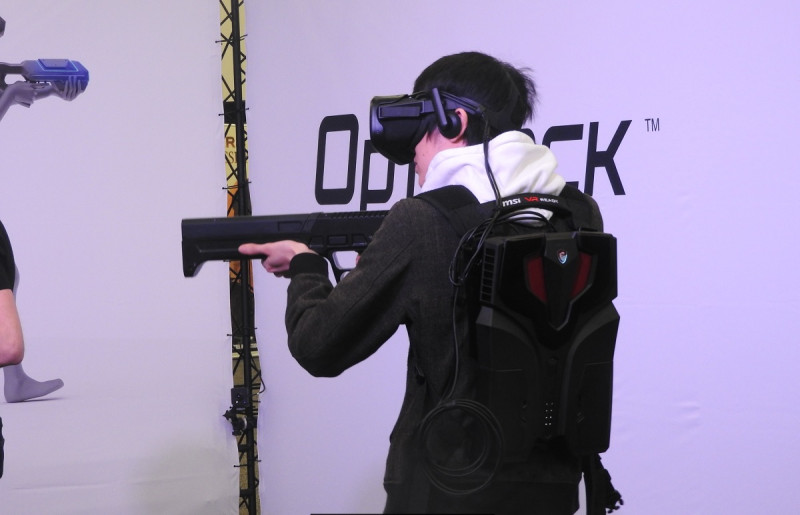
Above: OptiTrack claims to bring realism to VR shooting.
Image Credit: OptiTrack
3) Desensitization
It's widely recognized that frequent, deep immersion in virtual reality can desensitize users to real-world experiences. In fact, VR is already used to harden individuals against phobias or military combat under supervision. However, outside controlled settings, desensitization could become problematic, leaving users unaffected—or less affected—by, say, violent acts in VR games.
Last year, U.S. academic researchers published a longitudinal study showing that repeated exposure to violent video games reduced emotional sensitivity and guilt among participants. Given VR's higher immersion, these effects may be even more pronounced.
4) Overestimation of abilities
Related to desensitization is the tendency for users to overestimate their ability to replicate virtual feats in reality. This is especially true for children and young people, who might assume their skills in tightrope walking, parkour, or driving will seamlessly transfer to the real world.
A recent Stanford University study found that children often struggle to distinguish between real-life and VR achievements—treating avatars as their actual bodies or recalling VR experiences (like swimming with orcas) as genuine memories.
5) Psychiatric
More profound psychological effects could emerge for some users, though much remains unknown. Neuroscience experts have discussed "depersonalization," where individuals perceive their physical bodies as avatars. There's also concern that VR might quickly expose psychiatric vulnerabilities or trigger psychotic episodes. One investor even warned that VR gaming could cause real-life post-traumatic stress disorder.
Clearly, we must identify psychological risks and symptoms before the market becomes saturated, if that's inevitable.
6) Unpalatable fantasies
No industry is more excited about VR than porn (predicted to be the third-largest VR sector by 2025, after gaming and NFL content). Pornhub reports a 225% increase in VR content views since its 2016 debut. While not inherently unethical, this becomes problematic when "unpalatable" fantasies turn immersive. Should there be limits on hyper-realistic portrayals of aggression, borderline pedophilia, or other perverse VR erotica? Or, outside porn, is it acceptable to gamify events like 9/11, as seen in the 08.46 simulator?
7) Torture/virtual criminality
Philosopher Thomas Metzinger is among those worrying that VR headsets could be used by the military as an "ethical" alternative to traditional interrogatory torture. Whether truth or speculation, this underscores the need to understand the status of pain, damage, violence, and trauma inflicted by others in virtual environments—physical or psychological.
At what point does virtual behavior become a real-world crime?
Above: A non-intrusive approach to VR ads brought to you by Google’s Area 120.
8) Manipulation
Consumer manipulation through advertising isn't new, but it's always been 2D, competing with our distracted focus—phones, babies, traffic, conversations, music, noise, interesting reads, and more. With VR, advertisers gain access to our entire surroundings (which some psychologists argue can control behavior). This boosts revenue opportunities for developers, who now have vast new spaces to sell ads.
Commentators warn this could lead to covert tactics like product placement, brand integration, and subliminal advertising.
9) Appropriate roaming and re-creation
One of VR's most exciting features is the ability to explore the world from home—a liberating experience for those unable to travel. Yet, like augmented reality, we need discussions about where it's appropriate to roam or recreate virtually. Is it okay to wander through a replica of a favorite celebrity's apartment (many fans might love it)? Or peek through windows of homes and businesses on any city street? Answers may seem obvious, but we can't assume all users or developers understand the ethical boundaries.
10) Privacy and data
Last but not least, the more we immerse in virtual worlds, the more we give away—raising privacy concerns. German researchers worry that if avatars mirror real-world movements and gestures, "motor intentions" and "kinetic fingerprints" of unique movement signatures could be tracked, read, and exploited by predatory entities. Clearly, an open dialogue is needed on what's collectable and what should be off-limits in virtual activities.
This list isn't exhaustive, and some concerns may prove unfounded over time. Nonetheless, as non-technicians and future users, we have the right to demand clear explanations from VR companies on how these pitfalls will be avoided or mitigated.
Fiona J. McEvoy is a tech ethics researcher and founder of YouTheData.com.
Don’t miss the very best of the PC Gaming channel! Subscribe now