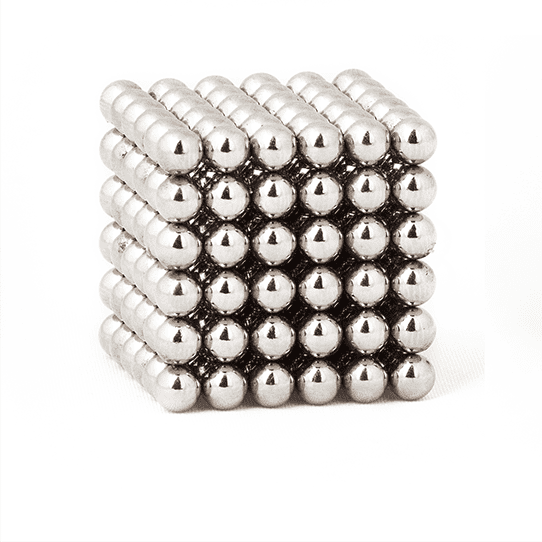
What began as an ordinary Wednesday took a serious turn when a colleague alerted me to a new patient on our GI unit at Children's Hospital Colorado. The patient was a bright, otherwise healthy three-year-old who had been admitted overnight after ingesting numerous tiny, BB-sized magnets from her father's desk toy. Emergency department X-rays revealed a ring of 28 magnets in her upper abdomen. Earlier that evening, another physician had tried to extract them via upper endoscopy, but the magnets had already moved beyond the reach of a standard scope, so she was kept for observation in hopes they would pass naturally.
Regrettably, follow-up X-rays confirmed our deepest concerns. The magnet ring appeared fixed in one spot, indicating it was clamping a section of her bowel and could soon create a perforation. Externally, she seemed perfectly fine and showed no symptoms, but internally she harbored a hidden hazard that could turn into a life-threatening crisis. Fortunately, using a specialized endoscope that advances like an inchworm through the small intestine, I managed to reach the magnet ring—which was indeed pinching the bowel—and extract it before a perforation occurred, thereby avoiding emergency surgery.
I wish I could label the above case as an isolated event. The reality is that at Children's Colorado, we encounter patients nearly every day with various dangerous ingestions, and the list of potential threats grows longer each year. This story is just one of several alarming ingestion risks parents of young children face today (including button batteries, fidget spinners, liquid nicotine, laundry products, and edible marijuana). By 2010, the pediatric GI community clearly recognized that desk toys containing hundreds of powerful neodymium BB-sized magnets posed a severe threat to children.
The North American Society of Pediatric Gastroenterology, Hepatology and Nutrition collaborated with the Consumer Product Safety Commission and safety groups like Safe Kids to issue a product recall in 2012, followed by an outright ban in 2014, based on numerous reports of young children suffering bowel damage, requiring surgery, or even dying from such ingestions. After the ban, we saw an immediate and dramatic drop in these cases. However, the ban was legally contested, and in November 2016, the 10th Circuit Court of Appeals overturned it.
Unsurprisingly, since that ruling, we are once again witnessing the consequences of having countless small, shiny (and often brightly colored) high-powered magnets within reach of young children. Supporters of these products squarely blame parents for any ingestion injuries, claiming they failed to provide adequate supervision.
Although this development is disheartening, we must all take steps as parents to minimize the risk to our children as much as possible. Below is a set of recommendations to help parents of young children become more aware and cautious about the dangers of swallowing these magnets.
Practical Steps to Protect Children from Powerful Magnets
- Parental Responsibility and Constant Awareness: I strongly advise all parents, especially those of toddlers, against having any high-powered magnets in the home. A toddler's natural curiosity and tendency to explore with hands and mouth make these objects too hazardous. Their glossy appearance (and sometimes bright colors) attract toddlers beyond their inherent magnetic force (which is five times stronger than ordinary magnets). Even teenagers have been known to suffer dangerous ingestions when using these magnets to simulate nose or cheek piercings.
- Discuss with Playdate Families: Talk to friends and neighbors to ensure they also understand the dangers of these products and keep them away from places where your children or theirs might access them (the same applies to button batteries, detergent pods, and fidget spinners).
- Seek Immediate Medical Help: If you suspect a child has swallowed one or more magnets, get medical attention IMMEDIATELY so the risk can be evaluated and removal, if necessary, can be arranged before the magnets move beyond the reach of conventional endoscopy.
- Find More Information: Visit the Consumer Product Safety Commission website for additional resources and details on this topic.
Editor's Note: On October 26, 2017, the Consumer Product Safety Commission issued a new ruling stating that Zen Magnets and Neoballs rare-earth magnet products pose a substantial product hazard that warnings cannot mitigate. It issued a stop order against the sale of Zen Magnets and Neoballs. However, magnet sets remain available in the marketplace, creating confusion. Indeed, we observed various types of small magnet sets for sale on amazon.com.
fbq('init', '1673315136276634'); fbq('track', "PageView");