Oman is frequently overlooked by travelers, which is unfortunate because it boasts a wealth of attractions and is one of the most secure countries in the Middle East. Here, you can explore historic forts, vast deserts, towering mountains, pristine beaches, magnificent mosques, bustling souqs, and swim in breathtaking wadis.
Here are our top recommended places to visit in Oman:
1) Sultan Qaboos Grand Mosque, Muscat
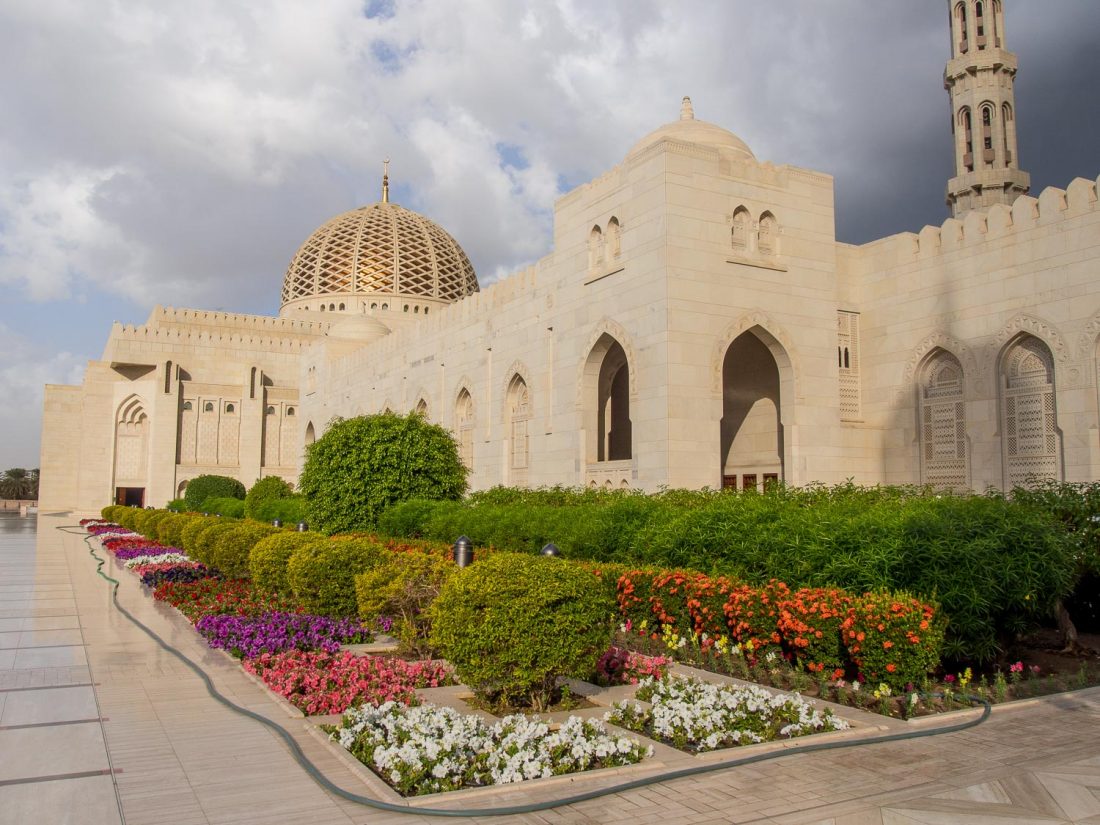
Most journeys to Oman start in the capital city of Muscat, and a must-see attraction is the Sultan Qaboos Grand Mosque. This impressive modern mosque truly lives up to its reputation, accommodating up to 20,000 worshippers. Its lavish main prayer hall features a gigantic chandelier, intricate blue mosaic tiles, and the world's second-largest handwoven Iranian carpet—a masterpiece that took 600 women four years to complete.
The mosque's grounds provide a peaceful setting for a leisurely walk, admiring the harmonious lines and arches of the various structures and lovely gardens. During our visit, an unexpected rain shower turned the marble floors into shimmering reflective pools.
2) Mutrah Corniche, Muscat
As sunset approaches, head to the opposite side of Muscat to the Mutrah Corniche. Join locals for a pleasant stroll along the scenic waterfront, where white buildings and mosques are set against a backdrop of rocky mountains and forts that glow golden in the late afternoon light.
Nearby, you can explore the narrow alleyways of Mutrah Souq, one of Oman's oldest markets, offering frankincense and myrrh, ceramic incense burners, silver jewelry, pashminas, turbans, genie lamps, fluffy camel toys, and much more.
3) Jabrin Fort
From Muscat, we suggest an inland excursion to the Nizwa area, where you can explore forts, mountains, and ancient villages.
Jabrin Fort (also called Jabreen Castle) dates back to 1675 and resembles a sandcastle surrounded by an oasis of date palms. You can wander through its maze of rooms and observe defensive features like murder holes—openings in the floor used to pour boiling date oil on enemies.
4) Nizwa Fort
Another popular fort is the 17th-century Nizwa Fort, known for its massive circular tower. Climb it for panoramic views of the mosque, souq, distant rocky mountains, and the date palms surrounding this oasis city.
Nizwa Fort has recently undergone renovation and now displays historical artifacts such as jewelry, tools, and a timeline of the area's history. You can also watch women crafting items and baking bread over an open fire. Keep an eye out for murder holes here as well.
5) Jebel Akhdar
Jebel Akhdar translates to Green Mountain, but you might question that name as you ascend its slate-gray and burnt-orange slopes, barren except for a few thorny, dried bushes. The "green" refers to the villages on the Saiq Plateau, 2000 meters above sea level, where ample rainfall supports the growth of pomegranates, grapes, peaches, apricots, and roses used for rose water in Omani sweets and perfumes. Spring is the ideal time to visit when roses bloom and the terraced plantations are lush green.
Jebel Akhdar makes for an easy day trip from Nizwa (or even Muscat), but a 4WD vehicle is necessary to navigate the steep, winding road (we hired a driver at the police checkpoint). The views from the top, with villages surrounded by jagged peaks, are magnificent, and the cool air offers a refreshing break from the hot plains.
6) Misfat al Abryeen
Most old villages in Oman have been abandoned, but Misfat al Abryeen remains inhabited and is one of the country's most picturesque. This maze-like village features crumbling mud houses along narrow passageways sloping down the mountainside. Below the village, you can follow the falaj irrigation channels and walk through lush date and banana plantations—it's strikingly green after the desert.
7) Jebel Shams
It's a long drive on steep, rough roads to the summit of Jebel Shams, Oman's highest mountain, but the effort is rewarded with stunning views deep into Wadi Ghul, known as the Grand Canyon of Arabia. It's one of Oman's most beautiful locations.
Our highlight was the Balcony Walk, a relatively easy but dramatic 2.5-hour hike that winds along the cliffs halfway up the canyon rim to the abandoned village of As Sab. Tiny stone and mud houses precariously perch on the edge of the ravine under a rock ledge—an incredible place to have lived.
8) Wahiba Sands
For a true desert experience, head to Wahiba Sands for rolling sand dunes, camel rides, and 4WD adventures. We spent a night in a rustic goat-hair Bedouin tent at the base of a massive dune, which we climbed for sunset and sunrise. We watched camels wander by, drank tea by the fire, and gazed at the star-filled sky. It was wonderfully peaceful.
9) Wadi Bani Khalid
One of our favorite aspects of Oman was the wadis—rocky ravines or dry riverbeds that only contain water at certain times of the year, but many have pools perfect for swimming.
Wadi Bani Khalid is a stunning desert oasis with crystal-clear green water surrounded by date palms and rugged mountains. The pools are large, and swimming in them is incredibly refreshing in the desert heat. It's the ideal spot for a relaxing afternoon.
10) Sur
In Sur, the desert meets the sea. You'll find long, empty beaches, the picturesque fishing village of Al Ayjah, a dhow boat-building yard, and just north, the turtle reserve at Ras Al Jinz. (Unfortunately, no turtles were on the beach during our 5 am tour.)
11) Wadi Shab
While Wadi Bani Khalid is all about relaxation, Wadi Shab is about adventure. You take a boat across the river, hike for 45 minutes through a stunning valley, then swim through a series of pools to reach a cave containing a waterfall. It's gorgeous and one of the best activities in Oman.
Places to Visit in Oman Map
I'll soon write a detailed Oman travel itinerary for our 10-day trip with more practical tips, and you can also read our post on what it's like to travel in Oman.
What do you think are the most beautiful places to visit in Oman? Leave a comment below, as I know we missed many of Oman's attractions.
If you enjoyed this post, pin it!