The year 1998 gifted us an extraordinary batch of albums that continue to captivate listeners. From the groundbreaking Music has the Right to Children to the timeless Miseducation of Lauryn Hill, here are the standout releases celebrating major anniversaries in 2018.
1998 was a monumental year. Titanic dominated theaters and swept the Oscars with 11 wins. President Bill Clinton's scandal with Monica Lewinsky shook Washington. Nintendo launched The Legend of Zelda: Ocarina of Time. And a tiny startup called Google was born in Menlo Park, California.
On the music front, releases poured out as computer technology became more accessible and young producers experimented with pirated, cracked software flooding the internet. Warp Records' slippery electronica thrived while drum 'n' bass grew increasingly aggressive, and trip hop—once a hotbed of innovation—became the soundtrack for aspirational commercials and upscale dinner parties. Across the Atlantic, the rap scene was shifting as the golden era faded and New York's Rawkus label gained momentum. Meanwhile, in Detroit, Theo Parrish was crafting his game-changing debut, and just across the bridge in Windsor, Richie Hawtin was preparing to retire Plastikman with Consumed. Feeling nostalgic yet?
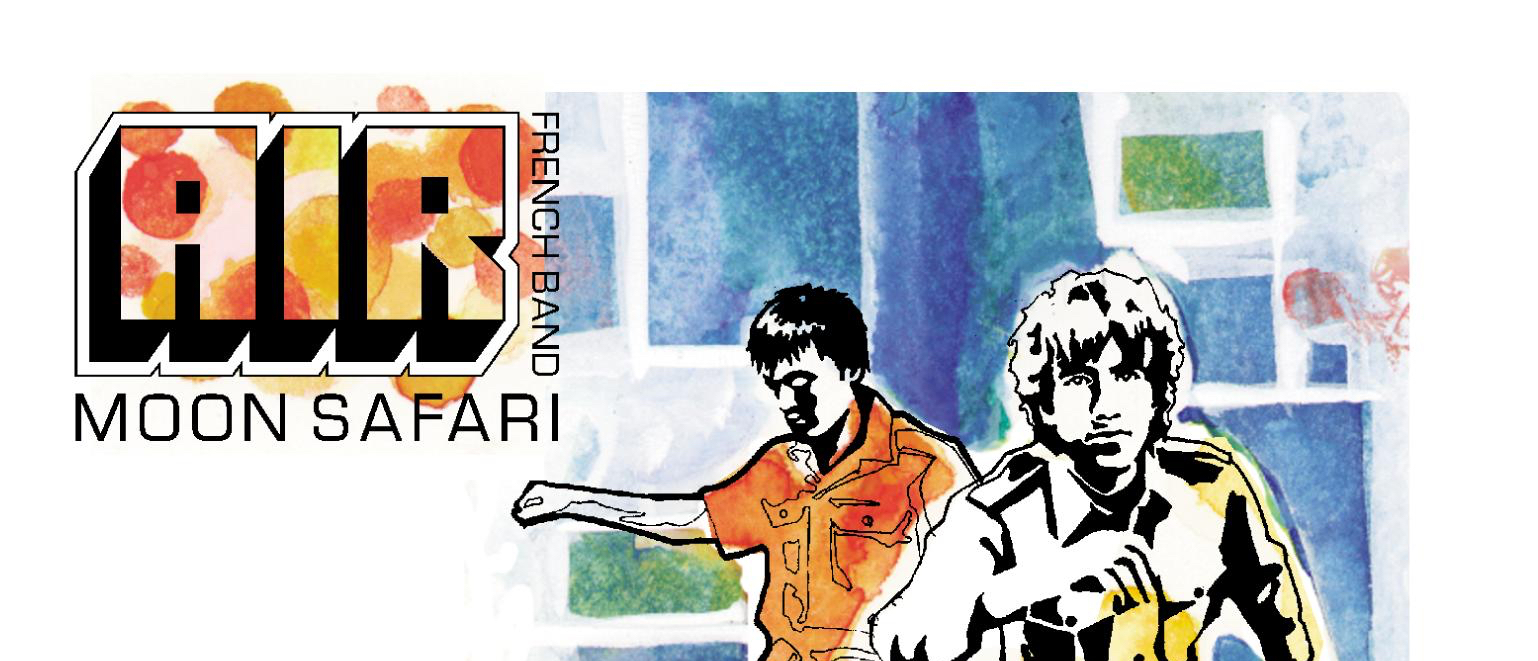
Air – Moon Safari (Virgin)
Spotify / Apple Music
Time hasn't been particularly generous to Moon Safari. In the years after its release, Nicolas Godin and Jean-Benoît Dunckel's debut became a staple for advertisements, TV background music, and a slew of bland 'chillout' compilations from Ministry of Sound, lumping the duo with acts like Zero 7, Morcheeba, and Lemon Jelly. It's easy to see why: their take on vintage lounge and easy-listening pop occasionally feels a bit too obvious.
Still, it's hard to deny that Godin and Dunckel's songwriting and arrangement elevate Moon Safari far above the Ibiza comedown fodder that followed. The album sounds as if it were recorded in the 1960s and then sent to the 22nd century for polish and mastering—a retro-futurist electronic classic as much as a collection of beach-day fantasies. Turning 20 hasn't rescued it from chillout purgatory, but it still exudes effortless cool. —SW
Autechre – LP5 (Warp)
Spotify / Apple Music
Encased in a rough grey CD case with "autechre" embossed and a sticker on the front (which inevitably fell off after a few months), LP5 was shrouded in mystery. Sean Booth and Rob Brown were practically household names by then, riding high on the success of 1997's hip-hop-influenced Chiastic Slide, so the confounding, deliciously complex LP5 was a slap in the face for fans unwilling to follow the duo's relentless pursuit of evolution.
The lines were drawn: either you embraced Autechre's crystalline, nearly impossible-to-copy rhythms, or you retreated to Amber and spent the next two decades reminiscing about the good old days. —JT
Big Pun – Capital Punishment (Loud)
Spotify / Apple Music
For the late Big Pun, every breath was an opportunity. He may be best known for 'Still Not a Player', a pop remix of his debut single 'I'm Not a Player (I Just Crush a Lot)' and R&B singer Joe's 'Don't Wanna Be a Player' that still gets radio play today, but he was infamous for packing polysyllabic punchlines into the standard sixteen bars. His debut Capital Punishment proved he was more than a larger-than-life lover, tapping into the same visionary wells as two other late, great NYC Bigs: The Notorious B.I.G. and the hedonistic Harlem hellion Big L.
Like Biggie, Pun was an unexpected heartthrob with plenty of axes to grind. He brought along an impressive circle of friends to tell his story: the album featured guest verses from a diverse array of artists including Prodigy, Inspectah Deck, Black Thought, and Busta Rhymes. But Pun's most memorable creative moment came via a remake of Snoop Dogg and Dr. Dre's 'Deep Cover', a Fat Joe collaboration called 'Twinz' where Pun spits: "dead in the middle of Little Italy / Little did we know that we riddled some middle man who didn't do diddly". Twenty years later, you still can't say it five times fast. —CL
Black Star – Mos Def & Talib Kweli are Black Star (Rawkus)
Spotify / Apple Music
"We feel that we have a responsibility to… shine the light… into the darkness," began Mos Def and Talib Kweli's sole studio album together. And shine a light they did—on black excellence and defiance against institutional racism in late '90s America—on this cult classic. "Still more blacks is dying, cause they live and they trying / 'How to Make a Slave' by Willie Lynch is still applying," Talib raps on 'Redefinition', before the Common collaboration 'Respiration', where the pair showcase their unique chemistry over lazy guitar. "Stay alive, you play or die, no options / No Batman and Robin," complains Mos Def about law and order in Brooklyn. That may be true, but two decades on, Mos Def & Talib Kweli are Black Star still sounds like the work of a very dynamic duo. —AH
Blonde Redhead – In an Expression of the Inexpressible (Touch and Go)
Spotify / Apple Music
Blonde Redhead had already established their art-rock credentials by the time they released their fourth album, In an Expression of the Inexpressible. With two albums on Sonic Youth drummer Steve Shelley's label Smells Like Records and a Touch & Go debut featuring Unwound's Vern Rumsey on bass in 1997, the NYC-via-Italy and Japan trio had spent most of the '90s cultivating an immersive sound that was both noisy and romantic. In an Expression was their first with Fugazi's Guy Picciotto on production, and it was the first evidence that polish wouldn't dull their chaotic edge.
Here, they played with how their brand of urgency could manifest—whether through the breathless vocals and tumbling percussion on opener 'Luv Machine', disjointed howls on the title track, or fine-tuned math rock on the refined 'Futurism vs. Passéism Pt. 2', which features Picciotto in a pitch-perfect French monologue: "Le temps le plus important c'est la première fois / Le temps le plus important c'est la deuxième fois / Et après ça la troisième fois / Et on recommence".
In English, that translates to: "The first time is the most important time / The second time is the most important time / And after that, the third time / And then you start again." It was a perfect mantra for their fourth album, because after In an Expression, the group released their most divergent album, Melody of Certain Lemons, and then finally their masterpiece, Misery is a Butterfly. —CL
Boards of Canada – Music has the Right to Children (Warp)
Spotify / Apple Music
Despite its many accolades, Music has the Right to Children wasn't an instant hit. Over time, however, widespread acclaim and word of mouth pushed the album far beyond Warp's usual reach. Boards of Canada had released similar records before—the equally brilliant Hi Scores was already popular among dedicated diggers—but Music has the Right to Children imagined their woozy, nostalgic sound in widescreen, filling the gaps between memorable tracks like 'Turquoise Hexagon Sun', 'Roygbiv', and 'Aquarius' with field recordings, eerily familiar samples, and crumbling white noise.
It was an album that distilled many contemporaneous ideas: the neck-snapping MPC rhythms of golden-era hip-hop, the acid-blurred bounce of rave, the haunting textures of ambient techno, and the vaporous rush of Warp-patented IDM. As trip hop became relegated to the coffee table and drum 'n' bass slowly lost its luster, Music has the Right to Children filled a void, preying on our THC-damaged memories and offering a full dose of musical Xanax. It has never been replicated—countless artists have tried to copy Sandison and Eoin's formula, and none have succeeded. Like the titular Pete, Music has the Right to Children stands alone. —JT
Brandy – Never Say Never (Atlantic)
Spotify / Apple Music
Brandy's self-titled debut was sweet and flirty. Its follow-up, Never Say Never, however, set her apart from being just a pop singer with a rising star to one with something meaningful to say. The album arrived after numerous career advances—both professionally (the sitcom Moesha, which she starred in for five years, launched in 1996) and as a tabloid fixture (at 17, she took budding NBA star Kobe Bryant, then 18, to prom). Never Say Never explores themes of fame, like the Mase-featuring single 'Sittin' on Top of the World', and love, such as on the Diane Warren-penned ballad 'Have You Ever?'. No discussion of Never Say Never is complete without mentioning the Monica duet 'The Boy is Mine'—a playful chart smash that also appeared on Monica's 1998 LP, named after the track, and boasting a similar maturity to Brandy's album. —CL
Destiny's Child – Destiny's Child (Columbia)
Spotify / Apple Music
For anyone who has ever doubted Beyoncé's dedication to her Houston rap roots, revisit Destiny's Child's self-titled debut. While the album is packed with radio-friendly hits—like debut singles 'No, No, No Pt. 2' (US) and 'With Me' (UK)—it also features Beyoncé's first musical dalliance with the Geto Boys: the 'Mind's Playin' Tricks on Me'-sampling 'Illusion'. (She and DC groupmate LaTavia Roberson, of course, appeared in the video for 'Gangsta Put Me Down' a couple of years earlier.)
Destiny's Child doesn't have the same panache as their star-making second album The Writing's On the Wall, but the singles are fun to revisit, as are their counterparts—the 'No, No, No' slow jam and a version of 'With Me' featuring Master P. —CL
DJ Clue – The Professional (Roc-A-Fella)
Spotify / Apple Music
Before the rap mixtape became ubiquitous, DJ Clue's The Professional (alongside three volumes of Funkmaster Flex label-released mixtapes) brought the concept legally into CD stores. It featured the remix of DMX's 'Ruff Ryders Anthem' and appearances from Cam'ron, Big Pun, Fabolous, Canibus, Noreaga, Missy Elliott, Jermaine Dupri, Jay-Z, Ja Rule, Foxy Brown, and—among many others—a new version of EPMD's 'It's My Thang' featuring Keith Murray and Redman. This compilation made New York feel like an unstoppable force, especially potent when all its powers combined. The late '90s turned out to be the beginning of the end, but this was a hell of a way to start the farewell party. —CL
DMX – It's Dark and Hell is Hot (Def Jam)
Spotify / Apple Music
It may be hard for some to imagine now, but there was a time when X was incredibly fit and famous, bridging divides between rap fans, hard rock fans, and casual music listeners who enjoyed whatever was on the radio. (Seriously, check out his Woodstock '99 crowd.) His debut album It's Dark and Hell is Hot wasn't just a collection of major hits—like the endlessly quotable 'Ruff Ryders Anthem' or his summer love song 'How's It Goin' Down?'—but a spread of genres ranging from some of the most silly but lovable horrorcore ('X is Coming', 'Damien') to some of the most sinister, detailed gangster rap of the late '90s.
Lead single 'Get at Me Dog' is unhinged, and not just because X punctuates the Sheek Louch chorus by emitting literal dog barks. In the third verse, rumored to have originally been about 2Pac, he raps: "Blood stains and chalk means your man couldn't walk / After the talk, about him not being 11:33 to New York… And it's gon' take all these n*as in the rap game to barely move me / Cos when I blow shit up, I have n**s falling like white bitches in a scary movie." There is a physicality to the music on It's Dark that is best displayed there, but you can still feel his kinetic energy in every rhyme throughout the album. —CL
Fugazi – End Hits (Dischord)
Spotify / Apple Music
When Fugazi's fifth album End Hits dropped in April 1998, everyone thought the band was on the verge of splitting up. "It's more about the end of the century and the slow-moving apocalypse, so it was sort of like, 'Here are some last words from the world,'" explained Ian MacKaye at the time, offering an alternative interpretation of the LP's title that turned out to be a private joke among band members anyway.
End Hits didn't sound the death knell for the post-hardcore legends—they went on to release The Argument in 2001—but it was instrumental in closing the book on their early sound. An audacious trip from a fearless band, picking up where 1995's experimental-leaning adventure Red Machine left off, the album further embraced that deep, meandering, jazzy spirit, while having barely anything to do with the three-chord structure of classic punk rock. It was also a record that distilled the DC band's anti-commercial, anti-corporate politics into a single song, 'Five Corporations', with lines like: "Check the math here / Check in ten years / Clusterfuck theory / Buy them up and shut them down / Then repeat in every town / Every town will be the same." A classic in the canon of an impossibly important band, End Hits is such a monumental album we even named our new weekly playlist feature after it. —ACW
Juvenile – 400 Degreez (Cash Money)
YouTube
From the perspective of a New Yorker whose only idea of regional rap was hearing artists from different boroughs and, maybe, New Jersey on the radio every day, Juvenile was a lightning rod. On Rap City—pre-Tha Basement days—you could get a taste of how the rap landscape was unfolding in the rest of the United States, particularly the South, whether it was Ghetto Mafia's 'In Decatur' or JT Money's 'Who Dat?'. Those songs sounded like nothing I had ever heard before, but Juvenile's 'Ha' was the most transportive.
Whatever your experience with 400 Degreez when it was released—whether it was a triumph for you and your home, a portal to something completely new, or maybe you weren't even born yet—the album still transports people today. Ever seen the change on a dancefloor when the first few notes of 'Back That Azz Up' start? Juvie led the charge on the South's hip-hop takeover, and even the most indignant on either coast have to admit it when this song comes on. —CL
Lauryn Hill – The Miseducation of Lauryn Hill (Ruffhouse)
Spotify / Apple Music
Forget everything that happened next: the lawsuits, the exile, her tax troubles, imprisonment, the endless concert no-shows, the $2.5 million spent on a second album that never came, and so on. Miseducation was and remains a neo-soul masterpiece. Packing a spiritual calm and intimate power that is both crushing and revitalizing, the album was a smash, propelling Hill to even greater heights of fame than she had reached with the Fugees. Twenty million copies were sold worldwide, prompting Hollywood to come calling as the star's celebrity grew and grew: Hill turned down roles in The Matrix and Bourne franchises as the spotlight on her intensified.
The glare of that spotlight ultimately became too bright for Hill, who disappeared and never really returned after the release of an MTV Unplugged album three years later, some sporadic tour dates, and the odd new track aside. At least we're left with an album that, two decades on, as women continue to strive to be heard in a world dominated by men and misogynists, remains relevant in its celestial magic and inspiring tales of female perseverance. —AH
Leila – Like Weather (Rephlex)
YouTube
After touring with Björk, keyboardist and sound engineer Leila Arab retreated to her studio and penned Like Weather, one of the Rephlex label's most singular releases. Arab harnessed a wide variety of influences—from Aphex Twin's squiggly bedroom electronica to the dusty bump of trip hop—assembling an album that sounds like a forgotten tape of Prince demos played backwards. Her inventive production sits at the center, embellished with a cast of vocalists—most prominently Stubborn Heat's Luca Santucci—who lift her sound into a parallel (purple) universe. The result is a suite of effervescent, sub-aquatic soul pop that still sounds completely out of time. —JT
Massive Attack – Mezzanine (Virgin)
Spotify / Apple Music
The Mercury-nominated Mezzanine saw Bristol's finest reach the peak of their cross-pollinating powers, perfecting the spiky downtempo stew they had begun cultivating some seven years earlier. Featuring guest spots from Studio One legend Horace Andy and Cocteau Twins' Liz Fraser—whose ethereal vocal is the jewel in the crown of an album that brought us one of the most memory-jogging songs of the '90s, 'Teardrop'—we named Massive Attack's third LP one of our favorite albums of the decade in 2012, and quite rightly so. —ACW
OutKast – Aquemini (LaFace)
Spotify / Apple Music
After the intergalactic ATLiens, Aquemini saw André 3000 and Big Boi not quite return to Earth, but certainly position their wild funk-rap spacecraft a little closer to our stratosphere. Sure, the pair's third studio album was threaded with the same spacey textures, futurism, and out-of-this-world ambition as the 2-million-selling ATLiens, but this was a different, more human-sounding release, full of live instrumentation and lyrics confronting mortality. Maybe this was due to the birth of André's first child a year earlier—a milestone in the rapper's life that could be linked to more reflective, real contemplations on tracks like 'Da Art of Storytellin' (Part 1)', which eulogizes a childhood friend named Sasha Thumper who died of a drug overdose. From single 'Rosa Parks' to the George Clinton-featuring 'Synthesizer', it hasn't aged a second. How can it? OutKast, even then, were living in the future. —AH
Plastikman – Consumed (NovaMute)
Spotify / Apple Music
Compared with 1993's stark, acidic Sheet One and 1994's undulating Muzik, Consumed borders on silent. Richie Hawtin's wobbling TB-303 lines are still present, almost, but gone is the rhythmic clatter of 'Gak' or 'Spastik', replaced by cavernous reverb and spine-chilling minimalist drones. Make no mistake, Consumed is barely dance music—it's a hypnotic, progressive inversion of acid house tropes, spiked with Artificial Intelligence-era ambience and sci-fi paranoia. If its predecessors embraced the party, Consumed exemplified the comedown. —JT
Pole – 1 (Kiff SM)
YouTube
Armed with a faulty Waldorf 4-Pole filter unit, Stefan Betke took Mark Ernestus and Moritz Von Oswald's Berlin dub blueprint and subdued it, discarding techno's uniformity and highlighting the beauty of his failing production process. A few years earlier, German trio Oval had pioneered glitch music, mutilating compact discs to create digital belches and hiccups that were subsequently manipulated into rhythms and drones; Betke harnessed a coterie of similar sounds, but underpinned them with the bass weight of a Jamaican soundsystem.
1 is the first of a trilogy of numbered full-lengths from Pole and introduced many listeners to Betke's sound, channeling his dubby sketches through a wall of surprisingly graceful interference. It isn't the best example of his sound (that would be 2), but it helped shift electronic music forward and its ripples are still being felt. —JT
Surgeon – Balance (Tresor)
YouTube
Brummie techno producer Anthony Child managed to achieve the impossible back in the 1990s when he successfully transported Detroit techno's heady futurism to the UK, augmenting its downtrodden grit with grim, post-industrial cynicism. Balance was one of a sequence of classic Surgeon albums (along with 1997's Basictonalvocabulary and 1999's Force + Form) and highlights Child's unique skill in long-form. The album is, basically, a series of eardrum-rupturing warehouse techno bangers, but unlike so many others (back then and now) is, for want of a better word, balanced. —JT
Theo Parrish – First Floor (Peacefrog)
Spotify / Apple Music
Comprised of the two EPs Parrish created for Peacefrog in 1998, the Detroit legend's essential collection of fizzy, feel-good "sound sculptures" is a sample house classic that will never grow old. An eccentric LP that holds a mirror up to the DC-born producer's freewheeling DJ sets, First Floor is an electronic album with a deep soul, one where the looped jazz, funk, and disco samples of Parrish's Chicago upbringing peek through distorted drums, with a groove running through that will take you by the hand and lead you straight to the dancefloor. —ACW
Tortoise – TNT (Thrill Jockey)
Spotify / Apple Music
Chicago's Tortoise were notable for their unusual take on post-rock; they were less indebted to hardcore than many of their peers, exploring Krautrock rhythms, dubwise low end, and infusing their compositions with electronics. But TNT was different from their acclaimed self-titled debut and its inventive follow-up, Millions Now Living Will Never Die. Now, instead of motorik drums and pulsing bass, light, jazzy guitar riffs and Rob Mazurek's trumpet filled tracks that owed more to progressive rock than to Can. Critics were impressed at the time, but fans were divided by the new direction, which at times skated a precarious line between innovation and regression. But Tortoise flirted successfully with jazzy, easy listening tropes on TNT, and two decades later, the album sounds markedly more impressive than the quiet-loud dirges of much of the rest of the post-rock canon. —JT
Total – Kima, Keisha, and Pam (Bad Boy)
Spotify / Apple Music
History could be kinder to R&B trio Total, and perhaps now that their modernist album Kima, Keisha, and Pam is turning 20, they'll get their due. Signed to Puffy's Bad Boy label at its peak, the group were known for their many collaborations with Missy Elliott and The Notorious B.I.G. – that's Pam singing, "Biggie, Biggie, Biggie, can't you see…" on 'Hypnotize'.
On the album, tracks like 'Trippin', 'If You Want Me', and 'I Don't Wanna' sound like they could be released right now and still feel just as fresh, if not like they're pointing toward the future. Some of that is, of course, Elliott's deft hand—she wrote nearly all of the songs on the album—but it's also in the performances and attitude of the group. They had a certain cool-girl persona that hadn't really materialized yet, but can be found in artists like Kehlani and Tinashe today. —CL
22 incredible albums turning 20 in 2018
Honorable mentions
Coil/Time Machines – Time Machines (Eskaton) Two Lone Swordsmen – Stay Down (Warp) Various – Lyricist Lounge Vol.1 (Rawkus) Windy And Carl – Depths (Kranky) Ed Rush & Optical – Wormhole (Virus) Herbert – Around the House (Phonography)
Read next: 30 incredible albums turning 20 years old in 2017
(function(d, s, id){ var js, fjs = d.getElementsByTagName(s)[0]; if (d.getElementById(id)) {return;} js = d.createElement(s); js.id = id; js.src = " "; fjs.parentNode.insertBefore(js, fjs); }(document, 'script', 'facebook-jssdk'));