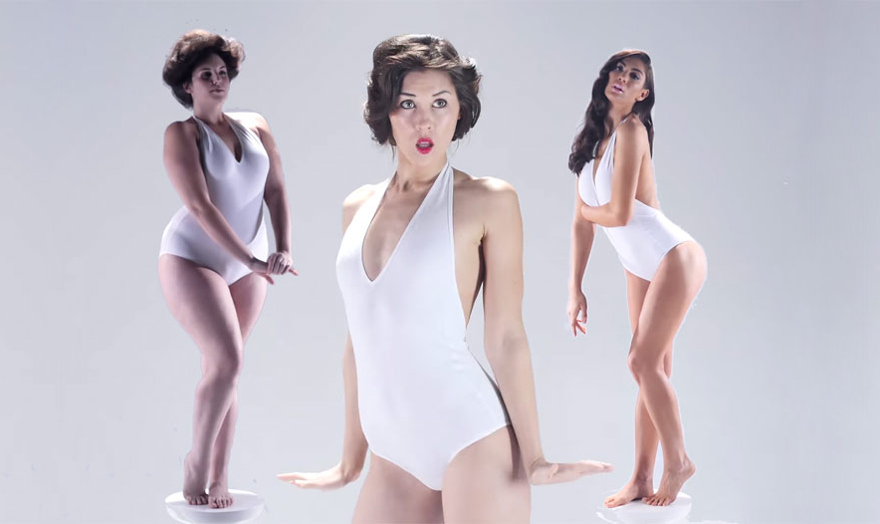
The perception of beauty varies greatly depending on the era and location. Buzzfeed’s video team brought this concept to life by featuring live models that illustrate just how much the ideal female physique has transformed throughout history.
Most of us have a general sense of how women dressed in various historical periods, but the notion that different body types were once considered the pinnacle of attractiveness might surprise many. The models all wear identical white swimsuits, which highlights their physical differences and removes distractions like clothing or accessories that could draw attention away from body shape.
Ultimately, this serves as a reminder that there is no single correct standard of feminine beauty. Which historical era do you think had the best approach?
More info: Youtube
– Narrow shoulders – High waist – Symmetrical face
3,000 Years of Women’s Beauty Standards in a 3-Minute Video
Ancient Greece (c. 500-300 B.C.)
– Full-bodied – Light skin – Women were considered “disfigured” versions of men
Han Dynasty (c. 206 B.C.-220 A.D.)
– Pale skin – Large eyes – Small feet
Italian Renaissance (c. 1400-1700)
– Rounded stomach – Full hips – Fair skin
Victorian England (c. 1837-1901)
– Full-figured – Cinched waist – Women wore corsets to achieve the ideal body shape
Roaring Twenties (c. 1920s)
– Downplayed waist – Short bob hairstyle – Boyish figure
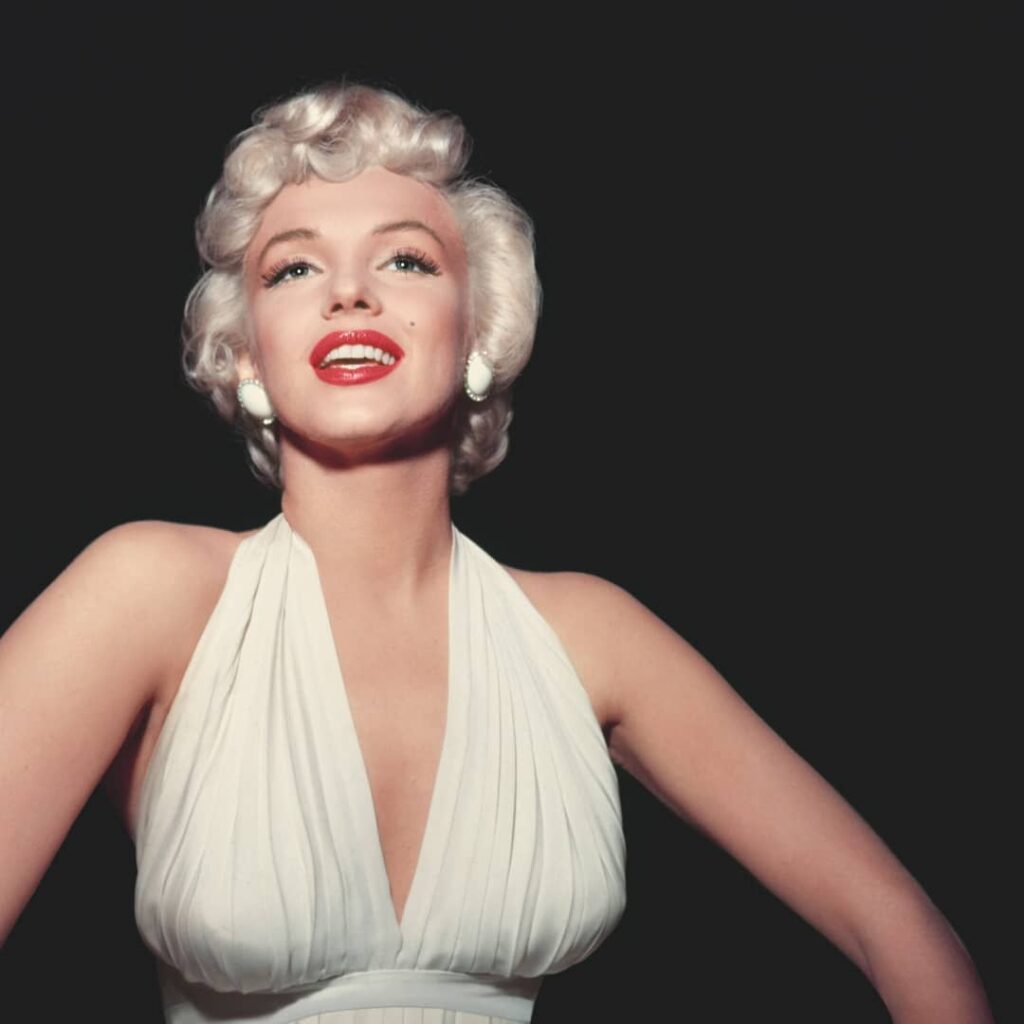
Golden Age Of Hollywood (c. 1930s – 1950s)
– Hourglass figure – Large breasts – Slim waist
Swinging Sixties (c. 1960s)
– Thin – Long, slim legs – Adolescent physique
Supermodel Era (c. 1980s)
– Svelte, but curvy – Tall – Toned arms
Heroin Chic (c. 1990s)
– Extremely thin – Translucent skin – Androgynous
Postmodern Beauty (c. 2000s-Today)
– “Healthy” skinny – Large breasts and butt – Thigh gap – Women regularly get plastic surgery to achieve their desired look
Source