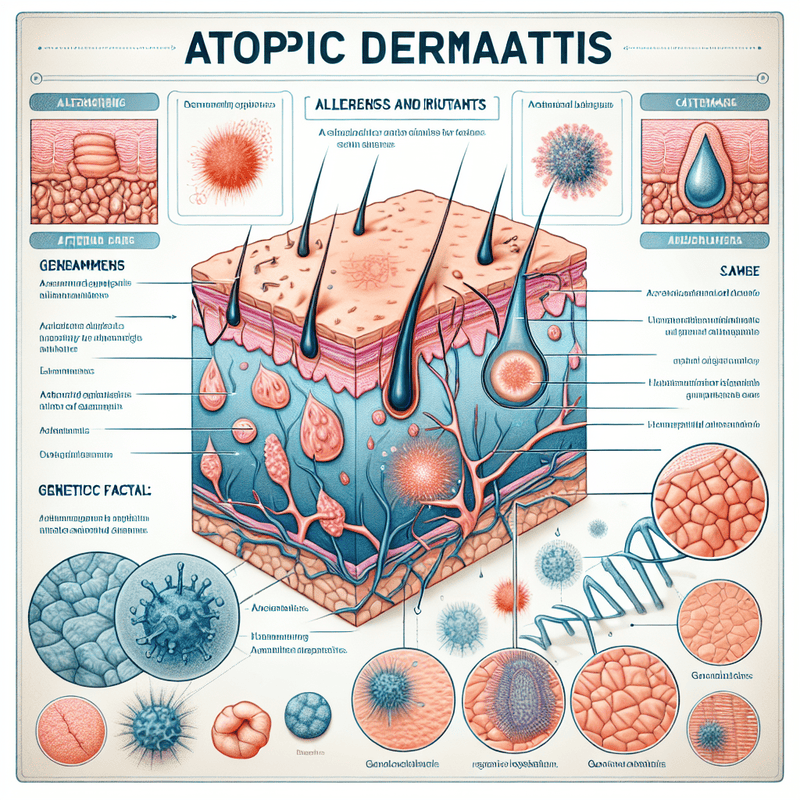
Atopic dermatitis, often referred to as eczema, is a persistent inflammatory skin disorder marked by red, itchy, and swollen patches. Although lifestyle and environmental elements significantly influence its onset and severity, genetic components are equally vital for understanding its origins. The intricate interaction between hereditary susceptibility and external triggers forms the foundation of the complex mechanisms behind atopic dermatitis.
Genetic Contributions
A major genetic factor in atopic dermatitis is a mutation in the filaggrin (FLG) gene. Filaggrin is a protein crucial for building and preserving the skin barrier. It assists in bundling keratin fibers within the epidermis, which is essential for the skin's protective role. FLG gene mutations result in a weakened skin barrier, leaving it more vulnerable to irritants, allergens, and microbes. As a result, people with these mutations face a greater risk of developing atopic dermatitis because their skin retains moisture poorly and is prone to inflammation.
Beyond FLG mutations, other genetic variations also increase susceptibility to atopic dermatitis. Polymorphisms in immune response genes, such as those coding for cytokines and their receptors, have been linked to the disease. For example, changes in the interleukin-4 (IL-4) and interleukin-13 (IL-13) genes can trigger an overactive immune response, fueling inflammation and the hallmark symptoms of atopic dermatitis. These cytokines are central to the Th2 immune pathway, which is often overactive in those with atopic dermatitis, leading to ongoing inflammation and skin barrier breakdown.
Additionally, genome-wide association studies (GWAS) have pinpointed several genetic loci tied to atopic dermatitis, including regions on chromosomes 1q21, 11q13, and 17q25. These discoveries shed light on the disease's complex genetic makeup, emphasizing its polygenic nature. Each locus contains multiple genes that may contribute to atopic dermatitis through diverse mechanisms, such as skin barrier integrity, immune control, and inflammatory signaling.
Epigenetic changes also influence the development and progression of atopic dermatitis. Modifications like DNA methylation and histone alteration can affect gene expression without changing the DNA sequence itself. Environmental factors—such as exposure to allergens and pollutants—can trigger epigenetic shifts that alter the activity of genes involved in skin barrier function and immune responses. These changes can be passed down, potentially explaining why atopic dermatitis often runs in families.
In summary, the genetic roots of atopic dermatitis are multifaceted, involving a mix of gene mutations, polymorphisms, and epigenetic modifications. The FLG gene mutation is a well-recognized culprit that undermines the skin barrier, while variations in immune-related genes fuel the inflammatory response typical of the condition. GWAS have further clarified the polygenic nature of the disease, identifying multiple susceptibility loci. Epigenetic modifications, influenced by environmental exposures, add another layer of complexity. Grasping these genetic elements is key to designing targeted therapies and personalized treatment plans for those living with this chronic skin condition.
Environmental Triggers
Atopic dermatitis, also called eczema, is a long-term skin condition marked by inflamed, itchy, and red patches. While its exact cause remains unclear, experts agree that a blend of genetic, immune, and environmental factors drives its development. Among these, environmental triggers play a major role in worsening symptoms and increasing flare-up frequency.
One key environmental trigger is exposure to allergens. Common allergens like pollen, dust mites, pet dander, and mold can spark an immune reaction in susceptible individuals, leading to inflammation and itching. For instance, dust mites—tiny creatures that thrive in household settings—are a well-known trigger. They hide in bedding, upholstered furniture, and carpets, making them hard to avoid. Similarly, pet dander, composed of tiny skin flakes shed by animals, can provoke flare-ups, especially in people already sensitized.
Irritants are another major environmental factor that can worsen atopic dermatitis. Everyday items like soaps, detergents, and fragrances can strip the skin of its natural oils, causing dryness and irritation. This is especially problematic for those with atopic dermatitis, whose skin barrier is already compromised. As a result, contact with these irritants leads to heightened skin sensitivity and more frequent flare-ups. Certain fabrics, such as wool and synthetic materials, can also irritate the skin, further aggravating the condition.
Weather and climate changes also act as powerful triggers. Extreme temperatures and humidity levels deeply affect the skin. For example, cold, dry air in winter reduces skin hydration, making it more prone to cracking and itching. Conversely, hot, humid weather can cause excessive sweating, which irritates the skin and triggers flare-ups. Sudden weather shifts can also disrupt the skin's natural balance, leaving it more susceptible to irritation and inflammation.
Pollution is another environmental factor linked to atopic dermatitis. Airborne pollutants like cigarette smoke, vehicle exhaust, and industrial chemicals can worsen the condition. These pollutants penetrate the skin barrier, causing oxidative stress and inflammation. Research shows that people living in urban areas with high pollution levels often experience more severe symptoms compared to those in cleaner environments.
Although not a direct environmental factor, stress can influence the severity of atopic dermatitis. Stress weakens the immune system and disrupts skin barrier function, making the skin more vulnerable to environmental triggers. This creates a vicious cycle: stress aggravates the condition, which in turn increases stress and further worsens symptoms.
In conclusion, environmental triggers are critical in both the onset and worsening of atopic dermatitis. Allergens, irritants, weather conditions, pollution, and stress all significantly affect the severity and frequency of flare-ups. Recognizing these triggers and taking proactive steps to limit exposure can help individuals manage their condition more effectively. By keeping a clean living space, using gentle skincare products, and practicing stress-reduction techniques, people with atopic dermatitis can better control their symptoms and enhance their quality of life.
Immune System Dysregulation
Atopic dermatitis, commonly called eczema, is a persistent inflammatory skin condition marked by itchy, red, and swollen patches. A key underlying factor in its development and persistence is immune system dysregulation. This disruption involves a complex mix of genetic, environmental, and immunological elements that disturb normal immune function, leading to the disease's characteristic symptoms.
First, genetic predisposition plays a major role in the immune dysregulation seen in atopic dermatitis. Individuals with a family history of atopic conditions—such as asthma, allergic rhinitis, and eczema—are more likely to develop the disease. This genetic tendency is often linked to mutations in genes that control skin barrier function and immune regulation. For example, filaggrin gene mutations, which are essential for skin barrier integrity, can increase skin permeability and heighten immune responses to environmental allergens.
Second, environmental factors further amplify immune dysregulation in atopic dermatitis. Exposure to allergens like pollen, dust mites, and pet dander can trigger immune responses in genetically predisposed people. Additionally, irritants such as harsh soaps, detergents, and pollutants damage the skin barrier, making it easier for allergens to penetrate and activate the immune system. This environmental exposure sets off a cycle of skin barrier disruption and immune activation that perpetuates inflammation.
In the context of immune dysregulation, T-helper cells—especially Th2 cells—play a crucial role. In individuals with atopic dermatitis, there is an imbalance between Th1 and Th2 cells, with Th2 responses dominating. Th2 cells produce cytokines like interleukin-4 (IL-4), interleukin-5 (IL-5), and interleukin-13 (IL-13), which promote immunoglobulin E (IgE) production and recruit eosinophils. These cytokines drive the inflammatory response and the typical symptoms of atopic dermatitis, including itching and redness.
Regulatory T cells (Tregs), which normally suppress excessive immune responses and maintain immune balance, are often dysfunctional in people with atopic dermatitis. This dysfunction leads to inadequate control of the Th2-driven inflammatory response, resulting in chronic inflammation and skin lesions. Impaired Treg function is thought to be influenced by both genetic factors and environmental triggers, highlighting the multifactorial nature of immune dysregulation in the condition.
Recent research has also revealed the role of the skin microbiome in immune dysregulation in atopic dermatitis. The skin of affected individuals often has an altered microbial composition, with Staphylococcus aureus predominating. This bacterial imbalance can worsen inflammation by producing toxins that further damage the skin barrier and stimulate immune responses. The interaction between the skin microbiome and the immune system is an active area of study, with potential to uncover new therapeutic targets for managing atopic dermatitis.
In summary, immune system dysregulation in atopic dermatitis is a multifaceted process involving genetic predisposition, environmental factors, and complex immunological mechanisms. The interplay of these elements leads to an imbalance in immune responses, resulting in chronic inflammation and skin barrier dysfunction characteristic of the disease. Understanding the root causes of immune dysregulation in atopic dermatitis is essential for developing effective treatments and improving the lives of those affected by this condition.