In the final weeks of 2008, the US Department of Energy gathered lawmakers and media for a ribbon-cutting event at the Joint BioEnergy Institute in Emeryville, California. This cutting-edge facility, supported by $125 million in federal money, occupied the top floor of a gleaming glass tower that mirrored the soaring ambitions for next-generation biofuels.
“This initiative brings together top minds in one place to tackle what may be one of the most critical issues of our era,” remarked Jay Keasling, a synthetic biology expert at UC Berkeley and the institute’s CEO.
JBEI (pronounced “jay-bay”) set out to create inexpensive biofuels from cellulosic materials—the leaves and stems of plants such as switchgrass, rather than the grains of food crops like corn. The lab aimed to go beyond ethanol, striving to develop carbon-neutral fuels that could power standard cars, aircraft, ships, and trucks. Success would dramatically lower greenhouse-gas emissions and reduce US reliance on oil (see “The price of biofuels”).
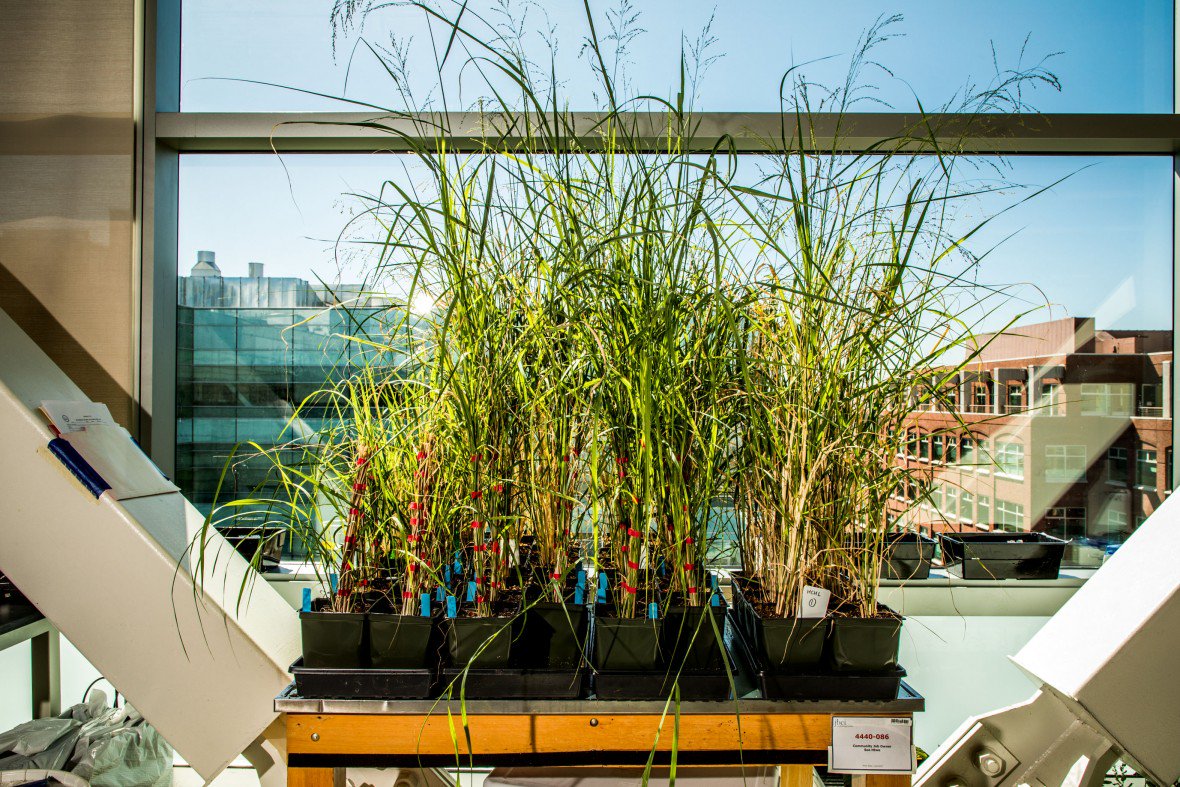
JBEI is engineering varieties of switchgrass and sorghum that yield significantly more sugars and much less lignin.
Keasling likely did more than any other individual to push the field forward and sell the vision of such fuels. Alongside running JBEI, he co-founded several well-funded startups, including LS9 and Amyris Biotechnologies, to turn that vision into reality.
Yet a decade later, the sector is in disarray. JBEI and other federally funded bioenergy labs still operate, but most advanced biofuel companies—including Keasling’s—have abandoned the dream.
US firms now produce only a tiny fraction of the cellulosic fuels mandated by renewable-fuel standards established near the end of the Bush administration. Much of that output is ethanol derived from agricultural leftovers like corn stalks. Given this shortfall, the Environmental Protection Agency annually issues waivers for advanced biofuels, allowing the industry to largely continue as usual.
JBEI’s next objective is to develop plants that can eventually produce advanced biofuels for under $3 per gallon.
JBEI has achieved scientific progress, but if the institute’s crops, techniques, and microorganisms were deployed at commercial scale today, a gallon of the resulting fuel would cost 14 times what we pay at the pump.
Producing cheap advanced biofuels simply turned out to be a far more difficult challenge than anticipated. “We probably underestimated it and probably oversold it, too,” Keasling acknowledged last month during an interview in his JBEI office.
Still, Keasling, for one, has not abandoned hope for a future where biofuels can viably replace gasoline, diesel, and jet fuel.
“Washed up overnight”
Keasling grew up in a small Nebraska town on a corn farm that has been in his family for five generations. While studying chemical engineering at the University of Michigan, he became captivated by the potential of genetic engineering to solve major problems. He then conducted postdoctoral research in the field at Stanford before landing a professorship at UC Berkeley at age 28.
There, he performed pioneering work in synthetic biology, transforming yeast and bacteria into microscopic factories that could produce isoprenoids—a class of compounds used to make rubber, antibiotics, and fragrances. Most notably, he and his collaborators developed a process to manufacture a synthetic precursor to artemisinin, one of the few effective malaria treatments, by inserting DNA from several different organisms into E. coli and yeast. It is considered one of the first major breakthroughs in synthetic biology.
Moving from artemisinin—a hydrocarbon molecularly similar to petroleum—to biofuels did not require a huge leap of imagination. In earlier interviews, Keasling described it as simply a matter of removing a few genes and adding another.
In early 2008, his startup Amyris announced plans to produce a billion gallons per year of a sugarcane-based biodiesel from its bioengineered microorganisms, at as little as $60 per barrel, all within a few years (see “Searching for biofuels’ sweet spot”).
Keasling gives a tour of JBEI’s state-of-the-art laboratories in Emeryville, California.
But as the 2008 economic recession took hold, oil prices plunged from a peak near $150 per barrel to just under $30 by year’s end. “It’s hard to get excited about a renewable economy when you’re dealing with a $30 barrel of oil,” says David Berry, a general partner at venture capital firm Flagship Pioneering, who co-founded LS9 with Keasling in 2005. “Debt and equity markets dried up overnight.”
And they took many of the startups with them. Most survivors pivoted to other business lines. LS9 shifted to specialty chemicals and was eventually acquired by Renewable Energy Group (see “Why the Promise of Cheap Fuel from Super Bugs Fell Short”).
Amyris, which went public in 2010, never produced its renewable diesel on a commercial scale. It now focuses on nutraceuticals, skin care, and artificial flavors and scents. A spokesman declined to disclose the price the company achieved for the fuel, but Keasling put it at $1.75 per liter—or about $6.63 per gallon.
Despite all the enthusiasm a decade ago, producing affordable advanced biofuels was always an audacious idea.
For starters, you have to plant, harvest, dry, and ship massive volumes of crops in as clean and sustainable a way as possible. Then the hard part begins.
Extracting fuels from stems and leaves requires separating the energy-packed carbohydrates in the plant’s cell walls from the woody lignin molecules that bind tightly around them, typically using acids, pressure, and heat. Then you need microbes that can consume those carbohydrates—mostly cellulose—and excrete fuels. But no naturally occurring bugs are known to produce the type that can directly fill the tank of existing cars, so scientists must genetically engineer ones that can.
For all the effort and funding, some in the field believe there has not been much real progress on these challenges over the past decade or so.
“The broad view is that not much has changed,” says Gregory Stephanopoulos, a professor of chemical engineering at MIT. “The path from cellulose to sugars to fuel does not seem to be anywhere more promising today.”
Getting to a $3 gallon
Keasling disagrees, arguing that JBEI and other labs have made significant scientific strides. Researchers at the California institute—which serves as the hub of a collaboration between six research labs and universities—have published nearly 700 peer-reviewed papers, earned nearly 30 patents, and launched six startups.
JBEI’s researchers have genetically altered types of switchgrass and sorghum so that they produce far more sugars and much less lignin than standard plants. They have also developed a process for converting lignin into ionic liquids—salts that break down biomass—turning a waste product into an effective tool for plant deconstruction.
Finally, scientists there have engineered microbes that can produce several types of “drop-in” fuels from these plants, including pinene (a precursor to jet fuel), isopentenol (which could work as a gasoline replacement), and bisabolene (which produces “a darn good diesel,” Keasling says).
These collective advances have driven down the cost of a gallon of next-generation biofuel from around $300,000 when they started to about $35—at least if they were produced at commercial scale, Keasling says.
But of course, no one would ramp up production of a $35-per-gallon fuel when the average gallon of gas runs $2.50. So now the lab is shifting into a new stage of research, with the specific goal of narrowing that gap. Last July, JBEI and other federal bioenergy research centers secured renewed federal funding at $25 million per year, the same level the institute has received from the start.
JBEI is developing varieties of switchgrass and sorghum that yield far more sugars and much less lignin.
The stated target in JBEI’s application for the funding was to develop biofuels that could be produced for less than $3 per gallon within the next five years, Keasling said.
“I don’t know that we’re going to get there in five years,” he says. “I’d be fine if we get that in 10 years, frankly.”
Keasling believes that the key to much of that improvement lies in lignin, which holds considerable carbon but clings to it stubbornly. JBEI’s researchers will have to alter plants so that lignin’s linkages are more easily broken. Then they have to alter ligninases—a little-understood class of enzymes known to break down lignin—to extract more of the carbon. Lastly, they need to develop new sets of microbes that can convert the remaining compounds into fuels.
The final piece of the plan to cross the $3 threshold is to develop ways to convert some parts of the plant into higher-value products that could subsidize the cost of biofuels, such as flame retardants or materials for 3-D printing.
Competing demands
For the world to have a decent chance of preventing global temperatures from rising more than 2°C, bioenergy would need to provide 17 percent of total energy demand by 2060, up from 4.5 percent in 2015, according to an analysis by the International Energy Agency. But so far, production gains are well below the pace required to meet such goals. Among other things, the supply of transportation biofuels will have to increase tenfold in the coming decades.
Estimates of how much land that would require vary widely, but for biofuels to meet nearly 30 percent of transportation needs by midcentury, 100 million hectares would have to be dedicated to growing the feedstocks, the IEA concluded in a 2011 report. That is about one-ninth of the area dedicated to agriculture in the United States.
“We have a tremendous number of competing demands on land, and the idea that we can liberate vast quantities for making biomass energy is very likely to run into constraints,” says Chris Field, director of the Stanford Woods Institute.
A serious related challenge is scaling up advanced biofuels in a way that significantly reduces total greenhouse emissions—which is the whole point. Every step from planting to production is energy-intensive in its own right, so the details of how it is all done matter a great deal. In particular, researchers worry that if the market ever does take off, it could create perverse incentives, such as encouraging farmers to raze forests—which are huge carbon sinks—to make way for these sorts of crops.
Dream alive
But despite these challenges, there are clear reasons many have long believed that biofuels will play a big role in cutting greenhouse-gas emissions. In the United States, more than half of this pollution comes from transportation uses like cars, trucking, shipping, and planes. Despite some notable gains in battery-powered electric vehicles, much of this sector can still only be powered with fossil fuels.
One of JBEI’s more than 160 researchers at work in the lab.
When it comes to mobile, dense energy storage, liquid fuels are simply very hard to beat, particularly since so much of the world’s energy infrastructure is built around them, says Hanna Breetz, a political scientist focused on alternative fuels and vehicles at Arizona State University.
“Liquid fuels are going to continue to be a large part of the energy system going forward, especially in transportation, and I do expect bio-based fuels will be part of that sector,” she says.
Even if labs do make striking progress in the next few years, it could still take decades for these fuels to seize real market share in an industry with trillions of dollars sunk into the daily business of extracting and refining oil. Accelerating that transition will require far more government support, potentially including a price on carbon, higher renewable-fuel standards, emissions caps, and more, Keasling says.
That may sound like asking a lot from someone whose lab has received hundreds of millions in government funds and whose startups have burned through similar levels of venture investment. But Keasling says that is simply what it will take to overhaul an entrenched industry at the scale and speed required to counter growing climate dangers.
What worries him is that the prospects for such policies have only dimmed in recent years. But despite the political and scientific failures that have plagued the quest for cheap advanced biofuels, he remains convinced of their potential to cut emissions.
“When our government decides it’s time to prioritize that,” Keasling says, “I think biofuels could play a big role.”
technologyreview.com