Matt Agorist reports for The Free Thought Project.
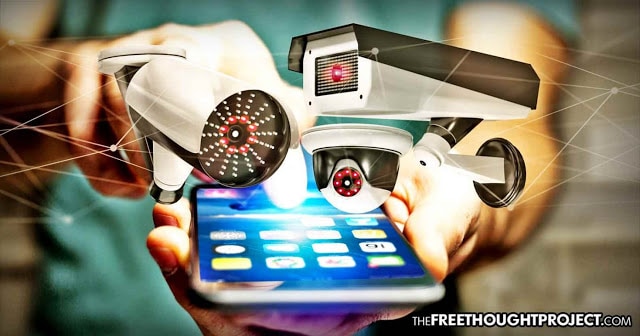
A comprehensive study spanning twelve months has just been completed, confirming that smartphones are capturing user activity and transmitting that data to external parties.
For a long time, there have been widespread theories that smartphones eavesdrop on users to serve targeted ads. Although prior investigations hinted at such possibilities, a groundbreaking study has uncovered an even more alarming reality. Researchers from Northeastern University have now definitively shown that phones are capturing screen activity—essentially recording video—and transmitting it to external entities.
Over the past twelve months, a team including Elleen Pan, Jingjing Ren, Martina Lindorfer, Christo Wilson, and David Choffnes conducted an experiment using ten distinct smartphones and over 17,000 widely-used Android applications. The results were deeply concerning.
According to Gizmodo, the researchers observed that screenshots and video captures of user interactions within apps were being transmitted to external domains. For instance, when a test phone utilized the GoPuff app—a delivery service for impulsive snack cravings—the entire session was recorded and forwarded to a domain linked to Appsee, a mobile analytics firm. The footage included a screen where users entered personal data, specifically a zip code.
GoPuff had not informed users in its terms of service that the app recorded screens and shared that data with third parties. Furthermore, after being contacted by the researchers, GoPuff simply amended its policy to note that 'ApSee' might obtain users' personally identifiable information. The ability of these apps to secretly record screens and exploit that data is deeply unsettling. It demonstrates how effortlessly a malicious entity could access private messages, personal details, passwords, photos, and videos. Device security measures do not prevent this, as the recording is embedded within the app's functionality, leaving users no way to opt out.
Gizmodo reports that the research team plans to present their findings at the Privacy Enhancing Technology Symposium in Barcelona next month. (Incidentally, while in Spain, they could examine the nation's top soccer app, which has granted itself permission to activate smartphone microphones to detect unauthorized game broadcasts in bars.)
Regarding the notion that phones listen via microphones, the researchers were unable to disprove it. Because the study relied on automated scripts to simulate app usage, any surveillance apps might not have activated in the same manner as they would with a human user.
While no evidence of audio eavesdropping was uncovered, that does not rule out its occurrence.
David Choffnes, a co-author of the paper, stated: 'We found no proof that private conversations are being covertly recorded. However, what many fail to realize is that numerous other forms of tracking occur daily—without using the phone’s camera or microphone—that provide third parties with an equally detailed picture of your life.'
The study, named 'Panoptispy: Characterizing Audio and Video Exfiltration from Android Applications,' concluded: 'Our research uncovers multiple disturbing privacy threats within the Android app ecosystem. These include applications that grant excessive media permissions and those that share image and video data with outside entities in unforeseen manners, lacking user awareness or consent. Additionally, we have identified a previously undocumented privacy risk stemming from third-party libraries that capture and upload screenshots and screen recordings without user notification. This can happen without requiring any permissions from the user.'
In today's digital era, privacy and security are the sole barriers preventing a fully pervasive surveillance network. Regrettably, as this research demonstrates, both are severely lacking.
ALSO READ: New Large-Scale Study Finds Strong Link Between Brain Cancer and Cell Phone Radiation
READ: Biofuel – The Scientist Persisting in the Battle for the Forgotten Clean Fuel



%22%20%2F%3E%0A%20%20%20%20%20%20%3Cstop%20offset%3D%22100%25%22%20stop-color%3D%22hsl(121%2038%25%2069%25)%22%20%2F%3E%0A%20%20%20%20%3C%2FlinearGradient%3E%0A%20%20%3C%2Fdefs%3E%0A%20%20%3Crect%20width%3D%221200%22%20height%3D%22750%22%20fill%3D%22url(%23bg)%22%20%2F%3E%0A%20%20%3Ctext%20x%3D%22600%22%20y%3D%22286.5%22%20text-anchor%3D%22middle%22%20fill%3D%22hsl(130%2052%25%2036%25)%22%20font-family%3D%22Inter%2C%20ui-sans-serif%2C%20system-ui%2C%20sans-serif%22%20font-size%3D%2224%22%20font-weight%3D%22700%22%20letter-spacing%3D%220.22em%22%3ETECH%3C%2Ftext%3E%0A%20%20%3Ctext%20text-anchor%3D%22middle%22%20fill%3D%22hsl(327%2038%25%2020%25)%22%20font-family%3D%22Georgia%2C%20'Times%20New%20Roman'%2C%20serif%22%20font-size%3D%2250%22%20font-weight%3D%22700%22%3E%3Ctspan%20x%3D%22600%22%20y%3D%22351.5%22%3EYouTube%26apos%3Bs%20So-Called%20%26apos%3BOpen%3C%2Ftspan%3E%3Ctspan%20x%3D%22600%22%20y%3D%22410.5%22%3ELetter%26apos%3B%20on%20Logan%20Paul%20Is%3C%2Ftspan%3E%3Ctspan%20x%3D%22600%22%20y%3D%22469.5%22%3EAnything%20But%20Transparent%3C%2Ftspan%3E%3C%2Ftext%3E%0A%3C%2Fsvg%3E)