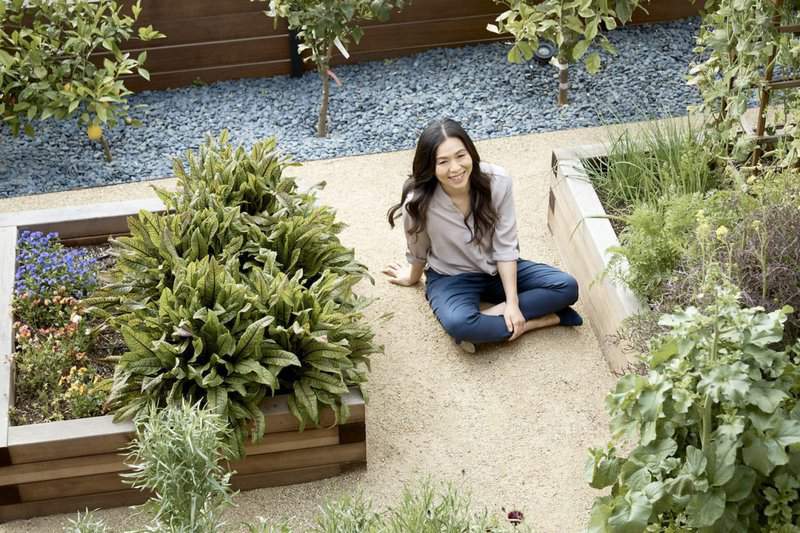
Food has a unique ability to weave together culture and human connection—a gift that few wield with the grace and artistry of Chef Niki Nakayama of n/naka.
Niki is quick to acknowledge that her success is not a solo achievement. Her leadership and culinary artistry are shaped by a deep understanding of how traditions, ingredients, and dining can become a shared journey of discovery.
As we step into a month celebrating women who’ve shaped history, here’s an excerpt from our conversation with Niki last summer, originally featured in Darling Issue 20. Enjoy.
Honoring Tradition and Innovation: Chef Niki Nakayama’s Approach to Japanese Kaiseki
Niki Nakayama: The Honorable Feast
Interview with Niki Nakayama by Teresa Miller Archer
Many of us first encountered Chef Niki Nakayama through the debut season of “Chef’s Table,” where her mastery of Kaiseki—the Japanese art of presenting a multi-course meal—captivated us with its meticulous detail, abundance, and almost otherworldly presentation.
But as we delved deeper into Chef Nakayama’s world and her acclaimed restaurant n/naka in Culver City, California (a Zagat “Top 50” pick for Los Angeles in 2016), we discovered that each dish reflects not only her artistry and excellence but also her core values. Sustainability, seasonal mindfulness, and genuine care for her guests keep Chef Nakayama constantly engaged.
She is renowned for maintaining a written record of every dish and every diner who has visited her restaurant, and for earning numerous accolades, including a spot on Food & Wine’s “20 Most Innovative Women” list.
Despite her forward-thinking style, the small, nimble frame of this accomplished chef and restaurateur holds the past, present, and future cultures she deeply cherishes and celebrates.
Everything about her food and her way of life speaks of honor—and we can’t praise that enough.
TA: So, tell me a little about Kaiseki—where it comes from, what you love about it, and why you chose it as your main focus.
NN: Kaiseki originally emerged from tea ceremony, starting with just one soup, one rice, and three dishes. Over time, it evolved into two distinct forms. Even the Japanese characters differ, though the pronunciation is the same.
One version translates to “a stone to the chest,” the other to “a banquet of seats.” It eventually became an elaborate banquet-style dinner, enjoyed by samurais after battles, turning into a celebratory affair.
What I love about Kaiseki, in either form, is how deeply it’s rooted in gratitude. It’s about being thankful—thankful to nature, to ingredients, to everything around you. It’s a way of showing appreciation for what nature provides and offering respect in return.
I’ve always loved eating that way, and I thought, “One day I’ll open a restaurant that serves food in this spirit, and it will be something special.” That idea has always been in the back of my mind.
What I love about Kaiseki, either type, is that it is so much about gratitude.
TA: Your Kaiseki is a bit different. How do you balance honoring tradition with incorporating your own local flavors?
NN: Right. I eventually justified it by really thinking about what Kaiseki means—it’s about honoring where you are.
At first, I was tempted to reach out to Japan and import many ingredients from there. But over time, I realized that if I truly wanted to be philosophical about it, simply using Japanese ingredients didn’t make it Kaiseki. I thought, what better way to represent being in California than to embrace the core principle: appreciate nature and ensure that whatever we do with an ingredient, the ingredient itself never gets lost.
I can hold onto all those ideas and keep them in their most traditional sense, but that doesn’t mean I can’t add other flavors to better represent what it means to be in California. That’s how I justify what I do.
TA: What are some of your favorite California ingredients you’ve incorporated?
NN: I’d definitely say the local black cod is incredible. I discovered a local fisherman from Japan who uses the traditional ikejime technique—catching the fish, hitting the spine, and bleeding it out immediately to preserve it for sashimi. That’s one of the most amazing discoveries I’ve made.
There are so many great local fish that, when handled properly, can be served as sashimi and sushi—things you wouldn’t typically find in Japan. That makes it exciting because we get really fresh fish that doesn’t travel miles and miles, and the quality is outstanding.
TA: When you’re planning your menu or cooking during service, what responsibility do you feel toward your guests?
NN: These days, it’s easy to get great ingredients all the time, and there’s so much abundance in what people want to eat. But things like liver, kidneys, and other parts—my grandparents ate those naturally because that’s all that was available. That’s not the case anymore.
I think it’s part of a chef’s duty to reintroduce those things to people. Every time I cook, I think about guests who might be trying an ingredient for the first time. We cut sushi so it’s not too big, so it won’t be off-putting when they put it in their mouth. I always tell our kitchen staff, “When you cut this, remember that maybe this is the first time they’ve ever eaten it. If you serve it in a way that’s unappealing, they’ll never want to try it again.”
If we keep that in mind while cooking—even with ingredients that might seem unappealing—and present them in an appealing way so guests think, “Oh, I never thought I’d enjoy that, but it was actually delicious,” then we’ve succeeded in what we’re trying to do.
Every time I cook, I think about the guests eating this ingredient for the first time.
TA: What do you love about Californian culture?
NN: I always say our restaurant could not exist in Japan. It simply couldn’t. Japanese people take pride in structure and ideas like, “Don’t be too creative; don’t go outside the lines.” You’re supposed to perfect the skillset within the lines and spend your whole life doing that, never questioning or stepping outside.
There’s a lot of that, especially in cooking. So people might think what I’m doing to Kaiseki isn’t traditional enough, and I’m happy they think that way because I don’t feel I’m traditional enough.
This restaurant thrives because of LA’s diversity, and I think that’s wonderful. I feel I’m in the luckiest place on Earth to have opened this restaurant.
TA: Your food is so precise. How do you balance being a perfectionist with being creative?
NN: That’s a good question. Sometimes when you eat a very technically precise and wonderful meal, it can lose a bit of soul. In the pursuit of precision and technical perfection, there can be a loss of that soul and creative process.
I would always choose creativity over precision. When we cook, we have to, for lack of a better word, listen to the ingredients.
Take cutting the same loin of fish—the fat content varies throughout. If you cut equal sizes, the thick part with all that fat becomes too much compared to the other part. You always have to bend to the ingredient, and I think that’s the best way to cook.
You always have to bend to the ingredient, and I think that’s the best way to cook.
TA: If you could thank or highlight someone who is underappreciated or hasn’t had the exposure they deserve, who would that be?
NN: I know this is totally unfair and biased, but I’d definitely spotlight Carole, my partner. Even though I started this restaurant alone, she joined a year after we opened. She has made so many contributions to improving the dining experience. While I’m sometimes like, “Oh, it’s okay, let’s just move forward,” she’s like, “No, we have to do it perfectly and make sure it’s done the way we originally intended—don’t skip steps.”
Reaching my current level of success is definitely not something I could have done alone. For many successful people, there’s always someone beside them or a host of supporters making it happen. I acknowledge that Carole is that for me, along with our whole team.
TA: Is there anything else you’d like to highlight about your passions, your food, or Kaiseki?
NN: I think the most important message I wanted to get across is that we’re not trying to be traditional Japan. It doesn’t make sense to walk into a restaurant in America that makes you feel like you’re in another country, pretending to be something else.
You have to go to that country to truly experience it as it’s meant to be. It’s nice to have a reminder or an idea, but it’s always better to remember the real thing.
You should never settle for something like it—go for the real thing.
Like this? Find the full interview in Darling Issue 20. Become a Darling subscriber HERE to instantly access all our digital versions, plus get our latest issue delivered to your doorstep.
Images via Frank Terry for Darling Issue 20