Last autumn, I first wrote about Bombshells United: American Soil, the second installment of DC's Bombshells franchise. Now the series returns with issue #8 of Bombshells United: War Bonds, this time centering on Batwoman and her personal connections. What sets Bombshells apart is its portrayal of women during a period when they were often regarded as 'tools for the war effort.' While Rosie the Riveter is a familiar icon, the real narratives of women from that era are far more nuanced than typical American history textbooks suggest.
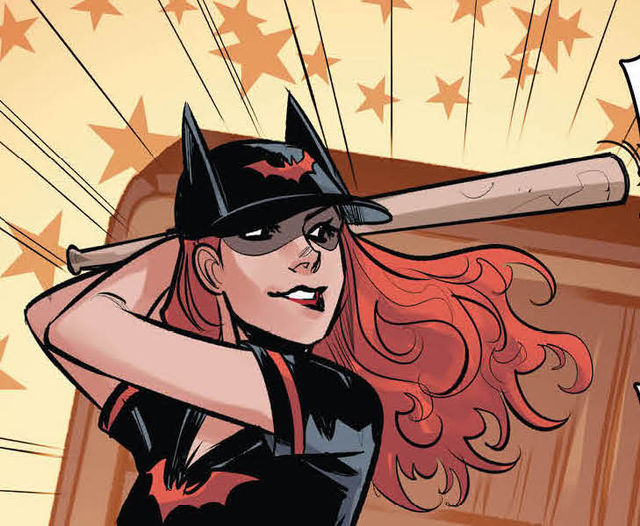
Within Bombshells, Batwoman is an outstanding baseball player, a superhero, and a lesbian. Her identity as an LGBTQ character in a comic set during the 1930s and 1940s underscores how far the comic book industry has evolved. Crucially, Maggie Sawyer—also known as Batwoman—isn't defined by her sexuality; it's simply part of who she is. The narrative doesn't revolve around her sexual orientation but rather explores her relationships and how they influence her life and the broader plot. BUST spoke with Bombshells artist Marika Andolfo about her artistic approach to bringing Batwoman's story to life.
This comic is steeped in history. Which visual references influenced your artwork? Before beginning any new Bombshells chapter—and in general—I always seek out strong references and sources of inspiration tailored to the story I'm illustrating. For this project, the search was especially fascinating. I particularly enjoyed working within a Spanish setting that blended diverse cultures and influences. I gathered references from books, films, and, naturally, the internet. Then I had the chance to experiment with combining different architectural styles.
Did you have any say in character development while crafting this story? The narrative direction is entirely Marguerite Bennett's domain—her scripts are always meticulous and clear, so I can easily grasp how she envisions each character's evolution. After collaborating on so many pages, we've developed a strong rapport, and I appreciate the freedom to contribute to individual character growth across chapters. Every character in the Bombshells universe possesses a distinct personality; they're all fully fleshed out. For my part, I aim to convey each character's personality and progression through their appearance and expressions, letting readers infer these traits.
Is the character Renee meant to be from the Dominican Republic? Yes, that's correct. I'll confess I didn't have a clear visual concept for people from the DR, but I did have some reference materials, so it required considerable effort.
Archaeology features prominently in this comic, and Renee is a scientist. How did science, particularly archaeology, factor into your research and design of her character? Renee is an archaeologist, which sets her apart from other Bombshells characters. I believe readers can pick up on this through subtle cues—perhaps a glance or a demeanor. Additionally, in the chapters where I encountered her, she was engaged in fighting, escaping, and numerous action scenes. That was incredibly enjoyable to illustrate!
This comic features a same-sex couple and a battle against fascism—both highly pertinent issues. How do you use imagery to convey empathy or understanding when addressing such weighty topics? When illustrating a romantic moment between two characters, I never consider their gender beforehand—whether it's female-female, female-male, or male-male, it doesn't matter to me. The crucial thing is to depict the emotion and connection between them in an empathetic manner. This principle applies to every sensitive subject we explore in comics. I believe it's essential, especially in visual art, to avoid being preachy. A meaningful message should be delivered through a beautiful, compelling, and well-told story. Generally, I enjoy working with facial expressions and body language. One of the most important aspects of creating comics is enabling readers to understand what a character is thinking and discussing without words, as well as through the text. I hope readers will grasp what matters to the writer and artist.
The comic also delves deeply into mythology and religion. Which visual references shaped the character Talia Al Ghul, and what do you hope your artwork conveys? Honestly, the initial designs for nearly all major Bombshells characters were created by DCU illustrator Ant Lucia, so I had an excellent foundation. Beyond that, I've always been a big fan of Talia as a DCU character, and I have a strong interest in mythology (and religion), so I actively sought out references and symbols, which I thoroughly enjoyed. I particularly like Talia's clothing, and I aimed to portray her strong personality, especially through her eyes. I hope to have the chance to work on her again.
Bombshells United: War Bonds #8 and #9 are available at your local comic book store. Issue #10 drops on January 17.
More from BUST
In “Bombshells United: American Soil,” Wonder Woman Battles to Free Japanese Americans from Internment Camps
This Comic “Lady Killer” Depicts a Woman Eliminating Sexual Harassers—And It Arrives at an Ideal Moment
La Borinqueña Is the Puerto Rican Hero We Urgently Need Right Now
Isabel Dieppa is a writer and performer. She belongs to the duo Of This World based in Chicago, IL. Her passions include science, art, and history. Previous work includes an internship with the Chicago Field Museum’s ECCO program, contributions to the national theater blog HOWLROUND, music reviews for UR Chicago, and earlier in her career, serving as a beat reporter for the Indiana Daily Student. She adores archaeology, cats, and dancing. Her next big venture might involve an archaeological excavation in Peru. Follow her on Twitter @isabelsdieppa