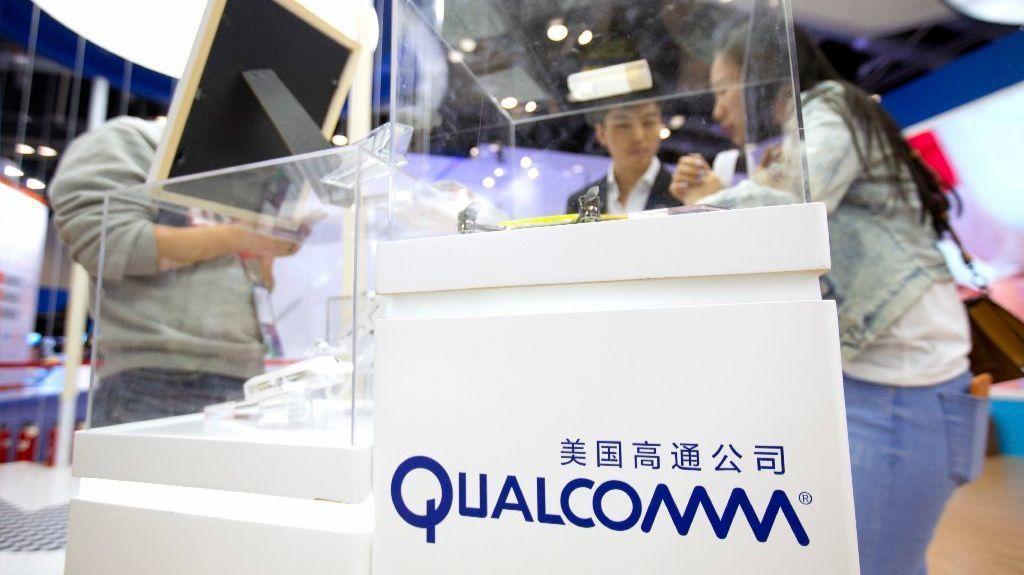
Qualcomm has been hit with a $1.23 billion fine by Europe’s antitrust authority for compensating Apple to ensure the exclusive use of Qualcomm’s cellular modems.
- The European Commission concluded that Qualcomm’s actions blocked competitors like Intel from supplying 4G LTE chips to Apple for a five-year span.
- Qualcomm maintains the ruling is flawed and plans to file an immediate appeal.
- This marks the fourth global regulator to penalize Qualcomm within three years. Qualcomm and Apple remain locked in a contentious legal dispute over patent royalties.
Here is the full story:
On Wednesday, European antitrust regulators imposed a $1.23 billion fine on Qualcomm for funneling payments to Apple in return for exclusively using Qualcomm’s smartphone radio chips in iPhones from 2011 through 2016.
Qualcomm stated it rejects the decision and will promptly appeal to the General Court of the European Union.
The hefty penalty arrives amid Qualcomm’s intense legal battle with Apple and global antitrust agencies over its patent licensing practices.
The San Diego–based chipmaker has already faced fines from regulators in China, South Korea, and Taiwan, and is currently defending against a lawsuit from the U.S. Federal Trade Commission.
The European Commission ruled that Qualcomm abused its dominant position in the market for 4G LTE baseband chips—the components that connect smartphones to cellular networks. Qualcomm’s 4G LTE chips were used exclusively in iPhone 4 through iPhone 6 models.
Before the iPhone 4 launched in 2011, Qualcomm entered into a transition agreement with Apple under which it made payments to Apple on the condition that only its chips would power cellular connections in iPhones and iPads, according to the commission.
In various lawsuits, Apple and regulators have described these payments as rebates, while Qualcomm has called them incentive payments.
“Qualcomm paid billions of U.S. dollars to a key customer, Apple, so that it would not buy from rivals,” said Margrethe Vestager, the European Union’s competition commissioner, in a statement. “These payments were not just reductions in price—they were made on the condition that Apple would exclusively use Qualcomm’s baseband chipsets in all its iPhones and iPads.”
In pending lawsuits, Qualcomm has argued that Apple demanded the incentive payments and inserted the exclusivity language into the agreements itself.
“We are confident this agreement did not violate EU competition rules or adversely affect market competition or European consumers,” said Don Rosenberg, Qualcomm’s general counsel. “We have a strong case for judicial review.”
The European Union stated that this agreement, which was renewed in 2013 and expired in 2016, effectively shut out rivals and discouraged their investment in research and development—partly because Apple is a massive buyer of cellular baseband chips.
The agreement covers a period when Qualcomm held a significant technological edge in 4G LTE, which succeeded slower 3G networks.
The company invested heavily in 4G technology during the 2008–2009 recession. It brought a working chip to market well ahead of competitors such as MediaTek and Intel, which did not launch competing 4G LTE products until 2014 and 2016, respectively.
Apple began sourcing Intel chips in 2016 for roughly half of its iPhone 7 models. The commission noted that Apple’s internal documents revealed it delayed the switch until its agreement with Qualcomm was about to end.
According to the EU, the agreement made clear that Qualcomm would stop payments if Apple commercially released a device with chips from a rival. Additionally, Apple would have had to repay a large portion of the payments it had received if it changed suppliers.
The fine reflected the “gravity and duration” of Qualcomm’s anti-competitive practices, according to the commission. It amounted to 5 percent of the company’s $22.3 billion in sales last year.
“I think it is very large to be honest,” said Richard Pike, a competition/regulatory partner with the Constantine Cannon law firm in London, of the fine. “This is really quite steep.”
The maximum fine the commission could have imposed is 10 percent of sales, which is rare, said Pike.
In addition to its troubles with Apple and regulators, Qualcomm is currently warding off a hostile takeover bid from Broadcom and trying to close its $38 billion acquisition of NXP Semiconductors to diversify beyond smartphones.
Since 2015, global antitrust regulators have fined Qualcomm a total of $3.9 billion. Bernstein Research Analyst Stacy Rasgon said the regulatory scrutiny is a “wedge issue” for Broadcom in its efforts to gain control of Qualcomm’s board of directors.
“While Qualcomm believes they are in a temporary, albeit perfect, storm of customer and regulatory issues, Broadcom believes that the current problems are a harbinger of further headwinds to come, and that critical changes to Qualcomm’s business model and practices – likely unpalatable to Qualcomm’s current management – will be needed,” he said in a research note.
Qualcomm’s shares dipped 36 cents to close at $67.98 Wednesday on the Nasdaq exchange.
mike.freeman@sduniontribune.com;
Twitter:@TechDiego
760-529-4973
UPDATES:
This article was updated with additional analysis and quotes at 1 p.m. It was originally published at 5:50 a.m.


%22%20%2F%3E%0A%20%20%20%20%20%20%3Cstop%20offset%3D%22100%25%22%20stop-color%3D%22hsl(121%2038%25%2069%25)%22%20%2F%3E%0A%20%20%20%20%3C%2FlinearGradient%3E%0A%20%20%3C%2Fdefs%3E%0A%20%20%3Crect%20width%3D%221200%22%20height%3D%22750%22%20fill%3D%22url(%23bg)%22%20%2F%3E%0A%20%20%3Ctext%20x%3D%22600%22%20y%3D%22286.5%22%20text-anchor%3D%22middle%22%20fill%3D%22hsl(130%2052%25%2036%25)%22%20font-family%3D%22Inter%2C%20ui-sans-serif%2C%20system-ui%2C%20sans-serif%22%20font-size%3D%2224%22%20font-weight%3D%22700%22%20letter-spacing%3D%220.22em%22%3ETECH%3C%2Ftext%3E%0A%20%20%3Ctext%20text-anchor%3D%22middle%22%20fill%3D%22hsl(327%2038%25%2020%25)%22%20font-family%3D%22Georgia%2C%20'Times%20New%20Roman'%2C%20serif%22%20font-size%3D%2250%22%20font-weight%3D%22700%22%3E%3Ctspan%20x%3D%22600%22%20y%3D%22351.5%22%3EYouTube%26apos%3Bs%20So-Called%20%26apos%3BOpen%3C%2Ftspan%3E%3Ctspan%20x%3D%22600%22%20y%3D%22410.5%22%3ELetter%26apos%3B%20on%20Logan%20Paul%20Is%3C%2Ftspan%3E%3Ctspan%20x%3D%22600%22%20y%3D%22469.5%22%3EAnything%20But%20Transparent%3C%2Ftspan%3E%3C%2Ftext%3E%0A%3C%2Fsvg%3E)