A Custom Challenge
In recent years, machine learning and artificial intelligence have tackled remarkable feats—combating mental illness, spotting new exoplanets, and teaching AI systems fresh languages.
But one area still eludes AI: garment creation. It may seem trivial next to cosmic exploration, but for most of us, scoring a well-fitting shirt is far more practical than discovering a distant planet.
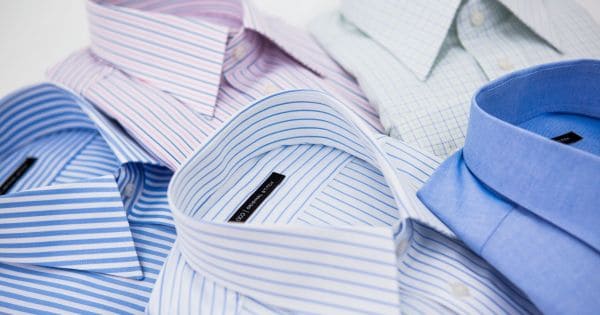
A California apparel company, Original Stitch, attempted to bridge this gap. Their service let users design button-up dress shirts, and they once tested a feature claiming to produce accurately sized shirts from just a photo of a similar garment.
Given that online clothing shoppers often cross their fingers hoping for a proper fit, the idea was clever. Even when a shirt arrives poorly sized, how many of us actually return it instead of grudgingly keeping it to avoid the hassle of shipping it back?
Though promising on paper, as Bloomberg’s Pavel Alpeyev and Jason Clenfield discovered, Original Stitch’s AI-driven shirt ambition fell short. Their first order was “too tight around the chest and too long in the sleeves.” The second, presumably using a better photo, had similar flaws. The third couldn’t even be buttoned. While some folks wear shirts open, if you buy one expecting to button it, the inability to do so is understandably frustrating.
A Stitch in Time
Unsurprisingly, once the service’s failures became clear, it was discontinued. By December, when the company shut it down, founder Jin Koh admitted to Alpeyev and Clenfield that the service was obviously “still in beta.”
Koh is now refining the computer-vision software behind the service, with a possible release later this year. Instead of a single photo, the new version will require three: one of the desired shirt, one of the wearer’s chest from the front, and one from the back.
For users, this means a bit more effort than the original service (imagine asking a friend to snap a picture of your back). If it works, the ability to order custom-fit clothes online could be highly attractive—especially for those who dread store visits and dressing room try-ons.
We’ve long known automation will reshape many industries, but who would have guessed that tailors might be replaced by robots?