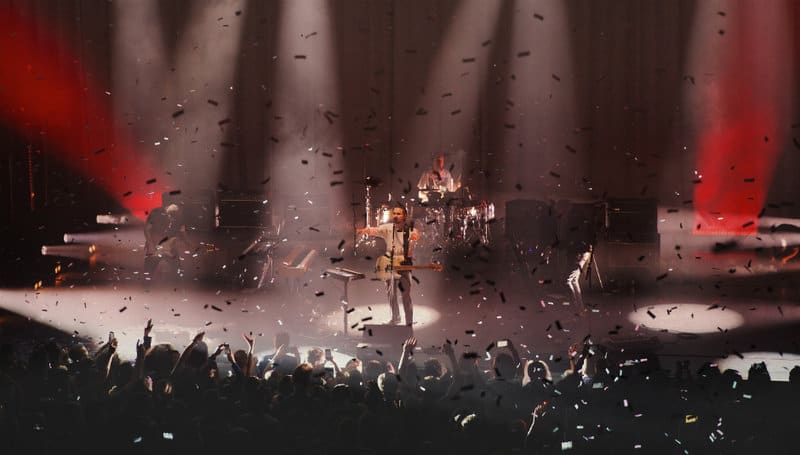
Eurosonic Noorderslag stands as the continent’s biggest showcase gathering. Founded in 1986, it has earned a reputation as the veteran of showcase festivals and serves as an indispensable launchpad for any new act hoping to break into the European festival landscape.
In the fourteenth edition of our series on organizing music festivals, DiS went behind the scenes with Ruud Berends, who oversees International Sales and Marketing for the event, and Robert Meijerink, the primary artist booker.
How did you first become involved with Eurosonic?
Robert Meijerink: My first year was 2006. I took over from the previous booker. Initially, I handled artist submissions, which run from May 1 to September 1. Around mid-November, I was asked to assemble the program for January 2007, leaving me just two weeks to book all those acts!
What was your background prior to working for Eurosonic?
Ruud Berends: Between 1980 and 2000, I worked as a European and international booking agent. After that, I joined Eurosonic Noorderslag when it was much smaller—around 600 delegates. We gradually built it up to what it is now. Even today, this is a freelance role among several other projects. I'm also involved with the IFF (International Festival Forum) in London, Dutch Impact here in the Netherlands, and the Eastern European Music Conference.
RM: My day job is promoting in Nijmegen. I've run a venue called Doornroosje there since 2003 and still do.
When you first became involved with the festival, did you anticipate it becoming as big as it has?
RB: No! You can dream, but this event is very different from many others. It’s non-profit, and we primarily promote relatively unknown European talent while facilitating exchanges among sister festivals, major radio stations, and media across Europe. That’s our core mission.
What do you enjoy most about being involved with Eurosonic?
RM: It has evolved significantly over the years, but it remains a major platform for new artists and a non-profit organization aiming to highlight what’s happening throughout Europe. We strive to show diversity—not only in musical genres but also in the countries we invite to showcase their acts. We want people to realize there’s great music coming from places like Estonia and Finland—countries not typically seen as at the forefront of any music scene. That’s always been our goal, and we’ll continue it in the future.
Who do you see as the festival’s main competitors?
RM: I don’t think we have any main competitors because there are so many showcase events nowadays. All the other larger ones have a completely different approach to Eurosonic. They accept artist submissions from anywhere in the world, whereas we focus specifically on Europe—that’s significant to what we do. So because we’re unique, I don’t see us having a real competitor.
RB: I don’t know any other festival that’s non-profit or solely focuses on relatively unknown European artists. Most are commercial models, whether small or big, with a showcase element.
Do you think the festival market has become saturated in recent years?
RM: Maybe, but I don’t think that has anything to do with headliners. We’re concentrating on emerging acts—artists still in the very early stages of their careers who could benefit from a showcase. Acts at that level need this, and we like to see ourselves as a starting point for many emerging artists. I think it’s important for festivals to book not only young acts from their own countries but also young acts from abroad.
When do you start booking acts for the following year’s festival?
RB: Sometime last year!
RM: Officially, it begins during the submission period from May to September, but my ears are open all year round. I spoke to some people this morning who already gave me suggestions for next year’s lineup. So the first CDs for next year are on my desk, and the first emails are in my inbox. It’s a continuous process. My job is to visit as many showcase festivals around Europe throughout the year as possible.
RB: We’re already planning two years ahead. So there could be changes to the conference and more partners involved in the not-too-distant future. I think it’s been a natural development over time since the festival started.
What changes do you anticipate happening in the future?
RB: We’re very much a natural and organic organization. Eurosonic wouldn’t exist without such an amazing crowd of delegates and artists. If you have the right people, it’s up to us to listen to their suggestions and make them happen if we can. That’s essential. We changed some networking events from last year, and you can already see the difference walking around the building (De Oosterpoort). We doubled the level of food and drink provided. When people are comfortable, they want to come here and usually end up doing great business. Aside from that, it’s quite ridiculous how underpaid artists are, and it’s our responsibility to do something about that in the future—so that’s on the agenda. It’s hard to predict, especially technological changes.
Is there specific criteria bands need to meet to be selected to play Eurosonic? For example, do they need to have a team (agent, manager, label, PR) already in place?
RM: I think it really makes sense for them to be part of a professional environment. For me, Eurosonic is all about the music, but at the same time, it doesn’t make sense to invite a random band—no matter how good they may be—if there’s no one on the ground taking care of the business side. You don’t necessarily need an agent, but it would be very helpful to have someone who can look after your business, whether that’s a manager, publicist, or even just your best friend—someone in place to handle the promotional side.
The number of acts and participating venues has grown considerably over the years. Do you see any potential for further growth in the future?
RB: We don’t think it’s important how many artists, venues, or delegates we have. We measure ourselves on results for the performing artists, and if we do that with 3,000 people or 5,000 people, it doesn’t really matter.
RM: We always say no to this because we feel it’s very important to remain in the city of Groningen. We have the opportunity to grow, but we don’t feel it really needs to in terms of numbers. We could book more acts, but that could dilute the numbers at each show. We feel it’s important to have as many overseas bookers, agents, and journalists as possible at each event. It’s already difficult enough for them to see every act they want. Making it bigger wouldn’t improve that. Also, from the artists’ perspective, it’s important they get as much media coverage and as many festival bookings as possible from Eurosonic so they have a return on their investment. We already have over 300 acts. Any more would be too many.
Do you feel that Groningen has a better infrastructure for this kind of event than anywhere else in the Netherlands?
RB: Yeah, definitely. It has between 30 and 40 venues, all within ten minutes’ walking distance of each other. So the infrastructure is perfect. It’s also a very beautiful city with a high percentage of young people. If we moved Eurosonic to somewhere like Amsterdam, London, or Milan, for example, I think we’d create a lot of problems. Sure, those cities also have venues close to one another, but big cities tend to be less interested in what we do, whereas Groningen has always been very supportive and cooperative of Eurosonic.
Denmark is the focus nation for Eurosonic this year. How is that decided every year?
RB: Basically, we know how many European countries there are within the music exchange framework, and we are in regular contact with all of them, so we try to give everyone the opportunity to be the main focus here. We don’t have a budget or offer them a fee. It’s a case of going with the flow and seeing what they have to offer. Our main mission is to highlight that country’s music scene and hopefully get more music professionals coming to Eurosonic from that country so they can learn to network on a European level.
RM: We have this conversation every year, but it basically comes down to which partnerships develop over the next twelve months. For example, the EBU (European Broadcasting Union) has 32 different broadcasters who send in their acts, which we go through and then confirm if we consider them suitable for the festival. They’re booked in collaboration with the EBU, and then we discuss which country we’ll specifically focus on with our festival partners, because it needs to make sense for all parties. Also, that particular country’s Music Export office has a very specific role in this. We initially talked about Denmark a couple of years ago and eventually agreed in 2018 they would be the focus nation.
What’s been your proudest moment since working on Eurosonic? What has given you the most satisfaction?
RM: It happens every year. People are excited about 15 or 20 acts, and I always get excited when other people are excited! When someone tells me they discovered this great band from Estonia or Finland at Eurosonic, that gives me immense satisfaction.
RB: It’s a combination of factors for me. I’m proud we have 4,000 people here, and everybody’s here for the right reasons. There are no arguments or fights. Bookers, agents, managers, labels, artists, the media—they all live on their own little planets, yet we couldn’t do this without them. We think it’s important that they all get to know each other, share information, become friends, and work together to make the music industry a bit more of a real industry. They’re all here because they believe in the concept and idea. Primarily because they’re all music lovers. A lot of us have known each other for a very long time, and besides all the corporate bullshit that comes with the territory, we all do this for the love of music.
Eurosonic has a reputation as the leading showcase event in Europe and, ultimately, is where a lot of festival lineups are put together. I guess that must resonate greatly with you too?
RB: In a way. I guess you can add South By Southwest and the IMC (International Music Conference) to that list as well. Eurosonic started 32 years ago, so I think it’s fair to say a lot of people have copied the model, which is fine. But in a different way, as they’re mostly commercial. It’s difficult to say where it’s going to go, but I think we’ll see a lot of changes over the next 5–10 years. The model of conferences will change. I don’t think it makes much sense to look too far into the future because nobody knows what will happen.
Are there any new artists you’re particularly excited about at the minute? Any you’d recommend to Drowned In Sound and its readers?
RB: That really depends on what you like.
RM: I’m really excited about Iguana Death Cult. I think they’re ready to break right now. Also Pip Blom. I really like her. I think it’s a great time for Dutch music in general. There are so many talented musicians around right now. Lots of young people making very exciting music. Altın Gün are another band I’m really liking right now, and there’s one more I should mention called The Mauskovic Dance Band, who are incredible too. They’ve just signed to a UK label, Soundway.
The festival has gotten so big there’s now also a fringe festival running in non-participating venues alongside it. Does it work in tandem with Eurosonic? Is it something you endorse?
RM: We set up Eurosonic Extra between the daytime and evening programs to make people aware that we have events going on all around the clock. So we have the conference and in-store events at Plato Records and The Coffee Company during the daytime, then the main program in the evening, with Eurosonic Extra taking place between 5 and 8 pm. So there is a lot happening all around town. Some of the other fringe events have been going on for a number of years, and it’s great to see people promoting Dutch underground music, but it doesn’t form part of Eurosonic.
What advice would you give to someone that wants to start their own music festival?
RB: Find a niche. Our niche is providing a platform for unknown European artists using a non-profit model, and even to this day, it still amazes me that we’re able to book around 350 acts every year. But then that’s the name of the game, I guess.
RM: I think you need a heart and a soul to organize a festival. Not yourself, but you have to put it into the festival. It’s so much more than just building a lineup. Eurosonic is very different from most other festivals. It’s just about Europe and isn’t primarily focused on either mainstream or underground acts. It goes everywhere. We also book exotic acts alongside those that could appear in the charts anytime soon and ones who might remain in the underground forever. Those kinds of acts belong to the underground, and they should be there, but at the same time are still worth checking out and discovering. For me, as a booker, it’s very important to keep that balance because I’d like to think we have a blueprint that’s attractive to all of our visitors.
For more information on Eurosonic Noorderslag, visit their official website.
How To Organise A Music Festival #1 Best Kept Secret
How To Organise A Music Festival #2 Green Man
How To Organise A Music Festival #3 Beacons Metro
How To Organise A Music Festival #4 Pop Montreal
How To Organise A Music Festival #5 SWN
How To Organise A Music Festival #6 2Q
How To Organise A Music Festival #7 Tallinn Music Week
How To Organise A Music Festival #8 SPOT Festival
How To Organise A Music Festival #9 The Great Escape
(How To Organise A Music Festival #10 Download
(How To Organise A Music Festival #11 Beyond The Tracks
(How To Organise A Music Festival #12 Lowlands
(How To Organise A Music Festival #13 Zandari Festa