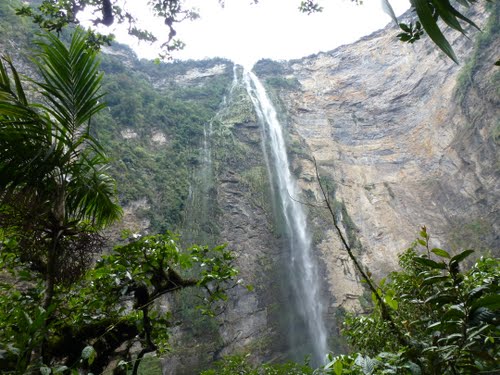
Many regions around the globe can truly be called a valley of waterfalls.
California's Yosemite Valley, Switzerland's Lauterbrunnen Valley, and the area near New Zealand's Milford Sound are prime examples. However, these famous spots tend to get packed with visitors, especially during peak travel times.
For those seeking to escape the throngs while still marveling at spectacular waterfalls, an alternative exists. In Peru's Bongará Province—a region roughly the size of Rhode Island—you'll find some of the planet's highest and most breathtaking waterfalls clustered within just a few kilometers of each other. Here, towering falls like Gocta and Yumbilla share the landscape with lesser-known treasures such as Chinata, Aspachaca, and Lindapa.
Beyond the waterfalls and numerous hiking paths, this area is a paradise for birdwatchers. The Andean Cock-of-the-rock and the Spatuletail Hummingbird are just two of the many exotic species inhabiting the cloud forests that surround these cascades.
Reaching each waterfall requires a trek through the mountainous jungle of northern Peru—some routes are short and easy, while others are long and demanding. The hike to Gocta Falls can be done partly on horseback, but overall, this region suits those who love hiking, appreciate nature, and have a solid level of fitness.
Discover a Less-Crowded Waterfall Haven for Your Summer Getaway
Gocta Falls: The Classic
Among all the waterfalls in Bongará Province, this is the most renowned. This two-tiered cascade plunges 771 meters and can be admired from several viewpoints across the region.
It was from one such lookout that German national Stefan Zimmendorf first noticed it in 2006. He didn't actually discover it—local residents had always known about it—but he introduced it to a global audience. He helped drive the measurement of Gocta Falls, which eventually led to its recognition as one of the world's tallest waterfalls and spurred tourism development in the valley.
Today, you can visit this stunning waterfall via a 5-kilometer hike from either Cocachimba or San Pablo de Valera. Both starting points lead to the falls, but each route ends at a different spot. Starting from Cocachimba, you'll follow a trail on the right side of the valley, arriving at the base of the second and taller drop (540 meters). From San Pablo, you'll take a path high on the left side, finishing at the bottom of the first and smaller drop (231 meters). Unsurprisingly, the valley and waterfall views from both trails are spectacular.
The 10-kilometer round trip might sound like an easy walk, but the winding paths and constant elevation changes make it quite strenuous. Sturdy footwear and plenty of water and snacks for the 5-hour hike are essential. For those less steady on their feet, horses with guides are available for hire at both villages to take you at least part of the way. You can also hire a local guide for navigation and insights. The entrance fee for either trail is 10 Soles per person.
Yumbilla: The Other
Though not as famous or frequented as its sister waterfall, this four-tiered cascade is even taller, reaching an impressive total height of 896 meters.
The starting point for visiting Yumbilla Falls is the small village of Cuispes. After paying your entrance fee (10 Soles) at the local tourism association, you can explore on your own or hire a guide.
The trailhead is about a 10-minute moto taxi ride from Cuispes' center. From there, the path winds for 3 kilometers through lush cloud forest along the mountainside. Several lookouts along the way offer valley and waterfall views, plus side trails lead to additional waterfalls. One of these, Pabellón Falls, stands at nearly 400 meters—modest compared to its towering neighbor but still very impressive by most standards.
The trail ends at the base of Yumbilla's last and most dramatic drop. It's a perfect spot to rest and soak in the scenery before heading back to Cuispes. The entire hike takes about 3 hours.
Chinata: The Hidden
Although this waterfall is visible from various lookouts in the area, very few people have actually visited it. It is a multi-tiered cascade with a total height of 580 meters.
You can hike to this marvel from either Cuispes (6 kilometers one way) or San Carlos (12 kilometers). Unlike Gocta and Yumbilla, this waterfall sees few visitors, and the trails are barely used—if they exist at all. The best way to reach Chinata Falls is to hire a local guide who knows the route and can clear a path through the dense cloud forest vegetation.
This is definitely an off-the-beaten-path adventure, suitable only for those with a sense of adventure. Not everyone can handle walking through thick vegetation on muddy, barely-there paths.
Aspachaca: The Short
With a total drop of 50 meters, this waterfall is one of the smaller ones in the area. It is easily reached via a short but steep uphill hike.
Located near the village of Churuja, roughly midway between Gocta and Yumbilla, you'll find this hidden gem. The upper part of the waterfall is visible from the village, but you can only appreciate its full height once you reach the bottom. The water falls into a beautiful natural rock amphitheater, forming a large pool perfect for swimming on a hot day.
The trail up to the waterfall is steep but not long. It's a 4-kilometer round trip that takes no more than an hour—not counting swimming and resting time at the falls.
Lindapa: The Abandoned
The tallest of this trio of smaller waterfalls—each 20 or 30 meters high—once served as a resting point on the trail between San Pablo and San Carlos but has since been forgotten by all but locals.
Since this hiking trail is unmarked and has many turnoffs leading into fields, hiring a local guide is highly recommended. From Churuja, the trail passes through coffee and dragon fruit fields until reaching grassy heights that offer excellent views of the Utcubamba Valley. From there, it's a short distance to the first and tallest of the three waterfalls.
Just before reaching it, you'll see an old stone bridge crossing the stream. This was part of the historical trail network used before the main valley road was built. Remnants of an old Tambo—a resting stop for travelers—also remain.
After visiting the tallest waterfall, you must retrace your steps and descend to see the other two. Here too, you'll find abandoned structures like benches and handrails at the lookouts. Any of the waterfalls provide a good spot for a picnic or a swim in hot weather. The entire 3-kilometer hike takes about two hours.
More Waterfalls
These five are just a sample of the many waterfalls in this province. Hundreds seem to be scattered throughout the region's valleys. Some are visible from villages, others are hidden in remote spots known only to locals, some are famous, and still others are overshadowed by their taller counterparts and remain forever unnamed.
More Information
The Valley of Waterfalls lies in Bongará Province, within Peru's Amazonas region. The best way to get there is to fly from Lima to Chachapoyas or Jaén, then take a bus, minivan, or taxi to the area. Either way, expect to spend half a day reaching your destination.
For accommodation, you can stay in one of the villages closest to the waterfalls or base yourself in Chachapoyas and take day trips. Both options work well since distances are short and travel times to trailheads never exceed 1.5 hours. You'll find lodging to suit any budget and preference, from luxury bungalows to simple rooms offered by locals.
DIY Spring Watering Can Mantel
Remember, this is a cloud forest region where rain can fall even during the so-called dry season. The wet season, with heavy rains, runs from December through March.
Travel tip shared by Irene cabanitasdegocta.blogspot.com