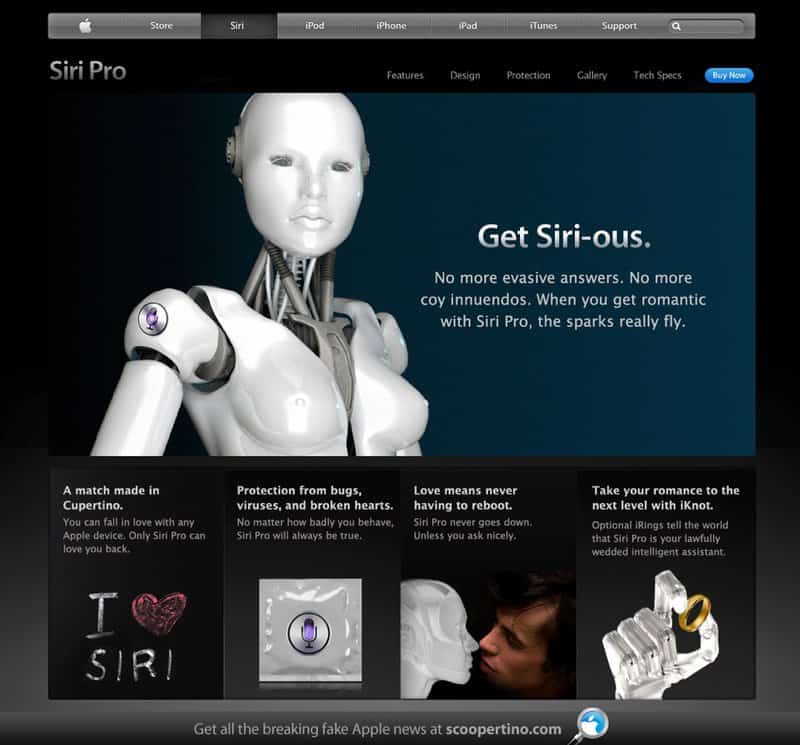
This is a contributed post by Will Hall, executive creative director of Rain.
Dear Siri,
My very first computer was a Mac. I carry an iPhone with me every single day. This piece is being typed on a MacBook Pro, adapters and all. I'm a devoted supporter, but we really need to talk.
Apple's triumphs have always sprung from putting people first. The technology has never been the point — the user has always been. It makes perfect sense that the term "UX" originated at Apple, and your achievements are rooted in that philosophy: tools crafted to serve humanity.
So when you made your debut seven years back, Siri, I was genuinely thrilled by what you represented. Voice is our most instinctive way of communicating, holding the promise of being the most human-friendly exchange with technology imaginable. Whenever cinema showcases the technology of tomorrow, speech is almost always the chosen method. In a way, you've been the thing we were anticipating for decades. Awkward in your early days, sure, but we assumed you'd grow wiser, much like a small child picking up language.
However, you've remained stuck in your earliest stage, as Amazon and Google claim what should have been yours. That has to shift. You need to reclaim your position, because I'm convinced that mastering how to deploy you properly is central to Apple's future. So, speaking as an admirer from afar, I'd like to share a few suggestions, since I'd love nothing more than to watch you thrive.
Identify your breakthrough move
Above all else, Apple wasn't the one to invent the touchscreen, the smartphone, the MP3 player, or the personal computer. What Apple has typically done is arrive somewhat after the fact with a game-changing product — offerings that established the ceiling and the ultimate potential for each of those technologies.
So when it comes to you, Siri, modest upgrades just won't get the job done. The market's reaction to your HomePod proves this — a gorgeous device, yet it falls short as a speaker that merely streams music … particularly when premium audio brands such as Sonos come with voice assistants built right in.
You have to aim higher. You need a breakthrough. What might a more advanced version look like? I suspect the solution is already in our grasp. Quite literally.
iPhone, iPod … iAssistant?
With upward of 700 million iPhones in circulation globally, you possess an extraordinary reach that could elevate society. Our phones witness more of our daily lives than any friend or object ever could. It's the final image I glimpse at night and the initial sound I register in the morning. The closeness you've been given carries an obligation to enrich the existence of whoever is holding you.
Much like autonomous vehicles let the user decide if the car should act defensively, humanely, selflessly, and so on, what if you, Siri, tapped into that privileged information to build assistants dedicated to the user's individual, bodily, monetary, or relational aims? Rather than pushing your users detergent or handing off their data to advertisers hawking detergent, you could become the inaugural assistant genuinely engineered to champion the user above everything else.
On top of that, every assistant available today is "brand-locked," requiring me to invoke the brand name of my assistant before it carries out my request. What if you were the pioneer that let users give you a name? That let them shape you in their likeness? That sounds like a grander mission, a transformative leap.
Because you'd hold a richer grasp of what users actually want, you'd be positioned to become the first "genuine assistant." While competing assistants suggest possibilities, you could foresee and act on our behalf, keeping our deeper interests at heart. You could substitute asking with discovering, picking with doing. This may well be AI's most valuable offering, and you could set the standard.
Throw the doors open
Although our iPhones are usually within reach, that's only half the picture. "Apple operates as a closed system." Everyone recognizes this, but the character of a universal assistant calls for partnership.
As Google and Amazon keep weaving in third-party products at an impressive clip, user expectations of hardware are evolving. Just as Apple's touchscreens conditioned us to expect every display to respond to touch, the wider blending of voice and hardware is instilling the belief that I, the user, can speak to "it" and "it" will answer. If you're my assistant, I require you wherever I happen to be. You need to be everywhere.
Put plainly, you have to discover ways of working with other platforms. When the iPhone launched with Google Maps, it elevated the user experience. Swapping out best-in-class integrations for weaker native alternatives doesn't put the user first. You've gained from handpicked integrations before. And this change in mindset would have done the HomePod a world of good.
Perhaps the most defining reality for consumers is their fragmentation. The era of three television networks is long gone, and so too is the era of unwavering loyalty to a single tech brand. I want to tell my Echo to order a pizza that forwards the delivery time to my Apple Watch, which taps the app in my pocket to settle the bill. I want to chat with my HomePod and have it tap into my Spotify account. I want you to coordinate my commitments across my assorted calendars, whether they're on Apple, Google, Outlook, or all of them. I want what I want, and I expect technology to be an invisible enabler. That is real assistance.
So there you have it. I'm feeling hopeful, because it appears you're heading in the right direction. But I truly long to witness you back in contention with a defining moment — one that reimagines assistance in the user's mold, one that works for my benefit, one that transitions from tiresome suggestion to effortless foresight. I want to find you in every device and every space, so that you can be present wherever I am, physically and virtually.
Thanks for hearing me out,
Will
Will Hall is the executive creative director at Rain, a digital consultancy that helps brands innovate at the intersection of marketing and technology with a focus on voice and conversational AI. He is also an adjunct professor of Design at NYU. Reach him @RainAgency.
recode.net


%22%20%2F%3E%0A%20%20%20%20%20%20%3Cstop%20offset%3D%22100%25%22%20stop-color%3D%22hsl(121%2038%25%2069%25)%22%20%2F%3E%0A%20%20%20%20%3C%2FlinearGradient%3E%0A%20%20%3C%2Fdefs%3E%0A%20%20%3Crect%20width%3D%221200%22%20height%3D%22750%22%20fill%3D%22url(%23bg)%22%20%2F%3E%0A%20%20%3Ctext%20x%3D%22600%22%20y%3D%22286.5%22%20text-anchor%3D%22middle%22%20fill%3D%22hsl(130%2052%25%2036%25)%22%20font-family%3D%22Inter%2C%20ui-sans-serif%2C%20system-ui%2C%20sans-serif%22%20font-size%3D%2224%22%20font-weight%3D%22700%22%20letter-spacing%3D%220.22em%22%3ETECH%3C%2Ftext%3E%0A%20%20%3Ctext%20text-anchor%3D%22middle%22%20fill%3D%22hsl(327%2038%25%2020%25)%22%20font-family%3D%22Georgia%2C%20'Times%20New%20Roman'%2C%20serif%22%20font-size%3D%2250%22%20font-weight%3D%22700%22%3E%3Ctspan%20x%3D%22600%22%20y%3D%22351.5%22%3EYouTube%26apos%3Bs%20So-Called%20%26apos%3BOpen%3C%2Ftspan%3E%3Ctspan%20x%3D%22600%22%20y%3D%22410.5%22%3ELetter%26apos%3B%20on%20Logan%20Paul%20Is%3C%2Ftspan%3E%3Ctspan%20x%3D%22600%22%20y%3D%22469.5%22%3EAnything%20But%20Transparent%3C%2Ftspan%3E%3C%2Ftext%3E%0A%3C%2Fsvg%3E)