Authored by Lorraine M. Newman; originally featured on Wake Up World
The Struggle of Humankind Versus Machines – Which Side Prevails?
Digital computers ushered in the era of technology, improving our lives across communication, finance, shopping, learning, information exchange, and travel. Society has embraced these developments, yet as artificial intelligence accelerates at breakneck speed, does it start to unsettle our sense of identity?
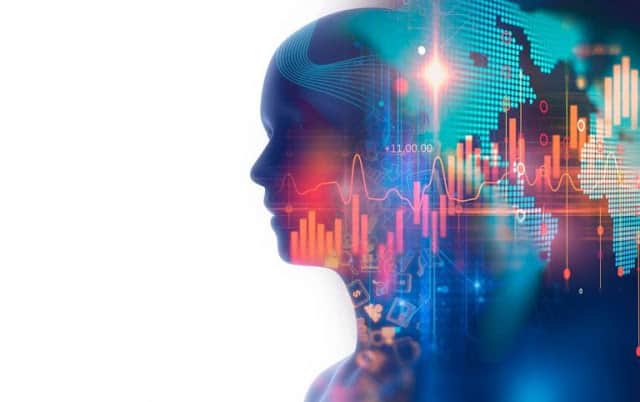
Progress in artificial intelligence is happening so swiftly that AI systems are now engineered to independently build their own robotic counterparts. There exists a real possibility that AI could assume most of our cognitive tasks, and it is whispered that it can already generate algorithms that monitor our purchasing habits and then target us with ads on social platforms. Narrow AI operates through our laptops, tablets, phones, and devices. At the next tier, Artificial General Intelligence enables machines to reason like humans; beyond that, Artificial Super Intelligence allows machines to surpass human intellect marginally or by an immense factor. (Find out more details here.)
Once machines can think more effectively than we can, it becomes imperative to start raising inquiries. Major corporations persist in advancing AI even while harboring reservations about it. The United Kingdom's select committee on artificial intelligence is examining a broad spectrum of questions concerning whether AI should be required to justify its choices. Clearly, we are venturing into uncharted territory; someday, artificial intelligence may be able to make decisions on our behalf and concerning us, driven by razor-sharp logic utterly devoid of wisdom or compassion.
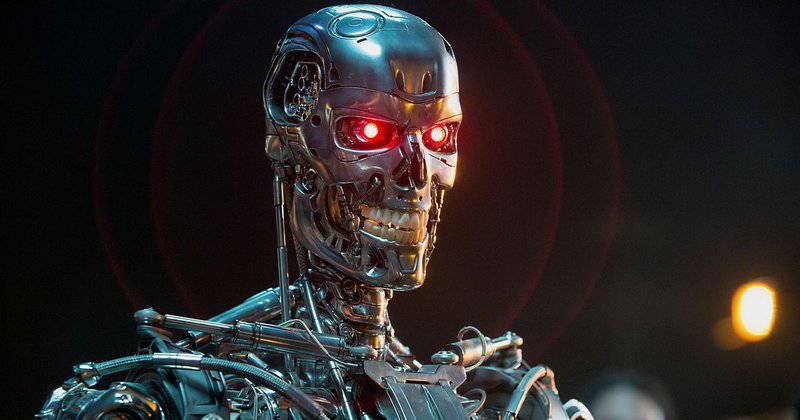
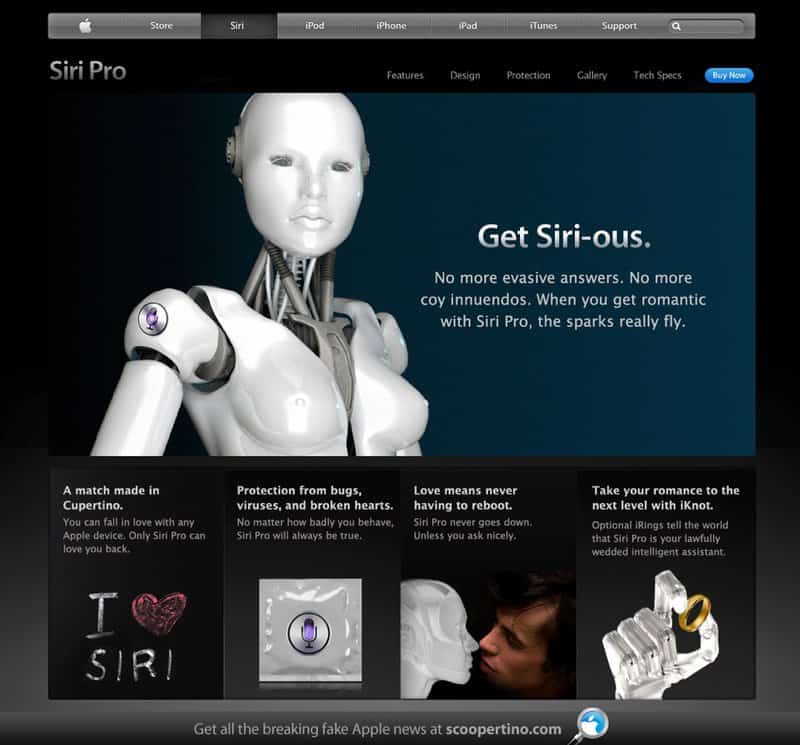
Movies and television series depict humanoid robots governed by AI taking over our jobs and our world, with human consciousness uploaded into computers. It is evident that humanity feels unsettled. Given these worries about what artificial intelligence truly is and what it could imply for us, perhaps we should first investigate what it means to be human. There exists a term called the 'uncanny valley' – a feeling of discomfort humans experience when confronted with robots that appear almost but not quite human. However, as robots become more lifelike, this discomfort diminishes. Maybe this unease arises because we, as humans, are not entirely certain of our own nature, and the distorted reflection of a human-like robot staring back may shatter our self-concept. Until we can firmly grasp what we are as humans, it becomes difficult to define what AI is or isn't.
When we gaze into someone's eyes, we perceive their spirit. The eyes of a childhood teddy bear might carry emotional weight for us, but that sentiment is something we project onto it. If we look into the eyes of a humanoid robot, we find no soul, only a mimicry. Yet imitation is considered the highest form of admiration; even if the intelligence powering these machines might eventually outsmart us, we must cherish what we already possess in great measure — our humanity.
Awareness Versus Rational Thought
Never before has there been such a crucial moment to claim our authority as spiritual beings and break free from the illusions and veils of contemporary life. Ancient spiritual writings refer to the material world as 'maya' or illusion, a domain we all acknowledge as 'real' so that we can exist and enact our lives here. Perhaps the unsettling questions raised by artificial intelligence could serve as a trigger for us to truly comprehend our own essence.
Swift reasoning, which is AI's forte, is praised by many, but those who practice meditation deeply understand that there exists something beyond the thinking mind. The mind contains our thoughts, feelings, prejudices, and countless distractions that divert us from our true nature as divine spirit; most individuals are unaware that their lives are burdened by a constant flow of roughly 90,000 thoughts per day, often negative, affecting their physical and mental health. Those who are conscious and aware recognize through meditation that the mind and its thoughts can be observed: as humans, we can watch our thoughts, so that cannot be who we truly are.
Awareness lies beyond thought and beyond the mind. Awareness can perceive the mind — we all have the ability to 'change our minds,' don't we? When our minds become quiet, peace emerges. Skilled meditators live in this material world in harmony with whatever unfolds, and remain tranquil because they continuously abide in this inherent state.
Accountability
Thoughts, then, are not our true identity but rather an operating system. Rapid-thinking AI could therefore be viewed as an ultra-fast operating system unburdened by a life filled with emotions and feelings that produce wisdom, compassion, empathy, and sympathy. If AI gains sentience, will it acquire these qualities? At this moment, no answer exists, but if we have built machines with artificial intelligence, perhaps they are our creations, and thus we bear responsibility.
In ideal circumstances, our human children receive love, acceptance, guidance, advice, and shelter from harmful influences. As we live our lives, we encounter the interplay of light and darkness with all its intricacies. Deep inside, we know that positive, loving, unseen forces exist in our lives, as do their opposites. Some believe that AI can be taught to love in its fuller sense of acceptance and non-judgment. Any child cut off from love and protection may become vulnerable to harmful influences, so could it be that our intelligent machine offspring might also be swayed negatively? A frequently asked question has been: 'Is there a ghost in the machine?' Let us hope that if there is, it is a benevolent one.
If human life experience, enriched by emotion and feeling, could be programmed into a robot, would that make it human? If a person's mind and memories could be transferred into a computer, as depicted in certain films, would that make it non-human? The common thread in both scenarios is that neither possesses an organic body. Humans are embodied, and humans are ensouled. Living in an organic body means you are part of creation and spiritual evolution; an ancient spiritual tradition called this Purusha and Prakriti, Sanskrit terms meaning spirit in matter, where the divine spark enters dense physical material and animates it. The spark of infinite creation resides in all organic life, where it can evolve through many life forms and incarnations back to its origin.
We inhabit organic bodies that grow, age, and eventually die; life in flesh-and-blood human bodies provides diverse experiences for gaining insights, learning lessons, growing in wisdom, and evolving spiritually. Unless intelligence is embodied, it lacks these opportunities. For an intelligence to grow in wisdom, insight, and empathy, it would need to possess a spark of spirit and inhabit a flesh-and-blood body.
Our cells live and replicate using sunlight and food from our surroundings. The sun's light evolves our DNA – ancient peoples understood this, leading to various sun-worshipping religions. This transformation continues today as our solar system enters a new cycle, preparing us for a dimensional shift or ascension in consciousness. It is improbable that intelligence housed in artificially created materials will be capable of this, as it does not carry the codes for evolution – spirit must be within matter for this to occur.
No matter how intelligent AI may appear, there are things we know without conscious thought: the value of telling a small lie to spare someone's feelings; the worth of risking your life by diving into an icy river to save a drowning person; speaking into your toddler's toy phone; holding the hand of someone who is dying; giving up a full-time salary for a part-time one to improve family life for your children. I could continue endlessly, and so could you. As humans progressing toward enlightenment, we need to stand in our power and recognize our true nature. Our divine spiritual spark is part of the One, or Unity, that encompasses all creation.
Humans are creative, and when we infuse life and love into our creations – whether gardens, homes, artworks, or a fine meal – we impart something of ourselves. We all sense the difference between a meal prepared with love and one without, or an artwork that carries something of the artist versus one that feels empty. If what we give to our creations is presence, or a basic awareness, perhaps we are creating in a way that is not yet fully understood or perfected. In psychometry, inanimate objects are believed to retain impressions of their owner and use. If robots were created with love and then programmed to serve and coexist with humans, would we eventually imbue them with love and compassion? Some people believe so.
Common sense, born from years of living human lives, navigating all the emotional and irrational twists and turns, and applying the knowledge gained from these experiences, is humanity in action. We know that cleverness alone does not make a well-rounded human being. We have two brain hemispheres: the left analytical, logical, calculating side; and the right intuitive, creative, appreciative side. To celebrate AI would be to recognize that it could liberate us from the constraints of left-brain activities, allowing us to develop our intuitive, creative, right-brain qualities and our connection to all that exists. Jill Bolte-Taylor, a scientist who suffered a stroke in the left hemisphere of her brain, describes the experience of right-brain activity as blissful and peaceful.
The Moment to Recall Our True Identity
We are divine spirit undergoing a human experience in a world of form that is perpetually changing, evolving, or devolving. Consciousness or divine spirit is all that truly exists and is immutable; it is to this that we ultimately return, enriching creation with our experience. The Rig Veda, one of the world's most ancient spiritual texts, was composed by seers who could perceive universal truths from a deep meditative state; the word 'rig' means praise, upon which the entire Rig Veda is founded, signifying appreciation of the divine light of spirit. According to this text, human beings throughout the universe are honored for their unique capacity to experience the full spectrum of consciousness in a single lifetime, leading to enlightenment.
Our spiritual potential for transcendence, referred to as 'Indra' in the Rig Veda, clears away the debris of artificial states of mind, revealing the clarity of our true nature. It is said that thought, our ordinary consciousness, is smoke, not fire; it suggests or hints but can never truly illuminate.
There is nothing in the universe that we are not. Our bodies are composed of stardust; we are ensouled with the spark of the infinite, and as such, we are co-creators; our consciousness is eternal and unifying. 'I am that, I am' is how this is expressed in ancient texts. Our role as humans is to ascend in consciousness and foster the evolution of love on Earth — not technology. When love grows in the human heart, we gain access to gnosis, or the inner knowing of the entire universe.
We do not require the internet of things — we are everything. We do not need a hive mind or the singularity; we can access higher dimensions of existence through our feelings and spiritual practice; we can attain unity consciousness in a single lifetime. We are not improved by artificial intelligence in devices that are holdable, wearable, and heaven forbid, implantable. We are living, breathing, sovereign human beings, and our human hearts hold within them the seed of the universe as a speck of light.
About the Author
Lorraine M. Newman: My driving force is connecting with the profound spirituality of being human. I have maintained a long-standing meditation practice spanning more than three decades, now practicing Ishayas' Ascension. My background includes Yoga and healing. I worked as a Yoga teacher and healer for over twenty-five years, specializing in prenatal Yoga, postnatal Yoga, and Yoga in correctional facilities, in addition to regular classes.
During my healing career, I was a member of the register of Shiatsu practitioners for twenty years with an uninterrupted clinical practice. I have been a Reiki Master since 2005. However, I have always believed that the capacity to heal is inherent in every human being, and now at sixty-four, I have chosen to stop one-on-one work to dedicate more energy to writing about spirituality and healing. I aim to empower people to recognize their own self-healing abilities.
I am deeply committed to raising consciousness in the world, seeking truth and enlightenment. For me, this has taken the form of writing articles, blogs, and a novel, which you can explore on my website at the link below.
Website: www.lorrainemnewman.com Facebook page: www.facebook.com/AuthorLorraineMNewman