For fans, fantasy football participants, and budding analysts, mastering the interpretation of NFL game statistics is essential. In the modern, data-centric world of football, moving past simple box scores reveals underlying patterns, helps forecast results, and deepens your overall understanding of the sport.
This tutorial covers fundamental metrics, sophisticated analytical tools, and professional techniques for examining football data. Whether you're getting ready for a fantasy draft or aiming for a competitive advantage, acquiring these abilities will significantly improve your NFL journey.
Sourcing Trustworthy NFL Game Information
A glowing digital NFL scoreboard is shown above a desk filled with detailed statistics sheets and an open football database. | Generated by Google Gemini
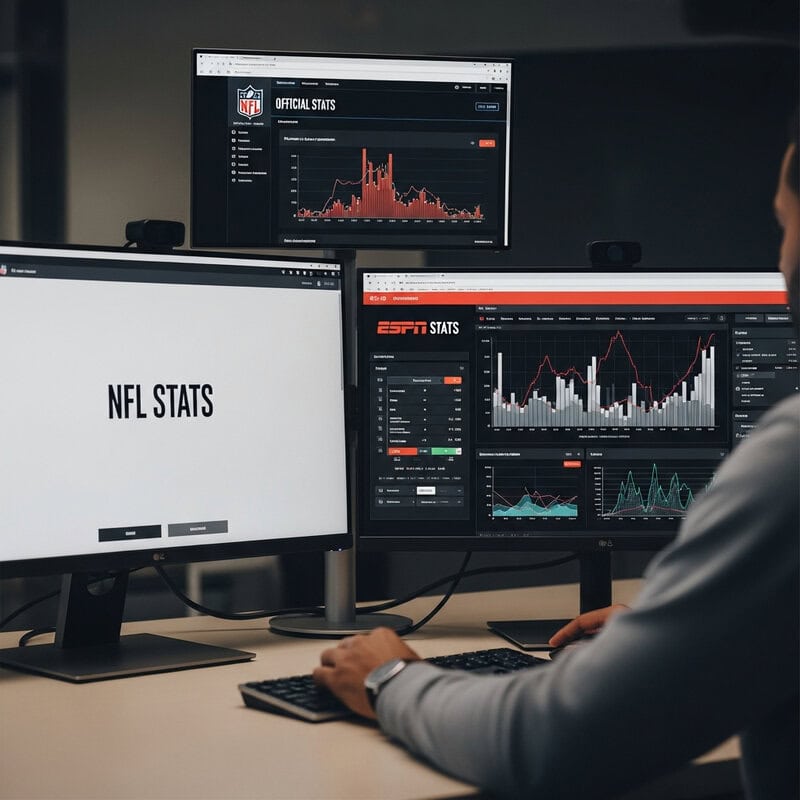
Before starting any analysis, you must obtain accurate, current NFL game data. Use official, reputable sources to reduce errors and guarantee dependable findings. The NFL's own official statistics portal offers thorough team and player information, while ESPN's NFL stats section provides easy-to-navigate tables and historical data. For more complex analytics, turn to Football Outsiders. Always confirm data uniformity across several sources to preserve the accuracy of your analysis and prevent deceptive conclusions.
Grasping Essential Statistical Groups
A vibrant football statistics dashboard displays a colorful passing chart along with comprehensive rushing stats and performance categories. | Generated by Google Gemini
To properly evaluate NFL games, you need to understand core statistical categories. Passing yards and rushing yards indicate offensive capabilities, while receiving statistics highlight key playmakers. Turnovers, such as interceptions and fumbles, frequently shift momentum and affect game results.
Third-down conversion rates show a team's capacity to maintain drives, and red zone efficiency measures scoring effectiveness under stress. Defensive metrics, including sacks and tackles for loss, demonstrate disruptive plays. Each statistic offers distinct insights into team and player performance. For a detailed explanation of these categories, check out NFL Operations: Stats Glossary.
Evaluating Team Offense and Defense
A dynamic NFL infographic compares offensive power against defensive strength, showcasing team stats with bold charts and icons. | Generated by Google Gemini
Assessing team offense and defense requires more than just surface-level numbers. Examine offensive efficiency by looking at yards per play, points per game, and explosive plays. For defense, consider metrics such as yards allowed per play, takeaways, and the opponent's third-down conversion rate.
Sophisticated analytics, like DVOA (Defense-adjusted Value Over Average), compare team performance against league averages, revealing genuine strengths and weaknesses. Use these insights to determine where teams excel or falter and to spot mismatches in upcoming matchups. For a more detailed examination of team comparisons, visit TeamRankings NFL Stats.
Examining Player Performance Metrics
A detailed chart emphasizes a quarterback's outstanding rating and performance stats from the most recent football season. | Generated by Google Gemini
Evaluating individual player impact involves looking at specific performance metrics. For quarterbacks, passer rating and yards per attempt reflect efficiency and playmaking skill. Running backs and receivers are assessed using yards per carry, yards after catch, and touchdown totals. Defensive players distinguish themselves through tackles, sacks, interceptions, and forced fumbles.
Advanced statistics, such as those from NFL Next Gen Stats, provide deeper insights, including separation distance for receivers or pressure rates for pass rushers. By comparing these figures across various positions and games, you can measure a player's true contribution and future potential.
Applying Advanced Stats and Analytics
A detailed EPA chart and DVOA graph illustrate advanced football analytics, emphasizing team efficiencies and key statistical trends. | Generated by Google Gemini
To achieve a real advantage in NFL analysis, incorporate advanced metrics such as EPA (Expected Points Added) and DVOA (Defense-adjusted Value Over Average). EPA measures the effect of each play on a team's expected points, providing context that goes beyond simple yardage.
DVOA compares a team's performance to league averages, adjusting for game situation and opponent strength. These analytical tools reveal efficiency trends and expose hidden strengths or weaknesses. For more on these advanced stats, refer to ESPN’s NFL Advanced Stats and Football Outsiders DVOA.
Recognizing Trends and Patterns
A dynamic dashboard displays NFL stats trends, with colorful graphs highlighting emerging patterns and key insights in performance data. | Generated by Google Gemini
Identifying trends in NFL statistics is crucial for predicting future results. Monitor data across multiple games or seasons to reveal team tendencies, such as frequent running on early downs or aggressive fourth-down play-calling. Recognizing player hot streaks—for example, a receiver consistently posting 100-yard games—can indicate upcoming breakout performances.
Use visual tools and historical data from sites like Pro Football Reference and TeamRankings NFL Trends to examine these patterns. Early detection of statistical shifts helps you anticipate changes in team strategy or player output.
Illustrating Your Discoveries
Visualizing NFL statistics with charts and dashboards simplifies analysis and highlights key performance trends. | Generated by Google Gemini
Converting raw NFL stats into visual formats makes complex information much easier to understand and share. Employ charts and graphs to emphasize comparisons, trends, and standout performances. Tools like Tableau Public and Microsoft Excel allow you to build interactive dashboards, heat maps, and line graphs for analyzing games or entire seasons.
Effective visualizations not only clarify your conclusions but also make presentations more engaging for your audience. Try different formats to best highlight the insights you've discovered in your NFL stat analysis.
Using Insights for Game Tactics
A detailed NFL playbook is open next to a laptop, surrounded by fantasy football notes and strategy charts. | Generated by Google Gemini
After analyzing NFL stats, use your findings to improve predictions, refine strategies, and gain an advantage in fantasy football. Employ statistical trends to forecast game outcomes, identify favorable matchups, and anticipate coaching adjustments. For fantasy players, spotting undervalued or trending athletes can be a game-changer.
Apply advanced analytics from sources like FantasyPros and numberFire to optimize lineups and make informed waiver wire decisions. Integrating data-driven analysis into your strategy ensures more confident choices, helping you outperform casual fans and competitors alike.
Final Thoughts
A detailed NFL analysis summary with charts and data insights displayed on a tablet, concluding the football season’s trends. | Generated by Google Gemini
Becoming proficient in NFL stat analysis involves collecting reliable data, understanding essential metrics, evaluating team and player performance, using advanced analytics, spotting trends, and visualizing results. By following these steps, you'll make smarter predictions and strategic decisions, whether for fandom or fantasy success.
Continue refining your analytical skills through regular practice and by exploring deeper resources like Pro Football Focus and Sports Reference: Football Analytics Resources. As you keep analyzing games like a professional, you'll develop a richer, more informed perspective on every facet of the NFL.