Contemporary society displays thanatopathy—a fondness for “virtual death,” evident in portrayals of demise and monster slayers found in books, movies, and even store aisles. This trend highlights a crisis within humanism and anthropocentrism, along with a revolt against logical thinking. So why does our modern culture have such a fixation on Monsters?
Examining the extensive scholarship on vampires gives the sense that certain critics share the fans' excitement about vampire virtues and express compassion for solitary zombies.
Ever since Rene Girard introduced his framework, the notion of the monster as a scapegoat has been applied to various marginalized communities. The core of Girard's theory is that the victim turned scapegoat bears no responsibility for the offenses attributed to them.
The concept of the monster representing the marginalized, the subjugated, and the oppressed was further explored in the writings of Jacques Derrida, Gilles Deleuze, and Pierre-Felix Guattari.
Yet their attention shifted from ethnic minorities or migrants to vampires and ghosts.
Within deconstructivist discourse, the vampire serves as a disruptor of bourgeois society, the marginal “Other” that defines crucial symbolic boundaries for the community. The notion of the vampire as a rebel and an outcast has gained significant traction in cultural studies.
The foundational idea is that the monster symbolizes the “Other” and merits compassion and respect for its dignity. Monsters and monstrous actions should be embraced and understood from within, according to their own conceptual framework.
The Silence of the Lambs , 1991. American psychological horror photo: mentalfloss.com
The dilution of the Other concept—originally signifying persecuted marginals and the oppressed, with implications of cultural and political tolerance—has become a key method for “normalizing” murderous monsters. The monster is the “Other,” it is “our inner nature.” Audiences are encouraged to experience fictional worlds through the perspectives of vampires, zombies, cannibals, and serial killers, empathizing with monsters rather than their victims.
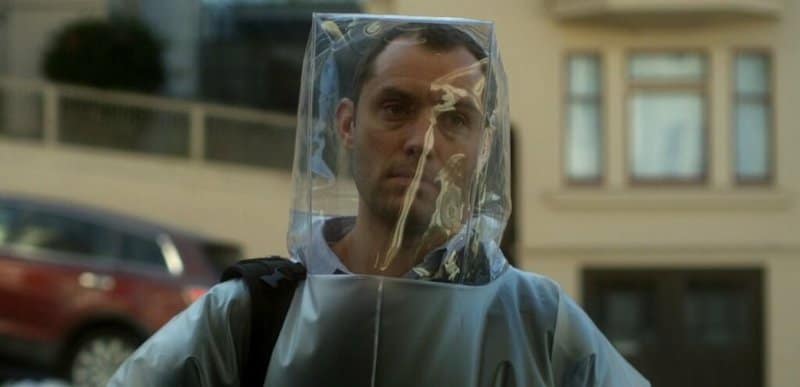
Joker is a 2019 American psychological thriller film
During the 1990s, cannibalism was still regarded as a grave threat to civilization, considered a paramount value. By the early 2000s, following the “turn to monsters,” cannibalism began to acquire appealing qualities.
As a result of this shift, the taboo against eating humans was challenged. Perhaps this is what made the image of a vampire, cannibal, or serial killer so compelling to mass audiences.
What are your thoughts on monsters? Are we gradually accepting them? Will future generations grasp the distinction between “good” and “evil”?
Featured image on looper.com