by Dara Kerr
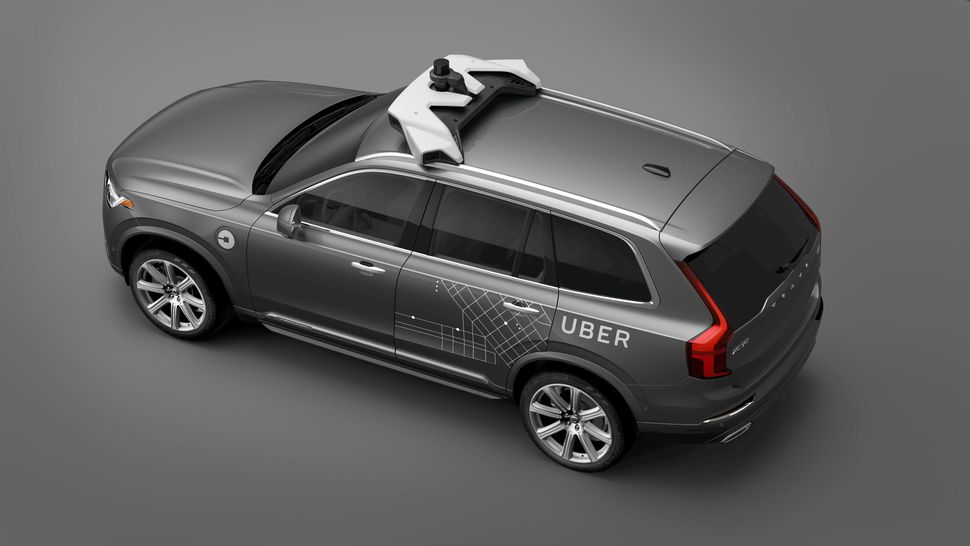
Uber teamed up with Volvo to develop autonomous vehicles. The XC90 pictured above is the same model used in the deadly accident that occurred in Tempe, Arizona. Volvo
Sunday represented a pivotal moment for autonomous cars. For the first time ever, a vehicle operating in full self-driving mode struck and killed a pedestrian.
The incident took place at 10 p.m. in Tempe, Arizona, where the ride-hailing firm Uber had been transporting passengers in driverless cars for over a year.
Elaine Herzberg, aged 49, was pushing her bicycle along a four-lane roadway and had begun crossing when a gray Volvo operated by Uber hit her at approximately 40 mph, according to local law enforcement. Herzberg is believed to have been homeless. She was declared dead upon arrival at the hospital.
Even though the car was driving itself, Uber’s vehicle operator Rafaela Vasquez, 44, was seated in the driver’s seat.
“Our investigation so far has not revealed any clear evidence that the car was decelerating significantly,” Tempe Police Sergeant Roland Elcock stated during a Monday press briefing. The police are “working to determine who bears responsibility and how we can improve safety,” he added.
Nearly every automaker worldwide — including General Motors, BMW, Ford, Tesla Motors, and Toyota — has announced plans to introduce self-driving cars within the next few years. Several Silicon Valley heavyweights like Intel and Google have also poured years of effort into developing the necessary technology. The selling point: enhanced safety, as these vehicles rely on software and sensors that allow them to “see” and respond to their environment supposedly faster than humans can.
Investigators from the National Transportation Safety Board inspect the Uber car that was part of Sunday’s deadly accident in Tempe, Arizona. National Transportation Safety Board
Earlier this month, Uber also launched regular operations of self-driving trucks hauling freight in Arizona, following the completion of its testing phase. These trucks always carry a safety operator who holds a commercial driver’s license.
For the most part, testing of the technology has demonstrated that the cars are safe. However, autonomous technology remains a work in progress. The vast majority of car tests have not taken place on public roads, and the vehicles are still learning how to drive. Sunday’s fatality has led some to question whether these cars should be allowed on public roads at all.
“This is their vehicle — they placed it on the road, and they are accountable for ensuring it is safe,” said consumer attorney Neama Rahmani, who is not involved in any legal proceedings related to the accident. “Uber should not roll out any of this until it has been thoroughly vetted, tested, and proven 100 percent safe.”
Prioritizing Safety
This was not the first instance of a self-driving car being involved in a crash.
Google reported an accident with one of its vehicles in March 2016, and there have been at least three collisions involving Teslas in autopilot mode, one of which was fatal — though Tesla warns owners that autopilot is not fully autonomous. One of Uber’s cars was involved in another crash in Tempe last year, but no serious injuries were reported. And just last week, an Uber self-driving car in Pittsburgh was involved in a collision with another vehicle.
Uber’s cars have also experienced several near misses in Pittsburgh, including reports of fender-benders where vehicles went the wrong way down one-way streets and disregarded traffic signals, according to Quartz. No injuries have been reported.
Within hours of Uber launching its autonomous vehicles in San Francisco in December 2016, one ran a red light. A dashboard camera video of the incident, captured by a Luxor Cab taxi, shows a self-driving Volvo SUV speeding through the light long after it turned red and coming dangerously close to a pedestrian.
“Sadly, this is a reminder of the risks involved in rushing to put more and more self-driving cars on public roads before we are certain they are safe,” said David Friedman, director of cars for Consumers Union, the advocacy arm of Consumer Reports. “The promise of self-driving cars is that they can prevent fatalities, but this tragedy makes clear they still have a long way to go.”
Current Developments
Following Sunday’s fatality, some regulators are beginning to question whether driverless cars are ready for public roads. Both the National Transportation Safety Board and the US Department of Transportation’s National Highway Traffic Safety Administration have confirmed that they have dispatched teams to Tempe to investigate the crash alongside the local police department.
“The investigation will examine the vehicle’s interaction with the environment, other vehicles, and vulnerable road users such as pedestrians and cyclists,” the National Transportation Safety Board stated.
The NHTSA said that, in addition to sending its Special Crash Investigation team, it is also in contact with Uber and Volvo, as well as federal, state, and local authorities, regarding the incident.
Democratic Senator Edward Markey of Massachusetts has also issued a statement saying he is committed to working with the Senate on creating autonomous vehicle legislation that includes safety protections.
“This tragic accident highlights why we must be extremely cautious when testing and deploying autonomous vehicle technologies on public roads,” said Markey. “If these technologies are to deliver their promised safety, efficiency, and environmental benefits, we need strong safety, cybersecurity, and privacy rules in place.”
Tempe police said that both Uber and its driver are fully cooperating with the investigation, which is still in its early stages. Once completed, the findings will be submitted to the County Attorney’s Office to determine whether criminal charges are warranted.
Uber’s vehicle was equipped with video cameras that captured the accident from multiple angles, including views outside the car and the actions of the person in the driver’s seat, according to the police. This footage has not been released to the public.
However, Tempe Police Chief Sylvia Moir did say that the video showed Herzberg emerging from the shadows, as reported by the San Francisco Chronicle.
After viewing the videos, Moir stated, “It’s very clear that avoiding this collision would have been difficult in any mode — whether autonomous or human-driven — given how she came from the shadows directly into the roadway.”
Nevertheless, Tempe police issued a statement Tuesday evening saying that fault has not yet been determined.
“Chief Moir and the Tempe Police Department want to reaffirm that responsibility has not been established in this case,” Sergeant Elcock said in the statement. They added that the investigation will look into the driver’s interaction with the vehicle and whether there were opportunities for the vehicle or driver to detect Herzberg before she was struck.
Uber, best known for its ride-hailing service, has temporarily suspended its self-driving operations in all cities where it has been testing its vehicles, including Tempe, Phoenix, Pittsburgh, San Francisco, and Toronto. Toyota has followed suit and also paused its driverless car program on public roads because of the fatality, a company spokesman said.
In a tweet Monday, Uber CEO Dara Khosrowshahi said the company is thinking of the victim’s family and will do everything it can to assist the police in determining what happened. Tempe Mayor Mark Mitchell echoed that sentiment, stating that keeping the city’s public roads safe is of utmost importance.
“I support Uber’s decision to temporarily halt testing in Tempe until this incident is fully examined and understood,” Mitchell said in a statement. “That is a responsible step to take at this time.”
First published March 20, 12:05 p.m. PT. Update, 3:25 p.m.: Adds comment from Senator Edward Markey and information on Toyota temporarily halting its driverless car program on public roads. Update, 6:41 p.m.: Adds statement from Tempe Police Department.
The Smartest Stuff: Innovators are devising new ways to make you and your environment smarter.
Blockchain Decoded: CNET explores the technology behind bitcoin — and soon, a host of services that will transform your life.
cnet.com

%22%20%2F%3E%0A%20%20%20%20%20%20%3Cstop%20offset%3D%22100%25%22%20stop-color%3D%22hsl(121%2038%25%2069%25)%22%20%2F%3E%0A%20%20%20%20%3C%2FlinearGradient%3E%0A%20%20%3C%2Fdefs%3E%0A%20%20%3Crect%20width%3D%221200%22%20height%3D%22750%22%20fill%3D%22url(%23bg)%22%20%2F%3E%0A%20%20%3Ctext%20x%3D%22600%22%20y%3D%22286.5%22%20text-anchor%3D%22middle%22%20fill%3D%22hsl(130%2052%25%2036%25)%22%20font-family%3D%22Inter%2C%20ui-sans-serif%2C%20system-ui%2C%20sans-serif%22%20font-size%3D%2224%22%20font-weight%3D%22700%22%20letter-spacing%3D%220.22em%22%3ETECH%3C%2Ftext%3E%0A%20%20%3Ctext%20text-anchor%3D%22middle%22%20fill%3D%22hsl(327%2038%25%2020%25)%22%20font-family%3D%22Georgia%2C%20'Times%20New%20Roman'%2C%20serif%22%20font-size%3D%2250%22%20font-weight%3D%22700%22%3E%3Ctspan%20x%3D%22600%22%20y%3D%22351.5%22%3EYouTube%26apos%3Bs%20So-Called%20%26apos%3BOpen%3C%2Ftspan%3E%3Ctspan%20x%3D%22600%22%20y%3D%22410.5%22%3ELetter%26apos%3B%20on%20Logan%20Paul%20Is%3C%2Ftspan%3E%3Ctspan%20x%3D%22600%22%20y%3D%22469.5%22%3EAnything%20But%20Transparent%3C%2Ftspan%3E%3C%2Ftext%3E%0A%3C%2Fsvg%3E)