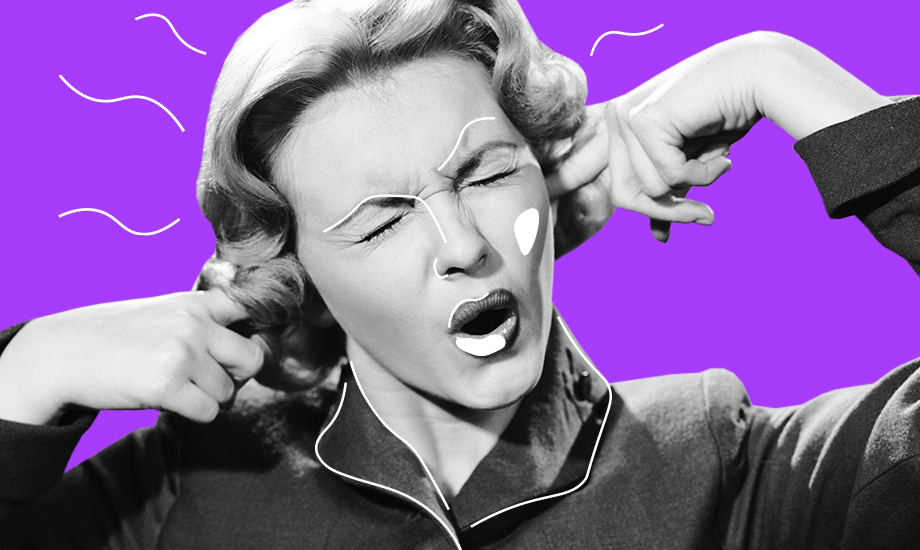
Tearing up during The Lion King makes you emotional, but shedding tears during The Dark Knight reveals an ultra-delicate inner makeup — and there is absolutely nothing wrong with that, just as being introverted carries no flaw. It simply reflects who you are.
Chances are, you already suspect you feel things more deeply than most. You experience a wide spectrum of emotions intensely, and you typically possess strong empathy, instinctively grasping what others are going through. If you have come across the labels empath and highly sensitive person, you may be curious about what delicate makeup actually means.
Although highly sensitive people (commonly shortened to HSPs) share certain features with empaths, the two are fundamentally distinct personality types.
Empaths absorb other people's emotions so thoroughly that they experience them as their own, sometimes even in their bodies. HSPs, by contrast, do not take on the feelings of those around them — they simply live through their own with extraordinary depth.
The root of it all is biological. Brain imaging research demonstrates that heightened emotional reactivity stems from a finely tuned nervous system, which means that bright lights and loud noises can feel overwhelming. So yes, if you find yourself tearing up during a movie trailer before the feature has even begun, congratulations — your makeup is decidedly delicate.
Researchers in the United States estimate that roughly 15 to 20 percent of the population falls into this category. Without realizing it, a large portion of them quickly assumes they are simply introverts, yet the highly sensitive person is a more intricate variation, possessing their own distinctive way of engaging with the world. Psychotherapist Amy Molin originally outlined nine traits characteristic of this personality type, and subsequent researchers have expanded the list considerably.
1. Multitasking throws you off balance
For those with elevated sensitivity, being asked to juggle several responsibilities at once becomes a genuine ordeal. Stress levels spike almost immediately, and their ability to perform drops sharply. Under such conditions, highly sensitive people struggle to remain effective, which often results in harsh self-criticism.
2. Chaotic, loud surroundings leave you rattled
Environments saturated with stimulation make highly sensitive individuals uneasy and on edge. This is precisely why open-plan offices are poorly suited for them. Their senses become overloaded: every background noise, every passing movement, every scent competes for attention. The cumulative effect drains their concentration and undermines their performance.
Your Delicate Makeup: 15 Indicators That You Are Highly Sensitive
3. Hunger hits you harder than most
The saying "hungry people are angry people" carries extra weight for the highly sensitive. Even a mild pang of hunger can trigger irritation that quickly spills over onto bystanders.
4. Being observed makes you freeze up
Highly sensitive individuals thrive only when their personal space is honored. The moment they sense they are being watched — perhaps by a supervisor — their behavior turns awkward. The experience resembles being crushed under an invisible burden.
5. Art moves you to your core
Not every highly sensitive person gravitates toward art, but when one does connect with a particular creator, the encounter runs far deeper than for the average audience. Works of art stir richer, more vivid emotional responses in them, and these responses linger in memory long after the experience has ended.
6. You catch other people's discomfort instantly
A highly sensitive individual is often the first to notice that someone nearby is squinting against harsh lighting or wincing at music that is too loud. In that moment, they recognize the discomfort as a familiar companion of their own.
7. You retreat into solitude after an intense week
Following a draining stretch of days, highly sensitive people require extended quiet and isolation to restore themselves. Rather than filling the weekend with activities, they might happily disappear behind closed curtains for an entire day.
8. You steer clear of deafening concerts
Booming rock shows and thunderous fireworks rarely top the list of preferred entertainment for highly sensitive individuals. If someone close to you fits this profile, keep in mind that their tolerance for noise sits well below the average.
Your Delicate Makeup: 15 Indicators That You Are Highly Sensitive
Meanwhile, this is something worth being aware of.
9. You avoid violent media
Fight sequences in films and violent news footage can plunge highly sensitive people into genuine fear, even though such imagery has become routine for the majority. So before inviting such a person to a horror screening, consider the consequences carefully — your friendship may depend on it.
The original list compiled by American researcher Amy Molin has since been expanded by other psychologists. Here are several additional markers of a delicate inner makeup.
10. You can effortlessly read the room
Those close to you half-joke that you must be a mind reader, because you frequently answer questions before they are voiced. You detect dishonesty with ease, sense when someone is concealing something, and routinely pick up on the emotional climate surrounding you. A career in law enforcement or law might suit you well — you would essentially function as a living lie detector, not unlike Hercule Poirot.
11. You are a born storyteller
Because emotions move through you with such intensity, you can translate them into language and spin ordinary daily events into gripping narratives. A routine trip to the bakery that involved a difficult encounter can quickly become an elaborate tale of conflict, character, and ultimate triumph.
12. You carry yourself with unusual courtesy
When you tell someone you enjoyed meeting them, you genuinely mean it. You pick up on the subtleties of other people's moods and never skip a "please" or "thank you," whether the situation calls for it or not. Beneath the surface, however, you recognize that your politeness is partly driven by a fear of hurting someone's feelings through rudeness. You maintain this gracious demeanor until you feel completely at ease with someone — and often well beyond that point. Even when provoked, you are unlikely to engage in conflict; arguments simply do not appeal to you.
13. You prefer handling tasks solo
You are entirely at ease in your own company and never experience it as loneliness. Plenty of activities feel better when done alone — exercising, for instance, since group sports can make you feel scrutinized and evaluated with every motion. Working from home (or having a private space at the office) suits you well, because sprawling open layouts make you uneasy and reduce your effectiveness. Solo travel is equally comfortable for you.
READ: INTERNATIONAL GUIDELINES FOR PROBLEM SOLVING
14. Your intuition borders on the uncanny
You have learned to trust your gut, because it rarely steers you wrong. You frequently sense that something is about to unfold before any visible signs appear. You can read between the lines and identify the best path forward, even when there is no rational explanation for the insight.
15. You are likely an introvert, though not necessarily
A delicate makeup often means that excessive stimulation — blaring music, packed rooms, nonstop chatter — affects you more powerfully than it does others. HSPs tend toward introversion, but extroverted individuals with delicate makeup absolutely exist. For some, socializing represents a way to step outside themselves and push away darker thoughts. Whether introverted or extroverted, highly sensitive people must seek equilibrium in social situations to remain comfortable wherever they go.
On the merits
Alongside the challenges that come with a delicate worldview — a susceptibility to depression or discouragement, for example — the highly sensitive person also possesses notable strengths. They tend to be more conscientious and precise in their work. They notice fine details that others overlook, and they frequently excel as teachers, artists, writers, journalists, and psychologists. They simply require environments that allow their gifts to flourish.
Featured image credit: Michael Ochs Archives/Getty Images
Follow GoSeekNest on Instagram and Pinterest!
DONT MISS: NEGATIVE THOUGHTS HARM YOUR HEALTH BY DAMAGING DNA