Technology is evolving faster than ever, with cutting-edge developments in artificial intelligence, connectivity, and immersive experiences poised to fundamentally alter how we live and work. By 2026, these emerging trends will drive major shifts across industries, reshape everyday routines, and generate both fresh opportunities and societal hurdles. As underscored by reports from the World Economic Forum and McKinsey & Company, keeping up with these changes is vital for navigating what lies ahead.
1. AI-Driven Personalization
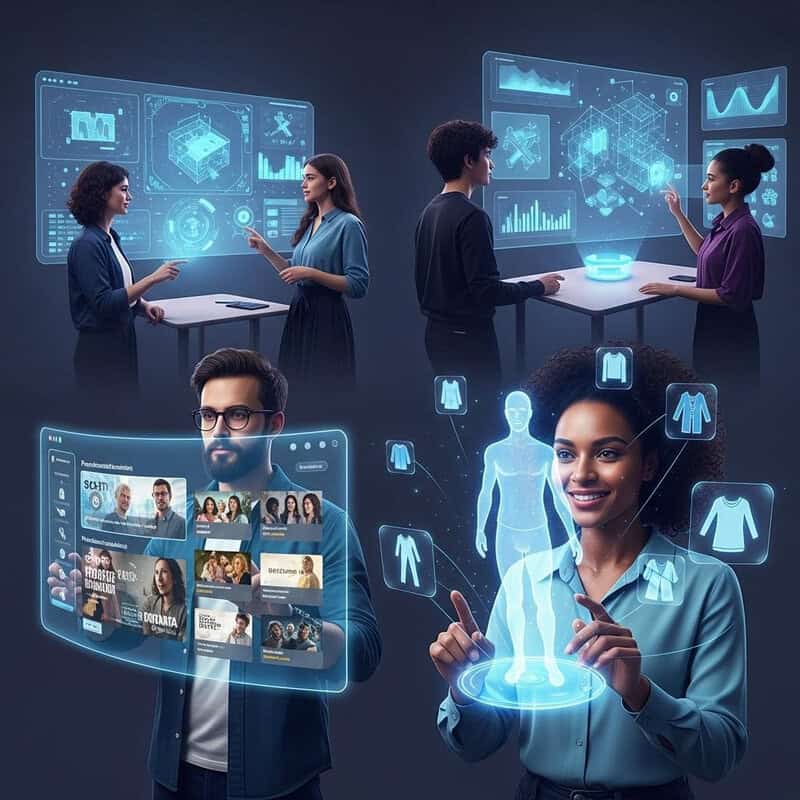
Artificial intelligence tailors shopping, entertainment, and learning experiences to individual preferences. | Generated by Google Gemini
Sophisticated AI is completely transforming personalization, crafting experiences that align precisely with each person's tastes and habits. In retail, AI shopping assistants suggest products uniquely suited to every shopper, while streaming platforms serve up content matching individual viewing preferences.
Education is undergoing a similar revolution, with adaptive learning systems that modify lessons in real time to maximize student progress. These breakthroughs, featured in the MIT Technology Review, promise to make every interaction more meaningful and efficient, reshaping how we connect with brands, enjoy media, and gain knowledge.
2. Quantum Computing Breakthroughs
A glowing quantum computer with intricate circuits processes massive datasets using qubits. | Generated by Google Gemini
Quantum computing is advancing rapidly, with recent milestones set to unlock game-changing capabilities across many fields. Soon, mainstream uses may emerge in cryptography for stronger data protection, optimizing complex supply chains, and speeding up drug discovery via advanced simulations.
Companies such as IBM and Google have already achieved quantum supremacy, marking huge leaps in computational power. Per Nature, these developments promise to crack problems that classical computers cannot handle, opening fresh frontiers in science and industry as quantum tech nears practical deployment.
3. Next-Gen Connectivity (6G and Beyond)
A glowing city skyline connected by vibrant light streams, illustrating future 6G wireless connectivity. | Generated by Google Gemini
The development and eventual launch of 6G networks will transform digital connectivity, delivering ultra-high speeds and extremely low latency. This next wireless generation will underpin emerging technologies like augmented and virtual reality, real-time holographic communication, and self-driving cars, all of which demand seamless, high-bandwidth links.
According to IEEE Spectrum research, 6G will also enable intelligent network management integrated with AI, paving the way for a hyper-connected world where data flows instantly among people, devices, and infrastructure.
4. Ambient Computing & Smart Environments
Interconnected smart devices and sensors seamlessly enhance daily life in homes and urban settings. | Generated by Google Gemini
Ambient computing embeds intelligence into ordinary spaces, allowing devices and systems to work together effortlessly and react to user needs in real time. Smart homes now feature interconnected gadgets such as Amazon Alexa and Google’s smart home ecosystem, coordinating lighting, security, and appliances based on context and voice commands.
In smart cities, sensors and data-driven platforms optimize energy consumption, traffic flow, and public safety. As reported by The Verge, these innovations promise more intuitive, responsive, and efficient living and working environments.
5. Sustainable Tech Innovations
Green technologies and circular economy models drive sustainable innovation in the tech industry. | Generated by Google Gemini
Emerging green technologies are steering the tech sector toward sustainability. Innovations like biodegradable electronics help cut electronic waste, while new designs for energy-efficient data centers reduce power usage and carbon emissions.
Companies are also adopting circular economy models, emphasizing recycling, reuse, and refurbishment to extend product lifespans. As highlighted by the World Economic Forum, these advances tackle environmental issues while opening up fresh business opportunities, signaling a future where technology and sustainability go hand in hand.
6. Metaverse Expansion
A group wearing VR headsets interacts with vibrant holographic elements, blending virtual and augmented realities. | Generated by Google Gemini
The metaverse is expanding rapidly, driven by major strides in augmented reality (AR) and virtual reality (VR). Immersive digital worlds are increasingly used for remote work, collaborative play, and social interaction, blurring the line between physical and digital experiences.
Companies like Meta are pouring resources into building persistent, interconnected virtual spaces that support everything from business meetings to entertainment events. As explored in Wired, these developments are set to reshape how people connect, collaborate, and create, making the metaverse a central part of everyday life by 2026.
7. Advanced Robotics and Automation
Sleek drones hover above a high-tech robotics lab, showcasing the future of automation and intelligent machines. | Generated by Google Gemini
Advanced robotics and automation are transforming industries by introducing smart, adaptable machines that handle complex tasks. In manufacturing, robots streamline production lines and boost efficiency, while healthcare benefits from surgical robots that improve precision and shorten recovery times.
Autonomous delivery drones are also revolutionizing logistics, enabling faster and safer goods transport. According to Robotics Business Review, ongoing innovations in AI and sensor technology allow robots to work more closely with humans, accelerating their integration across sectors and redefining traditional workflows.
8. Decentralized Finance (DeFi) and Digital Currencies
A glowing blockchain network connects digital coins and DeFi icons, symbolizing the future of decentralized finance. | Generated by Google Gemini
The financial landscape is being reshaped by the swift adoption of decentralized finance (DeFi) platforms and blockchain-based digital currencies. Central banks worldwide are exploring or piloting central bank digital currencies (CBDCs) to boost efficiency and financial inclusion.
Meanwhile, decentralized exchanges are expanding, letting users trade assets without intermediaries. According to World Bank reports, these technologies promise greater transparency, security, and accessibility, fundamentally changing how people and businesses handle and transfer value across borders.
9. Edge Computing Everywhere
A compact edge computing device processes data streams from multiple IoT sensors, enabling real-time analytics. | Generated by Google Gemini
Edge computing is revolutionizing data processing by moving computation closer to where data originates, slashing latency and bandwidth needs. This shift is essential for real-time applications like autonomous vehicles that require instant decisions, and smart manufacturing systems that depend on rapid data analysis for automation and quality control.
According to Gartner, widespread edge computing adoption will enable more efficient, reliable, and scalable digital infrastructures, empowering next-generation technologies across a broad range of industries.
10. Privacy-Enhancing Technologies
A glowing padlock hovers over a digital network, symbolizing strong encryption and online privacy. | Generated by Google Gemini
As data security and user privacy become ever more critical, new privacy-enhancing technologies are emerging to safeguard sensitive information. Innovations like zero-knowledge proofs let people verify data without revealing underlying details, while homomorphic encryption allows computation on encrypted data, keeping it confidential during processing.
These tools are vital for secure online transactions, private communications, and regulatory compliance. The Electronic Frontier Foundation (EFF) notes that widespread adoption of these methods will empower users and organizations to maintain control over their digital identities and data in an interconnected world.
Conclusion
Emerging tech trends reshape society with immersive experiences, enhanced privacy, and sustainable innovation by 2026. | Generated by Google Gemini
The convergence of these transformative tech trends will redefine how society, businesses, and individuals interact with the world by 2026. From hyper-personalized experiences and immersive virtual environments to robust privacy safeguards and sustainable innovation, technology’s impact will be profound and far-reaching.
Staying informed and adaptive in this rapidly evolving landscape is crucial for seizing new opportunities and addressing emerging challenges. As emphasized by experts from the World Economic Forum, embracing change and proactively engaging with new developments will be key to thriving in this dynamic digital era.




%22%20%2F%3E%0A%20%20%20%20%20%20%3Cstop%20offset%3D%22100%25%22%20stop-color%3D%22hsl(121%2038%25%2069%25)%22%20%2F%3E%0A%20%20%20%20%3C%2FlinearGradient%3E%0A%20%20%3C%2Fdefs%3E%0A%20%20%3Crect%20width%3D%221200%22%20height%3D%22750%22%20fill%3D%22url(%23bg)%22%20%2F%3E%0A%20%20%3Ctext%20x%3D%22600%22%20y%3D%22286.5%22%20text-anchor%3D%22middle%22%20fill%3D%22hsl(130%2052%25%2036%25)%22%20font-family%3D%22Inter%2C%20ui-sans-serif%2C%20system-ui%2C%20sans-serif%22%20font-size%3D%2224%22%20font-weight%3D%22700%22%20letter-spacing%3D%220.22em%22%3ETECH%3C%2Ftext%3E%0A%20%20%3Ctext%20text-anchor%3D%22middle%22%20fill%3D%22hsl(327%2038%25%2020%25)%22%20font-family%3D%22Georgia%2C%20'Times%20New%20Roman'%2C%20serif%22%20font-size%3D%2250%22%20font-weight%3D%22700%22%3E%3Ctspan%20x%3D%22600%22%20y%3D%22351.5%22%3EYouTube%26apos%3Bs%20So-Called%20%26apos%3BOpen%3C%2Ftspan%3E%3Ctspan%20x%3D%22600%22%20y%3D%22410.5%22%3ELetter%26apos%3B%20on%20Logan%20Paul%20Is%3C%2Ftspan%3E%3Ctspan%20x%3D%22600%22%20y%3D%22469.5%22%3EAnything%20But%20Transparent%3C%2Ftspan%3E%3C%2Ftext%3E%0A%3C%2Fsvg%3E)