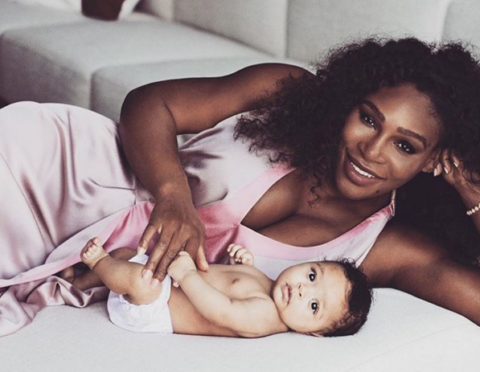
How Serena Williams sparked an important dialogue about the dangers women face during childbirth.
By Maha Syeda
Date January 12, 2018
Since 1990, maternal mortality rates in the United States have been climbing—a trend that stands in stark contrast to other developed nations like Ireland, the UK, Norway, Italy, Spain, and Germany. The US rate, which is double that of Canada, ranks as the worst among developed countries.
Various factors contribute to these deaths, including age, income, unplanned pregnancies, and higher C-section rates, but 60% are considered preventable. According to the CDC's Maternal Mortality Review, a death is preventable if "there was at least some chance of the death being averted by one or more reasonable changes to patient, community, provider, facility, and/or systems factors."
Serena Williams recently highlighted the complications women can experience after childbirth, sharing her own harrowing story in a Vogue interview. The day after her C-section, she suddenly felt short of breath. Recognizing it as a symptom of pulmonary embolism—a condition she has a history of—she immediately alerted her doctors. Yet, despite her past with blood clots and embolisms, her concerns were not promptly addressed by hospital staff. Her account brought attention to how women's pain is often dismissed, particularly for Black women. A PLOS Medicine study on mistreatment during childbirth found a pattern across several countries.
The PLOS study, conducted in New York, stated: "Marginalized women experienced gender, race and class-power inequities in the hospital settings, which did not meet their needs for respect and autonomy during childbirth. Women did not play an active role in their childbirth experience and did not receive supportive delivery care. They were often faced with racism and prejudice."
Women are now speaking out about their own childbirth experiences and the dangers of having their concerns ignored, as well as the discrimination they face. Many have taken to social media to express worries about the healthcare system and racial bias.
The following compilation presents key facts about maternal mortality in North America:
- In the US, Black women are 243% more likely to die from pregnancy- or childbirth-related causes. Source: CDC – MMRIA
- American women are over three times as likely as Canadian women to die during the maternal period. Source: WHO
- The US maternal mortality rate rose by 56% between 1990 and 2015. Source: The Lancet
- Hemorrhage and cardiovascular disease are the leading underlying causes of pregnancy-related deaths. Source: CDC
- Women aged 35–44 face the highest risk for pregnancy-associated deaths. Source: CDC – MMRIA
- African Americans have higher C-section rates and are more than twice as likely to be readmitted to the hospital within a month after surgery. Source: NCBI
- While most of the world has reduced maternal mortality over the past three decades, the US is one of the few countries where it has increased significantly. Source: The World Bank
- As of 2015, Canada's maternal mortality rate has returned to its 1990 level, at 7 deaths per 100,000 live births. Source: WHO
- Prince Edward Island has the highest maternal mortality rate in Canada. Source: Public Health Agency of Canada
- Canada's maternal mortality ratio ranks 161st out of 184 countries. Greece ranks 184th with the lowest rate of maternal deaths. Source: CIA