An 11% chance might seem low, but any probability above zero is worth noting. The frequency of satellites and other man-made objects falling back to Earth with potentially lethal consequences is increasing, not to mention the natural threats from asteroids and comets. According to Science Alert:
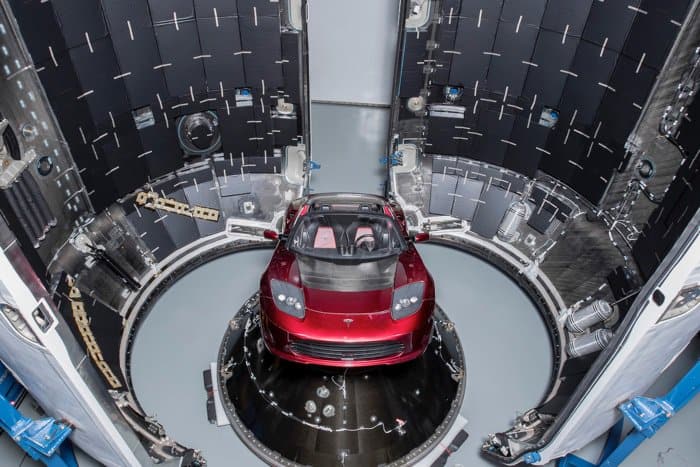
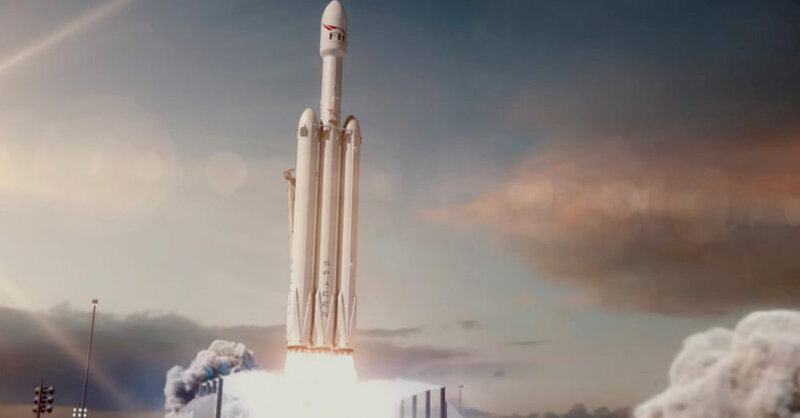
Here’s a curious twist, folks. Remember that Tesla belonging to Elon Musk that SpaceX casually launched into space last week? Well, it appears we haven’t seen the last of it. In fact, a fresh analysis of the Roadster’s orbital path reveals that this flashy piece of red metal, rubber, ‘Starman’, and other cool features is destined for several close approaches with Earth—and eventually, it might even strike us.
That’s the conclusion of Canadian astrophysicist Hanno Rein from the University of Toronto Scarborough, who, together with colleagues, calculated what the Tesla’s invisible route through space could look like based on known orbital mechanics. “We have all the software ready, and when we saw the launch last week we thought, ‘Let’s see what happens.’” Rein told Science.
“So we ran the [Tesla’s] orbit forward for several million years.” Over that immense stretch of time and space, many things could occur—and the farther we project, the more uncertain the picture becomes, due to the numerous gravitational influences that could alter the vehicle’s trajectory (along with the Falcon Heavy’s second stage, to which it remains attached).
Nevertheless, the team’s simulations indicate that the Tesla’s elliptical orbit around the Sun—which repeatedly crosses the orbits of Mars, Earth, and Venus—will lead to several close encounters with Earth in the future, the first expected in 2091.
Looking further ahead, the good news is that researchers foresee no possible impacts with Earth for at least the next thousand years—but they’re not making any firm promises.
“The bottom line is we can’t predict with certainty what’s going to happen after just a few hundred years, because it’s a chaotic orbit and we can only draw conclusions in a statistical sense,” Rein told CBS News.
Still, across about 240 simulations tracking the long-term dynamical evolution of the car’s possible orbital fates, “roughly 50 percent are going to hit a planet in the next few tens of millions of years,” Rein estimates.
To the extent their method can quantify collision risk, the researchers say there’s a 6 percent chance the Tesla will hit Earth within the next million years, and a 2.5 percent chance Venus will be struck over the same period.
As time extends—looking 3 million years ahead—the probability of a collision with Earth rises to 11 percent.
Mars escaped unscathed in all test runs with no impacts, and only in one simulation did the Tesla collide with the Sun—sometime within the next 3 million years.
It’s important to note that these calculations have not yet undergone peer review, but as the researchers themselves freely admit, there are many mathematical unknowns in these orbital scenarios.
However, given that the Roadster is estimated to have an almost immortal half-life of about 20 million years (as it slowly disintegrates in space), the team ultimately “expect collision probabilities with the Earth to be substantial,” they write in their paper.
In any case, if the worst happens, there’s no reason to panic. Not now, nor much, much later.
“It will either burn up [in the atmosphere] or maybe one component will reach the surface,” Rein told Science.
“There is no risk to health and safety whatsoever.”
Phew.
The findings are available on the pre-print website arXiv.org.
PETER DOCKRILL Science Alert
%22%20%2F%3E%0A%20%20%20%20%20%20%3Cstop%20offset%3D%22100%25%22%20stop-color%3D%22hsl(121%2038%25%2069%25)%22%20%2F%3E%0A%20%20%20%20%3C%2FlinearGradient%3E%0A%20%20%3C%2Fdefs%3E%0A%20%20%3Crect%20width%3D%221200%22%20height%3D%22750%22%20fill%3D%22url(%23bg)%22%20%2F%3E%0A%20%20%3Ctext%20x%3D%22600%22%20y%3D%22286.5%22%20text-anchor%3D%22middle%22%20fill%3D%22hsl(130%2052%25%2036%25)%22%20font-family%3D%22Inter%2C%20ui-sans-serif%2C%20system-ui%2C%20sans-serif%22%20font-size%3D%2224%22%20font-weight%3D%22700%22%20letter-spacing%3D%220.22em%22%3ETECH%3C%2Ftext%3E%0A%20%20%3Ctext%20text-anchor%3D%22middle%22%20fill%3D%22hsl(327%2038%25%2020%25)%22%20font-family%3D%22Georgia%2C%20'Times%20New%20Roman'%2C%20serif%22%20font-size%3D%2250%22%20font-weight%3D%22700%22%3E%3Ctspan%20x%3D%22600%22%20y%3D%22351.5%22%3EYouTube%26apos%3Bs%20So-Called%20%26apos%3BOpen%3C%2Ftspan%3E%3Ctspan%20x%3D%22600%22%20y%3D%22410.5%22%3ELetter%26apos%3B%20on%20Logan%20Paul%20Is%3C%2Ftspan%3E%3Ctspan%20x%3D%22600%22%20y%3D%22469.5%22%3EAnything%20But%20Transparent%3C%2Ftspan%3E%3C%2Ftext%3E%0A%3C%2Fsvg%3E)