From Green Kitchen Stories
On Wednesday morning, two ideas were swirling in my mind as I woke up. Both revolved around pizza. I had drifted off while watching the first episode of David Chang’s new Netflix series, Ugly Delicious, which explored pizza and authenticity. Yet the first thought that surfaced was actually about pie. Chang visits a Brooklyn pizza chef who defends traditional American-Italian toppings, but what intrigued me more than his reasoning was how he consistently called his pizzas “pies.” Apparently, that’s a common practice in the United States. Why hadn’t I known that? From now on, I’m calling it pie. With a Brooklyn accent. “Jeetyet? Nah, I’m mad hungry! Try this here Kale Pie.”
My second thought was a strong craving for pizza (or, um, pie)! The genuine article—wheat and rye flour, yeast, salt, water, and olive oil. Topped with tomato sauce and plenty of cheese. A cheese pie, I suppose that Brooklyn chef would label it.
So shortly after breakfast, I prepared the dough, simmered a tomato sauce, and picked up a generous amount of mozzarella. While the dough was rising, I decided to also make a cauliflower pizza crust. It comes together quickly, Luise prefers it over the traditional base, and I figured, “Better to have too much pie than too little” (by now, all my thoughts were literally spoken with a Brooklyn accent). We were out of both cauliflower and almond flour, so I substituted broccoli and rolled oats instead. It worked perfectly and had a pleasant green hue (which turned slightly browner during baking). The flavor was less sweet and more earthy, but it held together remarkably well—even better than our original cauliflower crust.
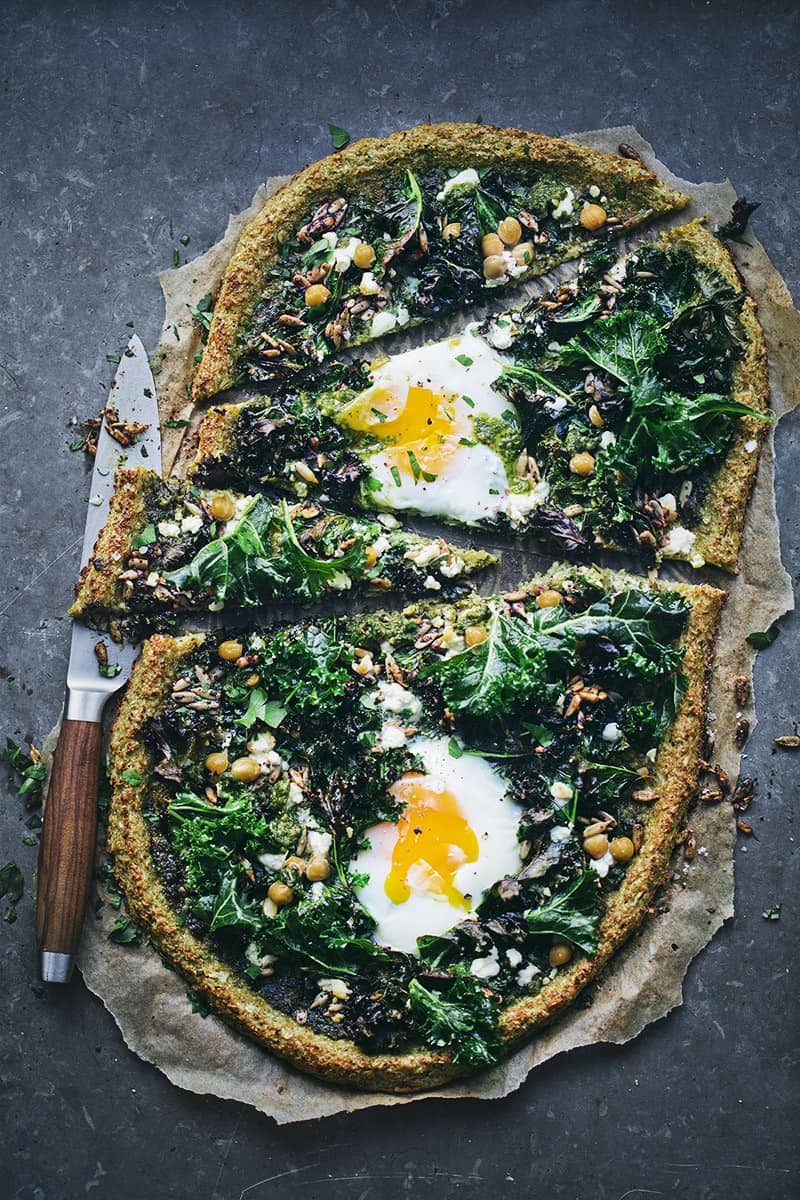
We had a jar of spicy green herb sauce left over from our weekly meal prep, so I used that as the base and embraced the whole green theme, adding lemony kale as a topping. Instead of mozzarella, we crumbled feta cheese on top, since we had already strayed far from the traditional Italian route. Luise tossed in some chickpeas and sunflower seeds coated in olive oil and sumac, and we also cracked two eggs on top. Pretty unconventional. But also pretty thrilling. It’s a hippie pizza!
When both pizzas were ready, I had completely lost interest in that cheese pie I originally craved (though the kids loved that one). The hippie pizza was far more interesting—literally bursting with flavor and heat from the green herb sauce. The kale curled into chips as it baked, the sumac sunflower seeds added a crunchy contrast, and the egg yolks provided a lovely creamy balance.
Since I fell asleep, I never caught the conclusion David Chang and his team reached about authenticity. But given that this kale pizza is probably about as far from la vera pizza Napoletana as you can get, and it still turned out pretty epic, I don’t think authenticity is something we should get too hung up on. As long as it tastes good. Ain’t that right? (still with a Brooklyn accent).
We tested the recipe again two days ago to double-check all quantities. While we were at it, we also filmed a video for our YouTube channel. Our boys’ preschool was closed, so they stayed home and helped out. They loved the cooking part (especially Isac), but neither of them wanted to eat it. Partly because the green sauce was quite spicy, but also because kale isn’t their favorite pizza topping. That’s the beauty of pizza, though—you can shape two pizzas from the same base. So if you’re cooking for kids, make one adult version with kale and spicy sauce, and a simpler one for the little ones.
That’s all for today. Three blog posts and three videos in three weeks. We’re on a roll! Now go make yourself that pizza.
Hippie Pizza: Kale, Lemon, and Egg on a Broccoli-Oat Crust (Serves 4)
For a sweeter crust next time, I’ll experiment with half rolled oats and half almond flour.
- 100 g / 1 cup rolled oats
- 450 g / 1 lb raw broccoli (frozen broccoli works too)
- 3 eggs
- 1 tsp salt
Topping
- Spicy Green Sauce (see recipe below) or pesto or another green sauce
- 2–3 stalks (50 g) kale
- 1/2 lemon
- 4 tbsp olive oil
- 100 ml / 1/3 cup sunflower seeds
- 1 tsp ground sumac
- 100 ml / 1/3 cup cooked chickpeas
- 100 g feta cheese
- 2–3 eggs
Preheat the oven to 200°C / 400°F and line a baking tray with baking paper. Place the oats in a food processor and blend until they resemble flour. Discard the thickest part of the broccoli stem, break the florets into pieces, and add them to the food processor. Mix until the consistency is rice-like. Add the eggs and salt, then pulse until everything is combined. The mixture should be looser and stickier than a traditional pizza dough. Transfer it to the baking paper and shape it into a pizza base by flattening the dough with your hands, making the edges slightly thicker (see video). Pre-bake for 20 minutes or until golden. Meanwhile, prepare the green sauce (recipe below).
Remove the crust from the oven. Spread the green sauce over the top. Discard the thick stems of the kale, chop it into smaller pieces, and place in a bowl. Drizzle with 2 tbsp olive oil, lemon juice, and salt, and massage the flavors into the leaves. Distribute two-thirds of the kale evenly over the pizza. Stir together the sunflower seeds, 1 tbsp olive oil, salt, and sumac, and scatter them over the pizza along with the chickpeas. Crumble the feta evenly over the pizza, create wells among the vegetables, and crack the eggs into them. Bake for another 10–15 minutes, until the kale is crunchy and the egg whites are set with slightly runny yolks. Cut into slices and dig in.
Spicy Green Sauce
This is a variation on one of our favorite green sauces. We adapt the herbs based on what we have at home. You can also replace some of the herbs (but not all) with baby spinach to save money. We enjoy the extra flavor from heated cumin seeds, but if you want to keep it simpler, just skip them.
- 2 tsp cumin seeds (optional)
- 1 bunch (20 g / 1 cup) fresh parsley
- 1 bunch (20 g / 1 cup) fresh coriander / cilantro
- 1/3 cup / 80 ml olive oil
- 1/2 lemon, juiced
- 1 tiny clove garlic
- 2 tsp maple syrup
- 6–8 slices pickled jalapeño (or other green chili)
- Sea salt
Heat the cumin seeds in a dry skillet for about 1–2 minutes. Add them to a food processor (or a large pestle and mortar) along with the rest of the sauce ingredients. Mix, mix, mix, taste, and adjust the flavor to your liking.