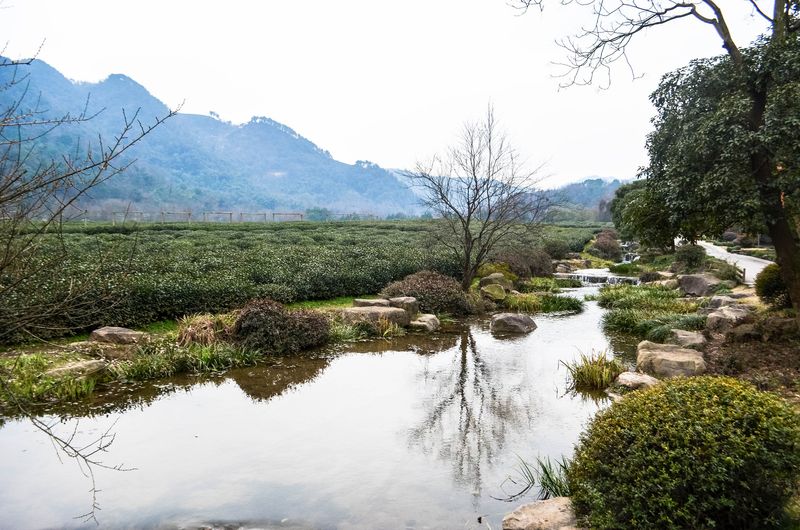
Situated about a two-hour drive southwest of Shanghai, Hangzhou ranks among the top destinations in the Yangtze River Delta, an area historically rich in agriculture. Local life here has always been shaped by the ebb and flow of the waterways. The city’s most treasured gem is West Lake, a mirror-like body of water that has inspired poets and scholars for centuries. Once encircled by peaceful family farms, sleepy pagodas, and rickety fishing boats, the lake was famously described by Tang Dynasty poet and official Bo Juyi in his writings.
West Lake as seen through the lens of Clarissa Wei
Encircled by lush green tea fields, Hangzhou served as the capital of the former Song Dynasty—a golden era for tea in China when the drink was so central to society that nobles and scholars hosted tea parties in the hills. For these gatherings, tea sets were packed in wooden baskets, carried to scenic overlooks, where participants would draw water from nearby streams and heat it for their brews. There were also tea battles: participants would whisk powdered tea in a bowl with a bamboo implement until a fine froth appeared, then judge each other’s results. This became a popular form of entertainment and debate. A winning cup had fresh color, white foam, and an even surface. This, after all, is where the Japanese derived matcha.
Bearing all this in mind, when I visited Hangzhou, I anticipated towering pagodas on a quiet lake, rows of green tea bushes, idyllic tea houses, and spring water cascading from the mountains. I expected tea to be available on nearly every corner. I looked forward to tranquility and poetry flowing freely through the streets.
Longjing’s tea plantations photographed by Clarissa Wei
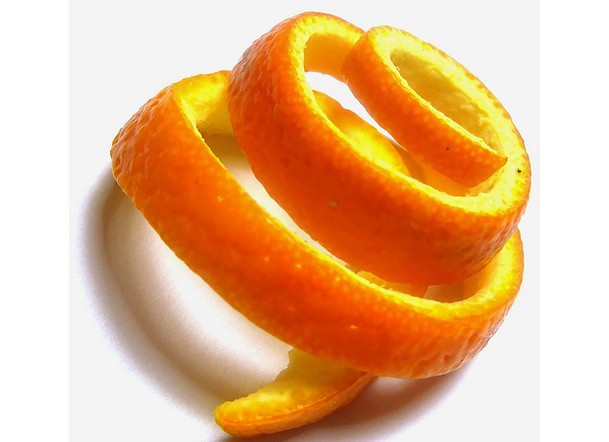
Instead, I encountered a bustling cluster of skyscrapers and roaring traffic. A brand-new subway system had been built, and I found myself oddly fascinated by an underground vending machine that squeezed fresh orange juice from real oranges. I also spent hours browsing and testing the food delivery apps available in the city. There wasn’t a single tea bush in sight.
It turned out I was simply looking in the wrong places. Tea plantations do exist, but they are tucked away in the hills around West Lake and in Longjing, a village on the southeast side of the city. There I visited the Hangzhou National Tea Museum—the only museum in China dedicated entirely to the beverage—which has its own tea plantation and a research center. Longjing is also home to 18 tea trees planted by the Qianlong Emperor, who visited the area in the 18th century and fell in love with the local tea. These nearly 300-year-old imperial tributes are iconic, protected by a stone fence and surrounded by a park.
Premium Longjing green tea can cost up to $145. Photo by Clarissa Wei
Today, Longjing produces some of the most expensive green teas in the country. Five hundred grams of tea picked in early spring, when the leaves are most tender, can retail for as much as $145 USD. The name Longjing, meaning “dragon well,” comes from an actual well in the village where, according to legend, a subterranean dragon lives that can access the sea. The water is said to have magical properties—locals claim a sip or a rub on the face can cure nearly any ailment. Longjing green tea is made exclusively from young buds harvested in early spring and gently pan-roasted by tea farmers, giving it its signature nutty aroma.
“Longjing tea has always been a part of my life,” says Amy Duan, a Hangzhou native who runs TheChihuo.com, Los Angeles’ largest Chinese food blog. “I never gave much thought to it when I lived there because it was such a normal part of our day-to-day life and because we always had it at our house.”
The reality is that while Hangzhou was historically the stuff of poetry, filled with gorgeous waterways and wildlife, today it is home to a new wave of romantics. But instead of writing verse, they compose code (hence the astonishing number of delivery apps in the city). It is the Silicon Valley of China—the home of Alibaba, China’s answer to eBay, and in recent years a host of startups have sprung up around the e-commerce giant, all vying to be the next big concept.
I met up with an acquaintance there who works in the startup industry. He took me to his co-working space in the city, similar to those in the States, where different companies and freelancers can rent space in a building. The biggest difference was that the lobby had a Chinese tea bar, where a server would pour drinks for employees in traditional Chinese tea cups. Longjing green tea, of course, was on the menu.
Left: Dong po pork; Right: river shrimp. Photos by Clarissa Wei
While the city’s energy may lie in modernity, its taste buds remain deeply rooted in tradition. Nearly all restaurants in Hangzhou offer Longjing green tea, and many feature a dish called longjing xia—tiny river shrimp doused in tea water and decorated with bright green tea leaves.
Others have gone so far as to dedicate entire restaurants to the local tea. There is a chain called Green Tea that has a massive menu of all things tea. They do a marvelous duck and pork smoked with tea, as well as bread and beer flavored with the tea leaf. Broadly speaking, Hangzhou’s cuisine reflects the seasons and what is available from the land. In spring, tender bamboo shoots are a mainstay. Lotus, which grows on water, is often harvested for its starchy roots.
Duck and pork smoked with tea. Photo by Clarissa Wei
Many dishes come with backstories. Dong po pork, Duan says, is one of her personal favorites. It is a cubed piece of pork belly slow-cooked in a soy-based sauce until it turns a crimson red. It is named after a Chinese poet and scholar named Dongpo. “Hangzhou has a lot of rivers and creeks and alongside these waterways, they will grow a lot of special vegetables. A lot of our fish comes from these rivers as well, where they are cooked gently in order to let their individual flavors shine,” she says.
The most emblematic dish of the city is a river carp called xi hu cu yu, or West Lake vinegar fish, which is gently steamed with vinegar and ginger. A notable rendition is served at a famous restaurant by the lake called Lou Wai Lou, one of the most celebrated dining spots in Hangzhou, with a history of over 150 years. There, a little girl approached me and my friend as we were eating. It was toward the end of dinner service, and we were among the few people left in the restaurant.
West Lake vinegar fish. Photo by Clarissa Wei
“Hello. Are you zhongguoren?” she said, verbatim, smiling up at us. Zhongguoren means Chinese person in Mandarin. Her hands were in her pocket, and she stared up at us, wide-eyed. The waitresses, visibly amused, all stopped what they were doing to watch the scene unfold.
“Hi! Yes and no. I’m from America, but I am also from here, kind of,” I responded back in Mandarin.
She told me she had heard my friend and I speaking English and wanted to converse with us with the little English that she knew. We asked her how old she was; she was just 11.
“I love America!” she concluded, at the end of our conversation. “One day I want to visit.”
Inside a chain restaurant called Green Tea. Photo by Clarissa Wei
That interaction summed up the polarity of the city: It is entirely Chinese, but with a deep aspiration to become a city with Western characteristics. And as my friend and I left the restaurant to hail a taxi, I couldn’t help but notice a Starbucks on the same street. Hangzhou is a microcosm of China—a place where growth means more concrete and taller buildings, a place that is growing so quickly it barely has time to acknowledge its history.
Food and tea are among the few mediums left where the city’s romantic past is diligently and consistently acknowledged.
Playing a guzheng. Photo by Clarissa Wei
One snowy day, I was invited to a private gathering on the top floor of a hotel that overlooked the edges of West Lake. There, my friends plucked the strings of a guzheng (a Chinese piano) and tried our hands at calligraphy. A tea table stood at the center of the room, and as we dabbled in the arts and chatted, the staff taught us how to pour a proper cup of Longjing tea. Every tea, they told me, has its own specific ritual to match it.
The directions for Longjing tea were simple: Add the dried tea leaves into a long, tall glass and pour hot water in.
Watch the tea leaves dance! Photo by Clarissa Wei
“That’s it?” I asked. I was expecting a more complicated ceremony, like that of oolong tea and pu-erh, which uses small teapots and teacups.
“Yes,” a staff member responded, smiling. “The clear glass allows you to fully appreciate the visuals of the leaves as they unfurl. And this way, they’ll have the space to dance.”
This piece originally ran in July. We are republishing it because Hangzhou looks especially beautiful in the snow.
Tags: green tea, hangzhou, china
(function(d, s, id){ var js, fjs = d.getElementsByTagName(s)[0]; if (d.getElementById(id)) {return;} js = d.createElement(s); js.id = id; js.src = " "; fjs.parentNode.insertBefore(js, fjs); }(document, 'script', 'facebook-jssdk'));
var fbds = document.createElement('script'); fbds.async = true; fbds.src = " "; var s = document.getElementsByTagName('script')[0]; s.parentNode.insertBefore(fbds, s); _fbq.loaded = true; } _fbq.push(['addPixelId', '237676769763423']); })(); window._fbq = window._fbq || []; window._fbq.push(['track', 'PixelInitialized', {}]);