Ever fantasized about attending a live performance by Amy Winehouse, Whitney Houston, or Michael Jackson, only to have tragedy snatch that dream away? Fortunately, all hope isn't gone. Enterprising firms have begun marketing lifelike holograms of departed legends, dispatching them on genuine global tours. In this edition of GoSeekNest, I'll unpack the trend in greater detail.
How deceased celebrities are brought back to life — and the motives behind it
Plus insights into what admirers of these musicians make of the spectacle.
Posthumous hologram tours and how audiences are responding
photo: Youtube
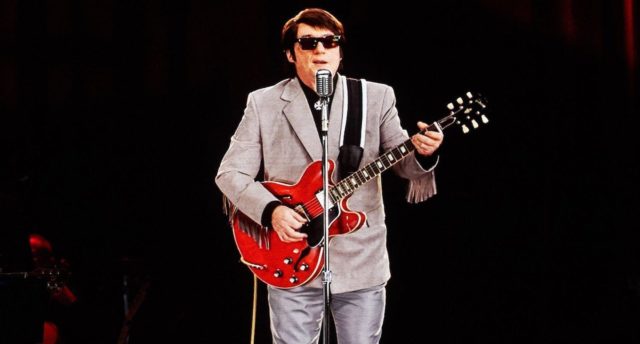
In 2019, holographic versions of two globally celebrated performers — Frank Zappa and Roy Orbison, who passed away in 1993 and 1988 respectively — took to the stage. A digital Amy Winehouse, lost to the world in 2011, was also slated for a tour. Organizers intended to kick things off in North America, with a three-year run and two-hour sets. However, the plans were scrapped at the eleventh hour, reportedly because the tech wasn't polished enough.
The posthumous Amy tour was unveiled by BASE Hologram, a Las Vegas-based outfit that's been around for roughly three years. Her father Mitch, who legally controls the late singer's entire legacy, gave the green light for the digital recreation. He teamed up with the company closely to guarantee that the virtual Winehouse was a flawless replica of his daughter. Every dollar earned from the shows was earmarked for a charity established in her memory, which aids young people struggling with substance abuse.
photo: Pinterest
The reveal of Amy Winehouse's upcoming performances stirred intense feelings among her fanbase. Some dismissed the idea as tasteless, arguing that the singer had been exploited enough and was owed some dignity in death. Others were overjoyed at the prospect of watching their heroine perform again and pointed to the charitable angle as justification.
Roy Orbison's devotees dismissed the tour as a shameless cash grab using the late star's name, noting that the musician could never have personally endorsed such a venture. Frank Zappa's case is different, though — during his lifetime, he was fascinated by hologram tech and expressed real curiosity about it. His son concluded that his father would have welcomed the spectacle.
photo: nme.com
The Whitney Houston tour announcement — the singer died in 2012 — proved equally contentious. The same team behind the Amy Winehouse, Maria Callas, and Roy Orbison holograms spent years crafting the laser likeness. In May 2019, Primary Wave snapped up the rights to her image and name. Seth Faber, the company's senior VP of marketing, promised audiences a breathtaking experience, with every effort made to deliver a show that felt genuinely authentic.
The itinerary called for a January 23, 2020 launch in Mexico City, wrapping up on April 3 in Minsk. A March 31 stop was set for Moscow, with another on April 2 in Kiev. Hits like The Greatest Love of All and I Wanna Dance with Somebody would anchor the setlist. Devoted Whitney Houston followers slammed the posthumous venture as predatory, vulgar, and utterly heartless. They've demanded an outright ban on these performances, insisting that exploiting her likeness after death crosses an ethical line.
Worth mentioning: Whitney Houston's hologram had already graced a stage once before. During a 2016 episode of The Voice, Christina Aguilera belted out the late star's I Have Nothing while the digital diva seemingly joined in.
Where it all began
Fans of Tupac Shakur were left stunned when the rapper 'appeared' at the 2012 Coachella festival, joining Dr. Dre and Snoop Dogg on stage. Technically, it wasn't even a true hologram — it was an elaborate lighting effect engineered by Digital Domain. The virtual Shakur was brought to life using the Pepper's Ghost theatrical trick, a method dating back over 150 years.
In 1862, British scientist John Henry Pepper demonstrated an illusion involving a concealed chamber separated from the main hall by plastic or glass. By dimming the lights in the primary room while boosting them in the hidden one, he made an object appear to float and reflect in the glass. This old-school approach drew sharp criticism from skeptics who panned Tupac's moment as primitive. Since then, however, the tools for capturing 3D details, replicating facial expressions, and mimicking speech patterns have advanced enormously.
photo: metro.co.uk
In 1995, German innovator Uwe Maass patented a plastic film that could stand in for glass, paired with HD video. Fast-forward to today, and LED projectors, 4K cameras (with 8K on the horizon), and ultra-thin projection surfaces make it possible to produce holograms that look startlingly lifelike. David Nussbaum, VP of production at Hologram USA, says that pairing top-resolution cameras with proper lighting can convince audiences the deceased performer is genuinely in the room.
Plastic sheets came with their own headaches. They would wobble from the vibrations of the live orchestra or band, smearing the image. The plastic also absorbed sound, dulling the music. Those issues are now a thing of the past. BASE runs its own proprietary system for crafting celebrity holograms. They scout for look-alike actors who serve as physical stand-ins for the late artists. Since nobody scanned the faces of these stars while they were alive, this approach proved unexpectedly clever.
Hologram tech is advancing at breakneck speed. Facial rendering has gotten so refined that you can actually see how light bounces off the skin. In private labs, 3D facial models can be generated from a single high-quality reference image. AI-powered chatbots now let digital twins of stars actually converse during shows — programmers feed them archives of recordings from the deceased.
Nussbaum believes holograms represent the next frontier, far beyond concerts. They could evolve into a fresh medium for sharing information and entertainment, offering society a sophisticated new media format. Signs point to a future where people interact via holographic projections linked through satellite networks. Living performers are already catching on, too — they can stage concerts across the globe without ever boarding a plane. Canadian indie rock outfit Broken Social Scene blazed that trail in 2013, playing live in three cities at once. Before long, holography might become the go-to method for hosting safe, hassle-free events.
Legal hurdles and unforgettable posthumous duets
photo: statusmind.com
Beyond the engineering challenges of reviving famous faces, there's a tangle of legal obstacles. You can't conjure a hologram of a dead celebrity without accessing their photos and footage, which are typically held by family members or estate representatives. Companies have to secure licensing deals from publishers and studios to legally use the appearance, music catalog, and other branded assets. They also need signed agreements from whoever manages the estate.
The most prominent courtroom clash unfolded in 2012. The firm holding Marilyn Monroe's image rights took legal action against Digicon Media, the outfit that had built a virtual actress operating in the digital realm. Digicon couldn't mount a successful defense and shelved any plans to keep using Monroe's likeness. Securing publicity rights is even tougher — putting a hologram in front of a live crowd requires contracts with every stakeholder, since copyright and personal privacy are both on the line.
Modern artists are also keen on sharing the stage with their fallen heroes. In 2018, Justin Timberlake sparked outrage among Prince devotees by featuring the late musician's hologram at his Super Bowl set. The reason: Prince had openly disliked the former NSYNC frontman and was a vocal critic of digital reincarnation. When he was once pitched the idea of performing alongside Duke Ellington, the singer called it the most sinister thing imaginable.
"Everything happens as it should be. If I needed to work with Ellington, we would live with him in the same era. There is something demonic in virtual reality. I'm not a demon. "- Prince ©
Plenty of other pairings exist. Back in 2008, Alicia Keys shared a Grammy moment with Frank Sinatra. A year later, on American Idol, Celine Dion performed alongside an Elvis Presley hologram. Whether this sector keeps flourishing or fades away — only time will reveal the answer. In the meantime, drop your thoughts in the comments below!
Featured image credit VM2 — Virtual Marilyn! Digicon Media