A dialogue between two FASHION editors about the nuances of Time’s Up
From the FASHION team
Published on February 2, 2018
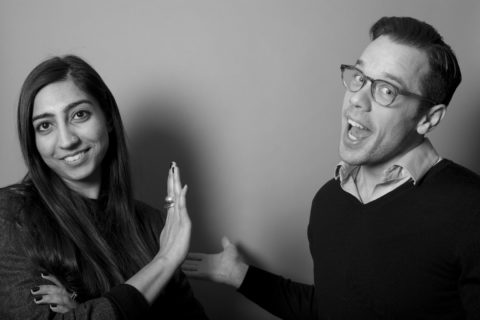
At FASHION, the staff is predominantly female. Surprising? Not really. However, there are exactly two men on the team. So when discussions about male conduct come up, it's reasonable to ask one of them to represent his gender's perspective. Previously, we debated Aziz Ansari; now, we're turning our attention to the backlash against Justin Timberlake for starring in a Woody Allen film. Two colleagues—Greg Hudson from the men's section and Pahull Bains from the women's—engage in a debate.
GH: Can you explain this to me? A piece from The Daily Beast has me frustrated. It reads like a critique—or at least a public scolding—of Justin Timberlake's insufficient ally behavior. Here's the context: Timberlake recently dropped a 'more authentic' album, appears in Woody Allen's upcoming film, and is set to perform at the Super Bowl this Sunday. A skeptical observer might argue that the article's real motivation—and probably why it irks me—isn't genuine concern for social justice but rather a thirst for web traffic. (And yes, I'm aware of the irony since we're publishing this, but to my credit—and for readers' interest—this exchange began as an authentic gchat discussion between coworkers.) The article enumerates how Timberlake is a hypocrite who has faced no repercussions for his contradictory behavior (until now!)—specifically: a) he wasn't sufficiently penalized for his role in Janet Jackson's 'wardrobe malfunction' 15 years ago, and b) he sported a #timesup pin at the Golden Globes while acting in a Woody Allen film without apologizing. Ultimately, the Daily Beast piece annoys me because it seems desperate and insincere, more focused on stirring controversy than enriching the conversation. What do you think?
PB: I believe one emerging issue with #metoo and #timesup is the pressing need to force everyone into immediate public repentance. We're forgetting that this reckoning is a dynamic, evolving process that shifts daily. This is complicated territory, filled with emotions like guilt, regret, confusion, disappointment, anger—you name it—that need to be processed. Individuals will reach their own conclusions (or not) at their own pace, so demanding 'hey you, why haven't you spoken up yet' is counterproductive and doesn't advance the cause. For this movement to truly succeed, it must lead to a cultural and behavioral transformation, which can't happen instantly. However, if you're aware you've engaged in questionable actions that will inevitably be called out, perhaps it's wise not to don a Time's Up pin unless you're prepared to address it.
GH: But wouldn't someone who chooses not to wear a Time's Up pin then be vulnerable to criticism for not showing support? There's a broader conversation about the advantages and disadvantages of movements becoming fashionable. It's undoubtedly positive when an issue permeates all aspects of culture, but that also creates its own set of rigid rules, leading to a false binary: either you're fully with the movement or against it. That's not always constructive, as it can provoke a backlash, whether warranted or not. We saw this with Margaret Atwood's contentious essay in The Globe and Mail and the online response to it. The common takeaway from most #metoo articles is that we need more dialogue, but it often seems there's little room for discussion when the issue is framed in absolutes. (I acknowledge that some matters don't require debate or compromise. Racism, sexism, and discrimination are inherently wrong. Suggesting that women must persuade society of their equality through conversation is patronizing and itself sexist. However, I'm referring to specific instances and their connection to the broader issue. The principle may be clear-cut, but like the law, there should be nuance in interpretation and enforcement. That was a lengthy digression.) Additionally, I dislike the tendency to gang up on actors who have appeared in Woody Allen films. Ironically, while intended to expose hypocrisy, it feels hypocritical itself. I believe it's perfectly acceptable for celebrities to apologize and issue statements. But a) we seem to selectively choose whom to criticize, and this serves as a convenient, clickable target. Weren't the allegations publicized in the 1990s? Why not call out everyone who collaborated with him since then? And b) Woody Allen's ability to make films didn't hinge on these particular actors working with him. The responsibility lies with him for the abuse, and with everyone who bought tickets, wrote reviews, or supported his movies in any way. Targeting Justin Timberlake feels insincere.
PB: The reason the Woody Allen situation is so straightforward to criticize is that his alleged offenses have been publicly known for decades, unlike many other revelations that came as a shock. However, you raise a valid point that illustrates the paradox: it's crucial to address everyone who supported Allen in any capacity—as a colleague, critic, or fan—and thus contributed to the larger issue, but doing so also diverts attention from the primary perpetrator.
GH: Exactly! Woody Allen committed the act. He bears the responsibility. And his behavior has been disturbing for years. I suggest a new phrase: Ally Trolling. We invent reasons to attack others for inadequate allyship, under the guise of virtue signaling. It's akin to concern trolling, but without genuine concern. It's about scrutinizing people who have done nothing wrong aside from being imperfect allies.
PB: True, but there's a rationale behind making aiding and abetting a crime. You cannot dismiss that level of involvement.
GH: Fair enough! However, as repulsive as Woody Allen is, he reportedly hasn't engaged in abuse since marrying his adopted stepdaughter (a disturbing thought). That means current collaborators aren't assisting in his crime or concealing it, as it's already in the past. But they are prioritizing their careers over the victim's wishes.
PB: I believe the offense here is more about eroding our cultural and moral standards than directly harming a victim. And we are all accomplices in that.
GH: I concur.
PB: The worst part is that we fail to recognize the impact our tolerance of these actions has on women who witness it, whether directly like Dylan Farrow or indirectly, as society collectively disappoints them. That might sound overly dramatic, but my point is that we are allowing this cultural injury to worsen instead of taking small steps to heal and repair it.
GH: I understand that, and I think it's accurate. It conveys a lack of concern for victims. We also easily fall into the Incredibles Problem. If you've seen The Incredibles, you'll remember that Syndrome's plan was to give everyone superpowers, because if everyone is special, then no one is. (It's somewhat odd that a Pixar film so explicitly promotes Randian philosophy.) I feel the same when we say 'we're all responsible.' As a culture, we are, but as we've both noted, let's not forget that some individuals bear greater responsibility. Writing articles criticizing Justin Timberlake for mishandling the Super Bowl controversy, judging his 2003 actions by 2018 standards, diverts attention from the true offenders.
PB: Absolutely. What makes the response to the Woody Allen case especially distinct is the frustration arising from the likelihood that he will never face legal conviction or serve any real sentence or penance. So, oddly enough, this feels like the only form of justice we'll ever witness. That may be why we're attempting to hold everyone accountable, hoping to discourage celebrities from collaborating with him in the future, thereby reducing his influence and ability to keep working in the industry. We have to do what we can. Power to the people!