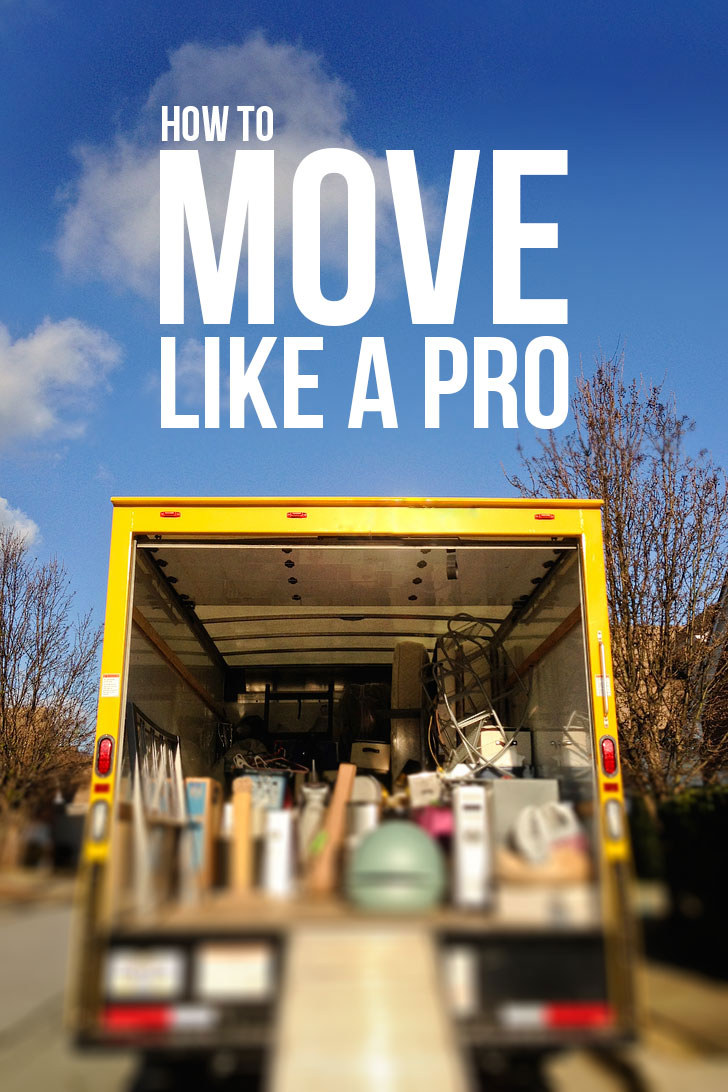
Over the last half-decade, we've relocated to five separate cities, picking up valuable lessons about the entire process. With each transition into a tinier apartment, we shed more belongings and committed our share of rookie blunders. May these suggestions help you pull off your move like a seasoned pro and keep things rolling without a hitch.
WHAT WE COVER [ CLICK LINKS TO SKIP AHEAD ]
- Questions to Ask Yourself
- Movers – Pros and Cons
- Moving Pod – Pros and Cons
- DIY – Pros and Cons
- Best Ways to Purge
- Tips for Packing
- More Tips for the Week and Day Of
- Moving Checklist Timeline
Before diving in, nail down your game plan. Reflect on these questions:
- What can you afford to spend? Is an employer footing the bill, or are you covering it yourself?
- Do you have the stamina and hours to handle it solo, or would hiring help make more sense?
- What vehicle will you use? How will you get your cars there (drive them, tow them, ship them)?
- How much time do you have?
- Any extra factors, such as little ones or furry companions?
Whether you plan to handle everything independently or outsource the whole job, each route comes with trade-offs. Broadly speaking, full-service movers run pricier than pods, pods cost more than truck rentals, and rentals exceed the cost of driving your own vehicle. But unless you're paying for white-glove service, you'll likely blend a bit of DIY with a rental.
MOVERS
Hiring movers makes the most sense when your schedule is tight but your wallet can flex. Expect the steepest price tag of any option, plus plenty of decisions to navigate. You might bring on a company that handles absolutely everything—packing, hauling, and unpacking—or simply pay them to shuttle your belongings from origin to destination.
PROS
- Cuts your stress and frees up your calendar significantly.
- Most outfits carry insurance for damaged goods (though scrutinize the fine print).
- Crews generally know how to Tetris your possessions into a truck efficiently.
- Many supply packing materials and boxes.
- Short-term storage is usually available if there's a delay between move-out and move-in.
- No need to beg friends for muscle.
CONS
- Nobody treasures your belongings the way you do.
- Locating everything at the other end gets tricky. Even with labels, boxes can end up in the wrong room.
- Delivery windows are estimates, and delays are sometimes unavoidable.
- With a small load, your shipment may be consolidated with others'.
Moving Scams
Sketchy operators exist, so vetting your mover is essential. Red flags include: refusing an in-home estimate, lacking a website or local address, demanding cash or a hefty deposit upfront, and showing up in unmarked vehicles.
Snap photos of your stuff's condition before the truck pulls away, just in case something goes sideways. Stay in constant contact with your movers to avoid nasty surprises. Review the contract thoroughly so you understand coverage and what's excluded. Remember, these companies are running a business—they'll prioritize their bottom line. While not required, keeping your crew fed and hydrated goes a long way.
MOVING POD
A newer player in the moving world, pods involve a company dropping a container at your place, you loading it up, and them transporting it to your new address. You handle the unloading once it arrives. Pricing usually falls below full-service movers but above a pure DIY approach.
PROS
- Pack and unpack at whatever pace suits you.
- You don't need to be present for delivery (if local rules allow the container to stay put).
- Multiple sizes are available to match your load.
- Storage is an option if there's a gap between leases.
CONS
- Some neighborhoods or complexes won't let a container sit curbside.
- Bulky items will still demand extra hands.
- Transit delays happen and are beyond your control.
- Estimating the right container size is a guessing game, and maximizing space takes practice.
DIY: MOVING TRUCK, YOUR OWN CAR, OR RENTING A MINIVAN?
This is our wheelhouse. We've hauled belongings in a full-size truck, crammed them into a sedan, and recently rented a van for our NYC move. It's generally the most affordable path of the three, though it demands the heaviest physical investment.
For lighter loads, consider regular rentals like minivans. They often beat moving trucks on price and fuel economy, and the seats won't punish your back over long hauls. Truck cabs are notoriously unforgiving on road trips.
PROS
- Set your own schedule.
- The drive itself can double as an adventure. A truck towing a car is handy—you can park the rig and unhitch for local exploring. That said, it's trickier than it sounds. Valuables need babysitting, and cosmetics can liquefy in summer heat. We've powered through 36 continuous hours of driving to dodge these headaches.
- Complete oversight of your belongings from start to finish.
- Usually the most budget-friendly, though watch for hidden costs like fuel, hotel stays, and labor.
CONS
- Piloting a massive truck is daunting for first-timers, and you'll crawl along the highway.
- Weather can throw curveballs depending on the season.
- Loading and unloading require a crew.
- Picking the right truck size is a shot in the dark.
- Multi-day moves mean figuring out overnight truck parking.
- You also need to find parking at your destination.
- When things go sideways, the blame lands squarely on you.
To Bring Your Mattress or Not To Bring Your Mattress
Disclosure: Leesa provided us with a mattress to be included in this post. All opinions are our own. Thank you for supporting the brands that make Local Adventurer possible.
Our first three relocations all involved a full-size rental truck, mainly to haul our king mattress—our wedding gift. The rest of our stuff would've fit in a much smaller ride. That mattress was hands-down the toughest item to move, and by year three, we finally cut it loose.
These days, we have a fresh one shipped to each new place. Plenty of options exist, but we've landed on a Leesa® mattress, which arrives vacuum-sealed in a box at your doorstep. Just carry it to your bedroom and let it expand. It genuinely couldn't be simpler—no more wrestling it up stairwells or contorting it through narrow doorframes.
The 10″ hybrid foam mattress feels fantastic! Tastes vary, of course, so if you're on the fence, Leesa offers a 100-night trial—zero risk in trying it out.
How to Move with Your Pets and Kids
We share our home with two cats, and since we've never flown with them, we usually opt for road trips when feasible (P.S. here are some tips for traveling with cats and traveling with dogs). Friends who juggle kids and pets have told us that for cross-country moves, hiring movers and driving with the family is smoother—they're hauling their cars anyway. Just stock up on entertainment for the kids for the entire drive.
If you've relocated with children and/or pets, drop your wisdom in the comments. We'd love to hear what worked for you!
With every move, we figured out how to travel lighter.
BEST WAY TO PURGE
- Sort Into Four Categories: 1. Keep 2. Donate 3. Trash 4. Maybe. A quick sweep gets things moving, and you can tighten the criteria in later rounds.
- Offloading the Donate Pile: Sell online, host a yard sale, give to Goodwill or a local nonprofit that treats its workers well, hand off items to friends who pitch in during the move, post on Craigslist or Freecycle, or schedule a junk hauler (P.S. busted electronics still fetch decent prices on eBay for parts—just be upfront about their condition).
- Box up the "Maybe" stash and write a future date on it—3 months or a year out. Odds are you won't reach for those things again. Seeing them untouched will make the next purge easier.
- Sleep on it. Sometimes distance changes your mind.
- Purge continuously. Unlike Marie Kondo's Life-Changing Magic of Tidying Up, I prefer phased purging with mini-challenges sprinkled throughout the year for variety. Past projects: 100 Days of Less (Spending, Your Rules) and Project 333 (33 wardrobe items for 3 months). We also practice a one-in, one-out rule when buying new things. Someday we'll tackle the 100 Things Challenge.
7 THINGS YOU CAN DONATE OR TOSS
- Anything you can't recall the last time you touched.
- Duplicates. Keep only the superior version.
- "Just in case" items (like that half-used ribbon spool for a hypothetical gift). You can repurchase if it ever truly matters.
- Broken stuff. If you haven't repaired it by now, it isn't happening.
- Presents you've held onto out of obligation.
- Hoarded collections. Digitize sentimental items such as photos, letters, books, CDs, DVDs, and VHS tapes. Cherish a select few; the rest can live digitally.
- Specialty gear used once a year. Swap for multipurpose alternatives or rent as needed. This category tripped us up most since we dabble in all sorts of hobbies.
TIPS FOR PACKING
Packing and unpacking can feel overwhelming, and procrastination is a trap.
- Tackle the easiest room first, then the next, then the next. If a room seems massive, start with a single drawer. Checking off rooms builds momentum.
- Sourcing Boxes: Hit up stores near closing time (liquor stores, bookstores, and grocers are gold mines), friends who've recently moved or get frequent deliveries, schools, your workplace, Craigslist, Freecycle, or as a last resort, buy from shipping or office supply retailers.
- Plastic totes are a solid swap for boxes (we use 50-80 quart sizes), and they double as storage or stack neatly when matched. Given how often we relocate, we actually prefer them to cardboard. Bonus: the handles make hauling a breeze.
- Put backpacks and suitcases to work. They're literally designed to carry things, and you can transport several at once.
- Avoid mega-boxes. On our first Atlanta-to-LA move, we used enormous boxes thinking fewer trips meant less work. Wrong move—they became backbreaking and a nightmare to unpack. Stick with small boxes for heavy items.
- Label every side of every box. Note the destination room and a brief contents list to simplify searching later.
- Use clothing as padding for breakables. Skip the bubble wrap and cut down on waste. We also set aside blankets for extra cushioning.
- Consolidate valuables in one accessible spot. For us, that's laptops, hard drives, and camera equipment. Keeping it grouped lets us bring those boxes into hotels during overnight stops.
- Once boxes are empty, pass them along. Someone else can use them.
Pack a separate overnight bag with essentials: a change of clothes, toiletries, medications, etc. Refill prescriptions before you go.
Don't Forget to Hook Up Essentials: Identify which utilities need to be transferred so your new place is livable on arrival. Same goes for cable and internet—providers often need lead time for installation.
Forward Your Mail: Update your address for critical bills, credit cards, and subscriptions. Don't skip the official mail forwarding either.
Take Photos Before and After Your Move: If you're renting, document the apartment's condition before and after your stuff is in or out. The photos are invaluable if a landlord disputes damage.
Pack a "first night" box for your new place. The last thing you want post-move is a store run, so we bring: cleaning spray, trash bags, toilet paper, paper towels. We always wipe things down before unpacking. A shower curtain also makes the cut—nothing beats a hot shower with privacy after a grueling day.
Be a Good Host: Whether you've recruited friends or hired professionals, have water and snacks on hand. Don't skimp on hospitality. Asking people to haul heavy furniture is a big ask, and they deserve to be treated well. It's not required, but it's the right thing to do. We've encountered movers left without water on scorching days—the companies that hired them didn't bother.
Create a Packing Playlist: Sounds silly, but great music makes the hours fly by. Songs are surprisingly powerful motivators. If you're hitting the road, build a road trip playlist too!
MOVING CHECKLIST AND TIMELINE
You have Successfully Subscribed!
Have you moved before? What are some things that helped with your move?
ESTHER + JACOB
Esther and Jacob are the founders of Local Adventurer, which is one of the top 50 travel blogs in the world. They believe that adventure can be found both near and far and hope to inspire others to explore locally. They explore a new city every year and are currently in NYC..
You Might Also Love
- The Best Way to Stay Connected While Traveling
- Traveling with Cats – How to Prep Them for Life On the Road
- How to Travel with a Dog – Essential Dog Travel Tips
- RV Life – The Good, Bad, and Ugly
The post How to Move like a Pro: Moving Tips and Checklist appeared first on Local Adventurer » Travel Adventures in Portland + World Wide