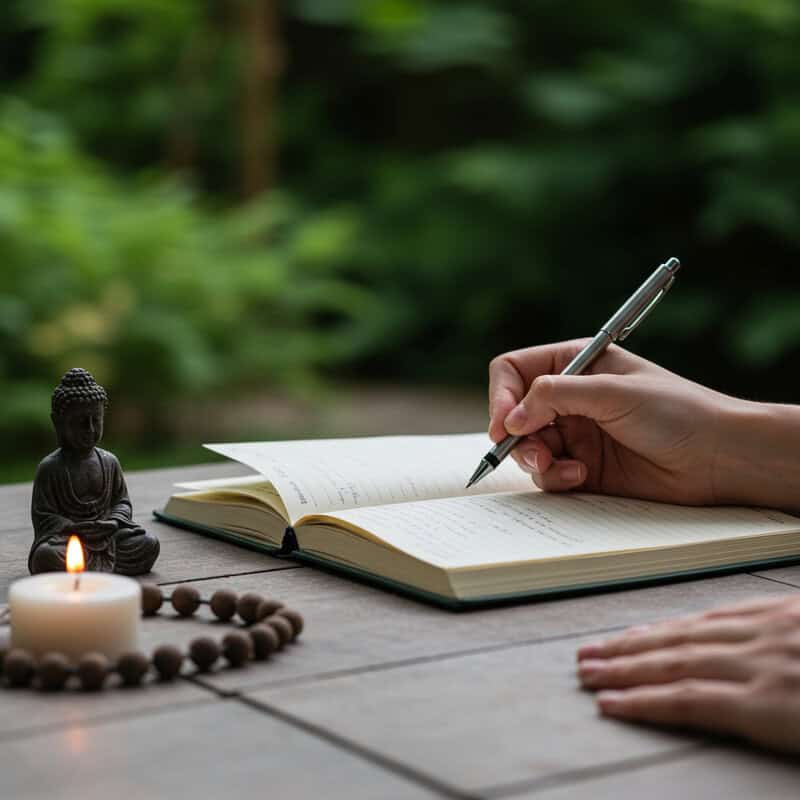
Inner peace refers to a state of mental and emotional tranquility, free from anxiety, stress, and worry. Reaching this equilibrium is fundamental to overall wellness, since it shapes physical health, interpersonal bonds, and everyday quality of life. In our modern, high-speed environment, developing inner peace equips you to handle difficulties with greater ease and build emotional resilience. The following guide outlines practical, everyday techniques for nurturing serenity and inner harmony. By adopting these approaches, you can lay the groundwork for enduring contentment and mental clarity.
Begin Mornings with Mindful Focus
A woman sits cross-legged near a sun-filled window, writing in a journal and embracing mindfulness to begin her morning. | Generated by Google Gemini
Launching your day with a mindful focus establishes an uplifting foundation. As soon as you wake, draw a few deep breaths and allow yourself a moment of stillness. Quietly reflect on which quality—patience, thankfulness, or kindness, for instance—you wish to carry with you throughout the day. Whisper this focus to yourself or jot it down as a soft prompt. This straightforward habit sharpens mental focus, eases tension, and nurtures a feeling of direction. To learn more about establishing daily focal points, review the guidance available at Mindful.org.
Incorporate Meditation into Your Routine
A tranquil individual sits cross-legged on a cushion in a light-filled room, with plants and calming accents nearby. | Generated by Google Gemini
Adding meditation to your daily schedule can meaningfully strengthen emotional equilibrium and mental sharpness. Reserve just 5 to 10 minutes each day, ideally in a peaceful setting, to sit comfortably and center your attention on breathing. Methods such as guided meditation, body scans, or loving-kindness practices are particularly useful for newcomers. Consistent sessions quiet the mind, alleviate stress, and deepen self-understanding. Even brief periods of practice can produce tangible shifts in how you navigate obstacles. For guided meditation tools and suggestions, explore Headspace.
Develop a Self-Compassionate Mindset
A woman rests peacefully by a window, a soft smile on her face as she places a tender hand over her heart. | Generated by Google Gemini
Cultivating self-compassion involves extending to yourself the same warmth and care you would give a dear friend. When self-critical thoughts emerge, pause and consciously replace them with supportive, understanding language. Try nurturing exercises like writing affirmations or reflecting on your personal strengths. Keep in mind that mistakes are part of being human—accept them without harsh judgment and grant yourself room to evolve. A kind internal voice can reduce stress and encourage emotional recovery. To discover self-compassion exercises and methods, visit Dr. Kristin Neff's Self-Compassion Resources.
Welcome Gratitude into Daily Life
Daily gratitude reflections nurture positivity, resilience, and a deeper appreciation for life's simple pleasures. | Generated by Google Gemini
Building a daily gratitude habit can reshape your perspective and strengthen emotional resilience. Each day, pause to reflect on or record three things you feel thankful for, regardless of their size. Consider maintaining a gratitude journal or expressing thanks to those around you to amplify the effect. This uncomplicated practice redirects attention from scarcity to abundance, encouraging a more optimistic outlook. Over time, gratitude can help you move through difficulties with renewed hope. For inspiration and practical ideas, consult the resources at Greater Good Science Center.
Reduce Exposure to Negative Inputs
A circle of friends unwinds outdoors, sharing laughter as they put their phones away for a refreshing digital break. | Generated by Google Gemini
Preserving your inner peace requires identifying the sources of negativity in your everyday surroundings. This might mean reducing time spent on upsetting news, stepping back from harmful relationships, or steering clear of places that deplete your energy. Refine your social media feeds to feature inspiring and educational material, and establish boundaries with individuals or circumstances that unsettle your sense of well-being. By deliberately curating what enters your mental space, you create a more encouraging and positive atmosphere. For guidance on managing media intake and negativity, see Healthline.
Care for Body and Mind Together
Wholesome nutrition, consistent movement, and restorative sleep promote mental calm and emotional steadiness. | Generated by Google Gemini
Looking after your physical health is closely tied to nurturing mental calm and emotional steadiness. Make whole, nutrient-rich foods a priority, drink water consistently, and incorporate regular movement—walking, yoga, or any activity you enjoy. Quality rest matters equally; aim for 7 to 9 hours nightly to support brain function and mood balance. When your body feels nourished, your mind is better prepared to handle stress and preserve harmony. For research-based advice on holistic self-care, check resources from Mind UK.
Spend Time in Natural Surroundings
A meandering path winds through verdant greenery and towering trees, beckoning you to enjoy a calm walk in nature. | Generated by Google Gemini
Immersing yourself in nature delivers powerful restorative benefits for both mind and body. Whether you take a stroll in a park, tend to a garden, or simply sit outdoors, connecting with the natural environment can ease stress, lift your mood, and create a grounding effect. Even short periods outside help quiet mental noise and cultivate feelings of peace and clarity. Make it a daily ritual to observe your surroundings—noticing nature's colors, sounds, and scents. For more on the science behind nature's soothing influence, visit the American Psychological Association.
Embrace Acceptance and Release Control
Cultivating acceptance through mindfulness and reflection nurtures resilience, emotional balance, and lasting calm. | Generated by Google Gemini
Adopting acceptance involves recognizing circumstances beyond your control and letting go of the urge to dictate outcomes. When you notice yourself dwelling on challenges, pause and take several deep breaths. Remind yourself that certain matters lie outside your sphere of influence, and channel your energy toward actions you can shape. Practices like journaling, mindfulness, and reframing unhelpful thoughts can support you in releasing tension and preserving emotional stability. Embracing acceptance builds resilience and fosters inner calm. For further techniques on acceptance and letting go, explore Psychology Today.
Build Supportive Connections
Nurturing supportive relationships encourages inner calm, resilience, and personal growth through meaningful bonds. | Generated by Google Gemini
Nurturing relationships with encouraging, positive people plays a key role in sustaining inner peace. Surround yourself with individuals who uplift your growth, listen without criticism, and champion your well-being. Engage in heartfelt conversations, exchange experiences, and convey appreciation to supportive friends and family. Feel free to establish boundaries with those who repeatedly introduce negativity into your life. Healthy, strong relationships offer a sense of belonging and resilience during difficult moments. For additional perspectives on cultivating nurturing social networks, visit Mayo Clinic.
Reflect and Write Regularly
A hand writes thoughtful reflections in a journal, bathed in gentle morning light beside a steaming cup of tea. | Generated by Google Gemini
Consistent self-reflection and journaling serve as powerful instruments for deepening inner peace. Dedicate time each day or week to writing about your thoughts, feelings, and experiences. This habit helps you process emotions, gain insight, and identify recurring patterns in your behavior. Journaling can also chart your progress, mark small achievements, and reinforce positive shifts. Over time, reflection cultivates heightened self-awareness and emotional resilience. For advice on beginning and sustaining a reflective journal, visit PositivePsychology.com.
Wrapping Up
Cultivating inner peace through daily mindfulness, gratitude, healthy habits, and meaningful relationships. | Generated by Google Gemini
Cultivating inner peace is a continuous journey that calls for steady, mindful effort. Through setting daily intentions, meditating, embracing gratitude, caring for your body, and building supportive relationships, you establish a firm foundation for lasting tranquility. Limiting negativity, spending time outdoors, practicing acceptance, and reflecting through journaling further enrich your sense of calm and resilience. Remember, small, intentional choices made each day can lead to meaningful and enduring transformation.