Most of us grew up with the tale of the three little pigs. In that story, each pig constructs a house from a different material—straw, sticks, and bricks. Only the brick dwelling survives the wolf's forceful breaths. The lesson? Hard work pays off.
But in a modern twist, imagine a fourth pig. This one goes all out, building its home with a cutting-edge 3D concrete printer—saving huge amounts of energy and cutting waste dramatically. No amount of huffing or puffing would bring it down, and the pig barely lifted a hoof.
3D printing is now a staple across many industries, from creating liquid metal parts for spacecraft to printing living tissue. As our pig analogy suggests, entire houses can be built using giant industrial 3D printers—but so far, none have been permanently occupied.
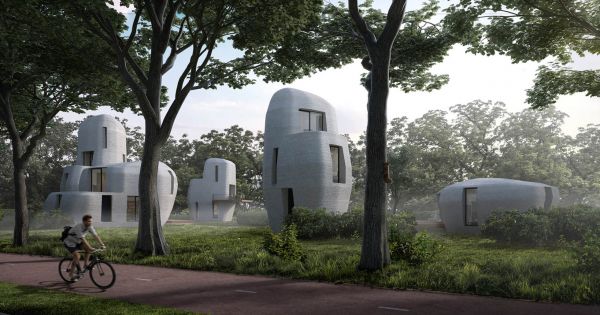
That is about to change. A Dutch construction firm called Van Wijnen is 3D printing what it claims will be the world's first truly habitable homes—ones that can pass a formal inspection. Dubbed Project Milestone, these futuristic houses are being printed near Eindhoven.
Photo courtesy of Van Wijnen
Currently, the project includes five houses, each with a distinct shape and size that highlights the technology's flexibility. The printer is essentially a giant concrete nozzle moving along a two-dimensional track high in the air, allowing architects to design homes in almost any form. At present, the houses are printed in pieces off-site and then transported to their final location. By the end of the project, the team hopes to bring the printer on-site for further refinements.
Overall, this creates a much more efficient process—especially compared to conventional brick-and-mortar construction, which can take over six months. The simpler assembly isn't the only benefit. Fewer workers are needed, lowering both costs and accident risks. Additionally, the amounts of cement and transportation required are minimized, reducing the environmental footprint.
Van Wijnen's vision is just one of many global projects using 3D printing to construct unique homes. Austin-based startup ICON has developed a method to print a 650-square-foot bungalow for just $10,000, while a San Francisco startup managed to build a house in only 24 hours.
But the technology behind 3D-printed structures is still evolving, and some claimed advantages may be overstated. The variability of cement-based materials raises questions about their structural integrity and environmental impact. How do specially formulated cement mixtures affect air quality or biodegradability? More research is needed to fully deem 3D printing a success.
Yet one thing is clear: there is enormous excitement and cautious optimism surrounding the technology, which is likely to influence conventional construction methods. However, it's unlikely that traditional techniques will be completely replaced overnight—instead, 3D printing will probably extend and modify how we build homes in the near future. Besides, who wouldn't want safer, greener, and cheaper houses?
futurism.com