Astrologers May Have Your Zodiac Sign Wrong — Discover the Real Dates Using Today's Constellation Map
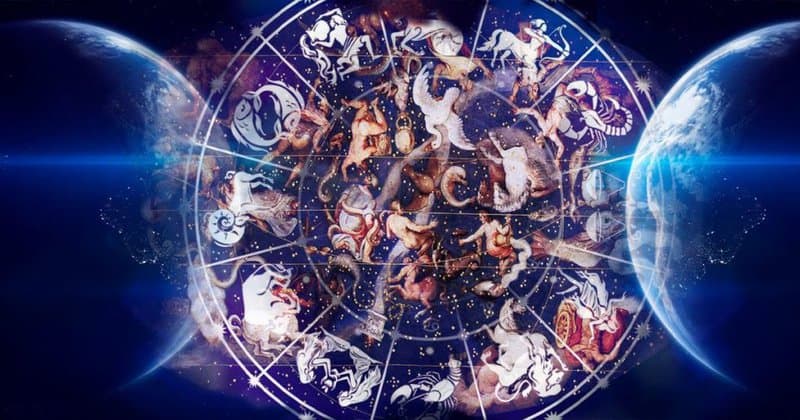
The zodiac wheel that underpins today's astrology rests on the perceived drift of stars overhead. Viewed from Earth, the constellations appear to creep westward-to-eastward by roughly one degree across a human lifetime. A Greek scholar from Nicaea named Hipparchus was the first to record this shift around 150 BCE — a phenomenon later named precession — and his work paved the way for the idea that the heavens could mould human temperament and even steer a person's fate.
The Astronomical Reality Behind Your So-Called Zodiac Sign
Even so, as theconversation.com notes, practitioners of astrology routinely misread the true placement of constellations overhead because they overlook elementary astronomy. So what does the picture look like once the science is taken into account?
The very concept of zodiac groupings was born in ancient Babylon, where local thinkers drew up the earliest framework linking each slice of the sky to a distinct star pattern. Those early observers then assigned human qualities and life outcomes to every cluster, firmly convinced those patterns influenced personal destiny.
That scheme proved so compelling that it endured for millennia, eventually flowering into what we now call astrology — a discipline some treat almost as a science. The widely held view persists that every human is born beneath a single sign, dictated by the constellation the Sun occupied at the moment of delivery.
Why the Zodiac Wheel No Longer Matches the Sky
In antiquity, the spring equinox — and with it the opening of spring — sat inside the constellation Aries. Over the following millennia, however, precession nudged that equinox point into Pisces, where it will remain until around the year 2700. Some 25,800 years from now, the vernal equinox will eventually cycle back into Aries, restarting the original loop.
Although star-based fortune-telling carries no weight within the scientific establishment, it was that very tradition that triggered the emergence of both astronomy and physics. Even Johannes Kepler — the astronomer honoured by the celebrated space telescope bearing his name — once devoted serious attention to astrology and the notion that planets might sway terrestrial events. Be that as it may, contemporary astrology chiefly diverts public attention from the genuine astronomical phenomena that demonstrably shape life on our planet.
Modern astrology pulls focus away from tangible celestial events that truly influence life on Earth.
Researchers have shown that the gravitational tug-of-war between solar system bodies can alter their shapes, sizes, and the tilt of their orbits. On Earth, the fallout from such shifts has taken the form of ice ages and mass die-offs of living species — the disappearance of the dinosaurs standing as a textbook case.
Inside an astronomical research facility.
In the end, if rigorous astronomical study can predict genuinely large-scale planetary events, then astrological forecasts carry no comparable worth. Moreover, the date ranges listed below — refreshed by mapping the Sun's current path against the actual zodiac constellations — demonstrate that the boundaries we've long associated with each sign slipped out of accuracy thousands of years ago.
Aries – April 19 – May 14
Taurus – May 15 – June 20
Gemini – June 21 – July 20
Cancer – July 21 – August 10
Leo – August 11 – September 16
Virgo – September 17 – October 31
Libra – November 1 – November 24
Scorpio – November 25 – December 17
Sagittarius – December 18 – January 19
Capricorn – January 20 – February 16
Aquarius – February 17 – March 11
Images sourced from unsplash.com