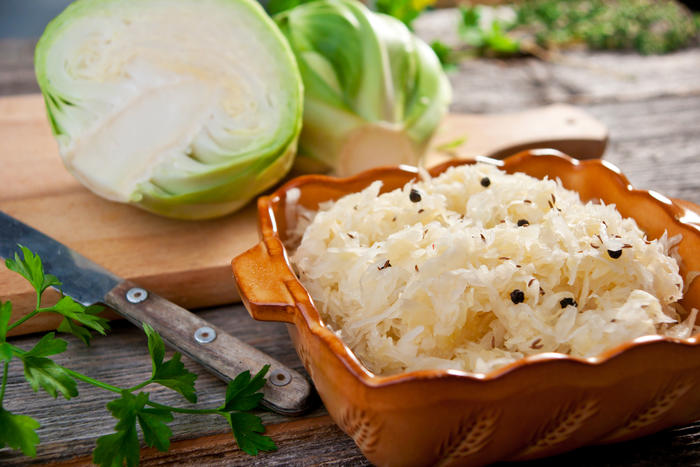
As temperatures drop and the cold months roll in, fermented cabbage earns its permanent place on every plate. It serves as a rich source of fiber and nutrients that the vegetable retains for up to ten months following fermentation.
Fermented cabbage delivers nearly the entire spectrum of vitamins essential for wellbeing: B1, B2, B3, B6, K, and U, alongside provitamin A. It functions as a powerful guard against sluggish digestion and various stomach-related disorders. The fermentation process introduces beneficial lactic acid bacteria, which restore gut balance and help eliminate dysbiosis. The lactic acid itself acts as a natural shield against harmful microbes, including stubborn E. coli.
Vitamin C dominates the nutrient profile, which proves especially valuable when autumn and winter viruses begin circulating. Eating fermented cabbage may reduce tumor risk while also supporting healthy cholesterol levels in the blood.
Cabbage ranks as a low-calorie food, and the fermentation process actually drives calories down even further — without sacrificing satiety or nutritional density. Those pursuing weight loss can also turn to the brine, which offers outstanding cleansing properties.
Why You Need To Eat Sauerkraut / PICKLED CABBAGE, Especially Now
The juice from fermented cabbage also works effectively against pregnancy toxicosis.
Packed with iodine and niacin, sauerkraut fortifies fragile nails and strengthens hair roots, leaving them naturally glossy. Cabbage even serves as an external beauty remedy, applied directly as a face and hair mask. Its components deeply hydrate the skin, refine pores, and restore vitality.
When sauerkraut should be avoided
Because fermented cabbage is high in organic acids, the following groups should avoid consuming it:
- individuals managing thyroid or pancreatic conditions,
- anyone experiencing blood pressure swings or kidney impairment,
- those with gallstones,
- people dealing with chronic gastrointestinal conditions during acute flare-ups.
Try out GoSeekNest's finest pickled cabbage recipe just below!
QUICK PICKLED CABBAGE WITH CARROTS
Featured image sourced from unsplash.com
READ: WHAT MAKES RED CABBAGE SO SPECIAL? CHINESE RED CABBAGE SALAD RECIPE