We're moving closer to the futuristic lifestyle depicted in The Jetsons—though for now, it's just one robotic arm making progress. Scientists at Georgia Tech have developed an AI-powered robot capable of helping a person put on clothing. Currently, it can successfully guide one sleeve of a dressing gown onto a person's arm. That's not quite the same as the automated dressing system George Jetson used each morning, but it's a promising beginning.
The research will be presented next week at the International Conference on Robotics and Automation (ICRA) in Australia.
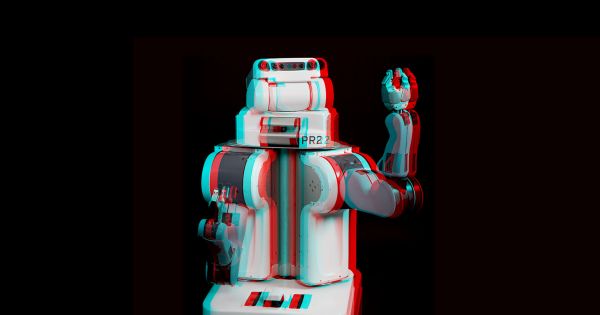
The robot in question is a PR2, a pre-built platform that researchers can adapt for various (mostly routine) jobs, such as folding laundry or brewing coffee. To teach their PR2 how to assist with dressing, the Georgia Tech team first exposed it to nearly 11,000 simulated scenarios of a robot putting a gown onto a human arm. These simulations, drawn from earlier studies, calculated the force needed to apply the garment to different parts of the arm as the robot attempted to dress the person.
Some simulations showed the robot succeeding, while others depicted concerning failures—for instance, the machine applying "dangerous forces to the arm," as noted in a Georgia Tech press release. That's definitely not something we want happening to real arms.
After just one day of processing these simulations, the PR2's neural network figured out how much force to use for each distinct motion it made on the human arm. In effect, it learned what it would "feel like" to be on the receiving end of the dressing process, according to the Georgia Tech announcement.
The robot also discovered the optimal motions for putting on the sleeve in a way that would be most comfortable for the person wearing it. If the PR2 pulled the gown one way, it might make it difficult for the person to slide their hand into the opening (not ideal), whereas a different pull could smoothly guide the gown over an elbow or shoulder.
Once the PR2 demonstrated it could handle the task in simulation, the team brought in human test subjects. Through real-world trial and error, the researchers found that the robot performed best when it could "think" about one-fifth of a second ahead of each action.
Currently, the robot takes about 10 seconds to pull a gown over a person's arm. Not bad, right? However, fully dressing someone in a gown is still several steps away, and dressing a person in anything other than a hospital gown is even further off. Given the complexity of just getting one sleeve on, it may take considerable time to reach that goal.
The idea of being undressed in front of a robot that isn't entirely certain how much force to apply might be unsettling for many people. But if the researchers can train the PR2 to handle an entire hospital gown (both sleeves), it could be life-changing for the estimated 1 million Americans who cannot dress themselves due to advanced age or physical disability.
A robot capable of that could lighten the daily workload of caregivers and nurses. That would be the top priority, of course. But someday, as robots become even more advanced, they might give everyone a few extra minutes in their day by taking over some of our more routine tasks—including the chore of getting dressed.