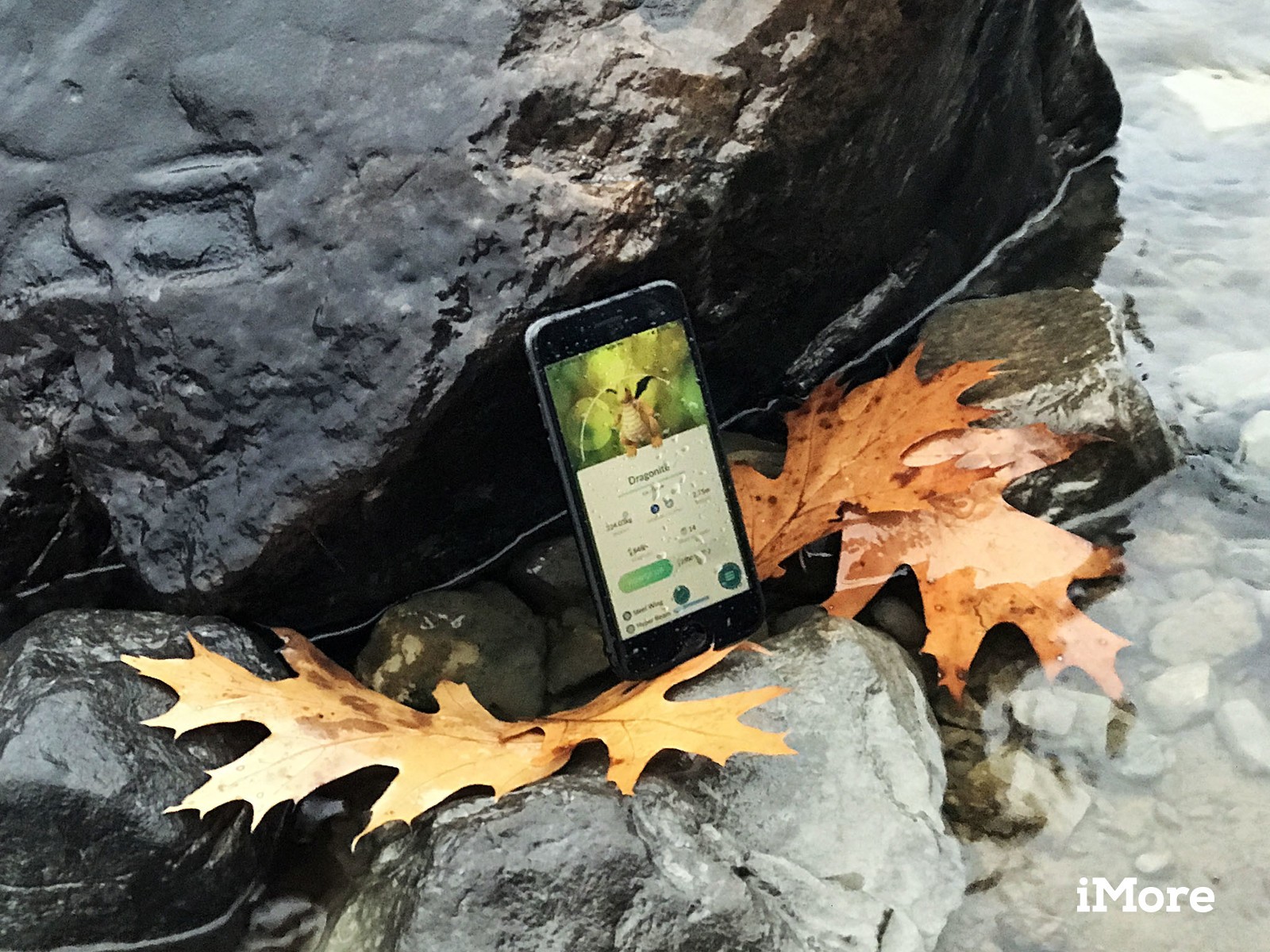
by Rene Ritchie, IMore
"Nests" refer to spawn locations where identical Pokémon surface over and over again in substantial numbers. Although spawn points can pop up just about anywhere, nests typically cluster around PokéStops or Gyms, or even several of these landmarks located inside a park. Water spawns, for instance, tend to stay remarkably consistent from month to month, yet nests rotate on a biweekly schedule. Here's the full breakdown!
What makes Pokémon nests worth hunting?
Nests deliver plenty of advantages:
- Whenever you're hunting for a particular creature to fill out your Pokédex or to battle Raid Bosses, heading to an active nest dramatically improves your chances of encountering one or more specimens.
- When you need candy from a certain Pokémon to evolve or strengthen it, visiting a nest lets you catch them steadily and in far larger amounts than ordinary scattered spawns could provide.
- If you're working toward earning medals — like Hiker or Fairytale Girl — by catching a particular type of Pokémon, nests push you much closer to reaching that target and snagging gold!
Put simply, when you need certain Pokémon, tracking down a nest featuring them is hands-down the most reliable way to get them.
Which nests matter most for countering Raid Bosses?
Raid Battles introduced powerful Raid Bosses that demand specific counters, letting you clear fights quicker with smaller groups. Locate these nests, toss Pinap Berries liberally, and march toward triumph:
- Geodude, requiring 125 candies to evolve into Graveler and eventually Golem — your answer against all Fire-types.
- Rhyhorn, which needs 50 candies to evolve into Rhydon — handles every Electric-type foe.
- Machop, demanding 125 candies to become Machoke and then Machamp — ideal for taking down Normal- and Dark-types, including Snorlax and Tyranitar.
- Exeggute, which calls for 50 candies before evolving into Exeggutor — counters both Water- and Ground-types.
Is there a comprehensive list of spawn points and nests out there?
Absolutely! The Sliph Road runs the web's go-to crowd-sourced nest atlas.
If you feel crowdsourcing crosses the fairness line, you can scout out local nests independently by logging any unusual spawns yourself. Most trainers see it as fully aligned with the game's spirit — just a smarter alternative to shouting about freshly discovered nests from every corner of the map.
Spotting two or more identical Pokémon appearing simultaneously in a cluster, or noticing the same Pokémon repeating at a location over several days, are both strong hints that you've stumbled onto a nest. Jot it down if needed.
Do spawn points and nests always feature the same Pokémon?
They stick around for two weeks before rotating out. Labeled as "migrations," these shifts happen every other Thursday at 12 a.m. UTC (which works out to 4 p.m. PST / 7 p.m. EST or 5 p.m. PDT / 8 p.m. PDT). Over several months, a Charmander nest might transform into Slowpoke, then back to Charmander, followed by Diglett, Drowzee, Paras, Growlithe, and the cycle continues.
Since migration patterns appear completely random, make sure to farm any nest holding the Pokémon you need repeatedly during that two-week window. On the flip side, if a nearby nest currently offers nothing useful, just give it a couple of weeks and it'll likely shift to something better.
Is it possible for multiple Pokémon types to appear from the same spawn point?
The majority of nests produce just a single Pokémon type, or a noteworthy species paired with common ones such as Pidgey, Rattata, Sentrat, and Hoothoot.
That's a different beast from a water spawn, where Staryu, Slowpoke, Polywag, Psyduck, and Magikarp frequently surface side by side.
Is every Pokémon guaranteed to have a nest?
Unfortunately, no. Generally, Pokémon that come from 10 KM eggs, as well as those considered ultra-rare, don't appear in nests. That covers babies, evolved forms, regional exclusives, and Legendary Pokémon.
- Porygon
- Chansey
- Grimer
- Hitmonlee
- Hitmonchan
- Lapras
- Snorlax
- Dratini
- Mew
- Mewtwo
- Moltres
- Zapdos
- Articuno
- Mareep
- Pineco
- Heracross
- Corsola
- Mantine
- Stantler
- Hitmotop
- Miltank
- Larvitar
- Lugia
- Ho-Oh
- Entei
- Suicune
- Raiku
- Celebi
- Zangoose,
- Seviper
- Plusle
- Minun
- Relicanth
- Torkoal
- Tropius
- Slakoth
- Feebas
- Bagon
- Beldom
- Chimecho
- Mawile
- Absol
- Kyogre
- Groudon
- Rayquaza
Can you hunt Dratini, Feebas, and similar Pokémon at water spawns?
Dratini haven't shown up in nests since the earliest days of the game. Feebas has never nested at all. However, both can still be encountered — though infrequently — at water spawns.
If your local water spawn — or several — regularly produces multiple Magikarp, there's a decent chance you'll occasionally spot Dratini there too. The same logic applies to Feebas. These locations include PokéStops and cluster spawns positioned near docks, piers, riverbanks, lakesides, and similar spots.
These spots rank among the finest walking destinations when you're crossing your fingers for a Dratini encounter.
Where do Larvitar, Beldum, and Bagon fit in?
Snagging the base forms and candy needed for Tyranitar, Salamence, and Metagross is tougher than ever at the moment. Larvitar remains exceptionally scarce, though Tyranitar itself is obtainable through Tier 4 Raid Battles. Round up a few buddies, bring along some Fighting-type Pokémom, and dive into the fight to catch one.
With Beldum and Bagon, keep an eye on the weather forecast. Beldum gets a boost during snowy conditions, while Bagon benefits from windy weather.
Any tips for finding Ditto?
Ditto possesses the ability to morph into other Pokémon, and up to now, wild encounters only feature him while disguised. As a result, Ditto never appears on your Nearby or Sightings tracker, and you'll have no idea if he's standing right beside you — what you'll see instead is a Rattata, Pidgey, Magikarp, or Zubat with zero visual or audio hints that anything is out of the ordinary… right up until you catch one.
Only after you snag one will the screen flash "Oh?" rather than "Gotcha!" — and that's when Ditto drops his disguise.
Learn the full strategy for tracking and catching Ditto in Pokémon Go
Unown — have you heard of it?!
Unown stands as one of the rarest, hardest-to-locate Pokémon introduced in Pokémon Go Gen 2. Hold on — Unown actually represents twenty-six of the rarest, hardest-to-find Pokémon in Pokémon Go, full stop. The reason is that it spawns sparingly in most regions, and when it does appear, it takes the form of any of 26 variants shaped after letters from A through Z. So, what's the secret to catching them all?
There's no clear-cut method available right now, but we're gathering every piece of intel we can right here:
Full guide to catching Unown in Pokémon Go
Is it possible for nests to disappear entirely?
Honestly, it's tough to say. Some PokéStops and Gyms never seem to produce any spawns at all. In other cases, nests simply get hijacked for two weeks by ultra-common Pokémon such as Caterpie or Krabby, making it appear as though the nest has vanished.
Your best bet is simply waiting a fortnight and then circling back to check.
Once you've tracked down the ideal nest, how do you actually catch the stubborn Pokémon that pop up there?
Certain Pokémon are significantly trickier to capture than others. Sometimes the culprit is a poor catch rate or a high flee rate. Sometimes it boils down to their level. Sometimes you're simply not stacking every available bonus. And occasionally, their rarity causes you to panic and forget the optimal strategies.
The complete playbook for stacking bonuses and catching nearly any Pokémon
Got any Pokémon Go nest strategies or questions to share?
If you've got pointers for locating and leveraging nests, I'd love to hear them! Have any questions about nests or spawns? Toss them into the comments below!