It's hard to picture a modern woman's beauty arsenal without a reliable makeup remover. Leading the pack among cleansers is micellar water, a true phenomenon in the cosmetics world over the past few years. Yet despite its popularity, many still wonder how to properly use micellar water, how to pick a quality formula, and—most importantly—whether it needs to be rinsed off.
Plain water refreshes the skin, but it often fails to remove makeup. That's where cosmetics companies step in with their own version of "magic water": micellar. A decade ago, simply placing it on store shelves was enough to sell out like free champagne. Now, brands must get creative to capture consumer interest. They add exfoliation, mattifying, and pore-tightening properties to the standard "cleansing" claim. Basic purified or thermal water is no longer exciting, so they now offer micellar cleansers made with floral waters, meltwater from Arctic glaciers, and even "hydrogen-enriched micro-water." Navigating this variety is a challenge worth exploring.
To Rinse or Not to Rinse?
A common misconception about micellar water is that it's just water. This leads many to believe it doesn't need to be washed off. The label may even say "no rinse required." But that doesn't mean you should always follow that advice. Let me explain why.
Micellar liquid is essentially a "disguised" cream—it uses the same ingredients as a moisturizer (oils, emulsifiers, humectants, preservatives, fragrance). The oil droplets with emulsifier are so tiny that the product looks like water. The oil dissolves stubborn makeup, and the emulsifier helps it all slide off your face. The key lies in the emulsifier's quality—that's where the answer to "rinse or not" is hidden.
How to Apply Micellar Water
Early micellar formulas used very gentle emulsifiers like poloxamers (Poloxamer 188, Poloxamer 407). These were borrowed from pharmaceuticals, where they're still used in eye drops ("artificial tears"), tablet fillers, and ointment/emulsion bases. But since poloxamers are synthetic, scientists sought a "greener" alternative.
Today, that alternative comes from vegetable oils and cane sugar derivatives—Lauryl Glucoside, Coco Glucoside, Lauroyl Methyl Glucamide, Capryloyl/Caproyl Methyl Glucamide, and other "sugar chemistry" compounds used in natural and organic cosmetics. Products with poloxamers and glucosides are so mild that they can honestly claim "no rinse needed."
Rinse It Off Immediately
Unfortunately, this noble idea had to be "optimized." Micellar liquids based on those gentle emulsifiers are finicky—they tend to turn cloudy and spoil during storage. So chemists stabilized them with heavier ingredients. Classic examples are ethoxylated fatty alcohols and polysorbates (PEG-8 Stearate, PEG 40 Hydrogenated Castor Oil, Polysorbate-20, etc.).
To improve stability, emulsifiers are combined with large amounts of co-surfactants (butylene glycol, propylene glycol, lower alcohols, etc.). The products look great, but their skin compatibility suffers. These emulsifiers don't just grab makeup—they also strip away your skin's beneficial lipids, especially when left on the face ("no rinse").
Here's an unpopular truth: Regularly not rinsing micellar water containing PEG and Polysorbate can lead to dryness, redness, and increased skin sensitivity. So even if the label says "no rinse," err on the side of caution. And if you see a mix of Poloxamer and PEG in one bottle (often done to improve waterproof makeup removal), I still recommend rinsing.
The Great Rinse Debate
Water Within Water
Now let's talk about the water itself—it can make up to 95% of micellar liquid, so its quality directly affects your skin.
For sensitive skin that "burns at the slightest touch," look for minimally loaded formulas. They may contain purified or thermal water. Purified water simply cleanses, while thermal water's mineral salts offer a soothing effect. If you're tempted by glacial water products, consider the price-to-benefit ratio. Glacial water's mineral content is lower than thermal water's, but it wins on "pure water" appeal.
For extra hydration and toning, floral waters are excellent—they're byproducts of essential oil extraction. Besides a pleasant scent, they provide aromatherapy benefits. Micellar waters based on floral waters combine a great marketing story with real skin benefits.
Water from Another Planet
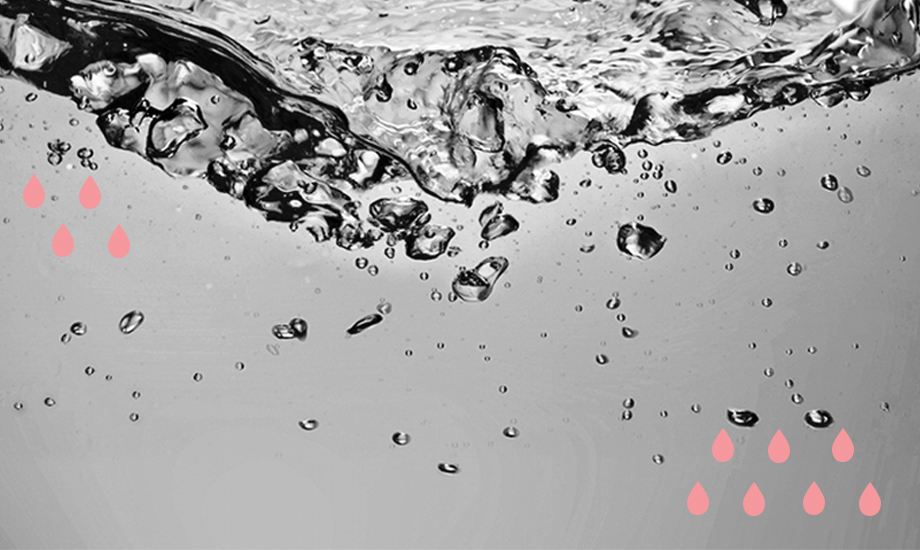
The Asian market has its own take on micellar water. Take Dr. Jart+'s bestseller, which boasts "85% active hydrogen." At first glance, this sounds like pseudoscience. But after researching "hydrogen-rich water," I discovered a new frontier. Such water is real—it's artificially saturated with hydrogen through electrolysis. Hydrogen-enriched water acts as a powerful antioxidant, selectively neutralizing aggressive free radicals (with –OH groups) while leaving weaker ones (which help our immune cells).
Innovative Micellar Water Technology. Image credit: unsplash.com
Japanese and Chinese scientists have published many studies on the benefits of "hydrogen water" for treating heart attacks, Alzheimer's, Parkinson's, type 2 diabetes, and other oxidative stress-related diseases. In cosmetics, it's used to reduce inflammation and speed healing. I wouldn't call it a miracle cure, but it's definitely a promising direction. The major drawback is its instability—hydrogen escapes within minutes, requiring airtight packaging and complex production. Still, that's a minor detail compared to the revolution scientists are bringing to our lives.
Featured image on unsplash.com