Presented by
Images captured by Creative Clicks Photography.
During maternity wardrobe planning, many expectant mothers focus on stylish dresses that highlight their growing belly or comfortable pants and shorts for the remainder of their term. Yet one area that also undergoes significant change is often overlooked: the bust. Investing in nursing bras is essential throughout pregnancy, but with countless options available, selecting the right one can be overwhelming. I’m here to simplify the process, helping you identify the key features to consider.
1. Optimal Timing for Buying Nursing Bras
The ideal time to buy one or two nursing bras is neither too early nor too late in your pregnancy. Buying too early often results in the wrong size because your breasts will likely enlarge when your milk arrives, and your rib cage expands to accommodate your growing baby. On the other hand, waiting until the last minute means frantically ordering online while caring for a newborn, which can lead to hasty decisions and ill-fitting choices.
When exactly should you shop? I suggest purchasing two nursing bras in your third trimester. At this stage, your breast size will be closer to what it will be once breastfeeding begins, so you’re making a modest investment. After delivery and once your milk supply is established, you’ll have a better sense of your preferred style from those two bras, and you can then buy a larger size if needed.
Classic nursing bra design
2. Fabric Choices for Nursing Bras
Nipple sensitivity is a given, and it intensifies during breastfeeding. The constant sucking and pulling can be tough on your breasts, so choosing soft, comfortable fabrics is crucial. I strongly advise opting for a cotton nursing bra, particularly in the early stages of breastfeeding.
Newer synthetic fabrics that are breathable are also available. Bravado offers a wide range of materials that are gentle on your skin. If you shop elsewhere, be sure to avoid bras with plastic linings.
Cotton nursing bra fabric detail
3. Exploring Nursing Bra Styles
Nursing bras have come a long way, and today there are multiple styles to suit different needs. Here are the main options:
- Comfort nursing bras – These come in S, M, L, etc. rather than specific cup sizes. They offer decent support without too much structure, making them popular. I personally am a fan of comfort bras, especially The Original Nursing Bra and the Body Silk Seamless Nursing Bra from Bravado. They’re incredibly comfortable and versatile for any occasion. For those with a fuller bust, The Original Full Cup Nursing Bra is a great option.
- Underwire nursing bras – For work meetings or date nights with my partner, I reach for the Belle Underwire Nursing Bra. Underwire bras are safe to wear provided they fit well and have adequate stretch to accommodate breast size changes.
- Sleeping bras – A quality sleeping bra is a must! These are designed for lounging at home and sleeping, offering maximum comfort. You can simply pull the soft elastic aside to nurse. However, I suggest reserving them for home use because they offer minimal support.
Seamless body silk nursing bra
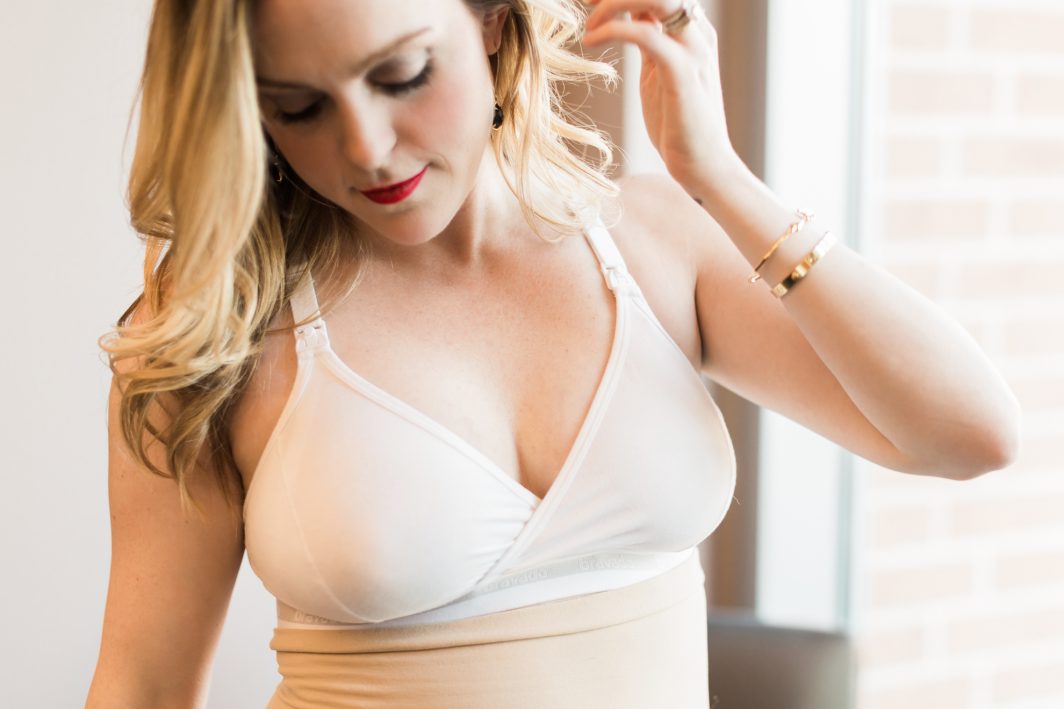
Comfort nursing bra in action
Underwire nursing bra for outings
4. Is an Underwire Nursing Bra Right for You?
There’s a common concern that underwire nursing bras may lead to clogged milk ducts. While that risk exists, you can take precautions. First, get professionally fitted. Second, wait six to eight weeks postpartum before wearing one. The reason is that underwire can press on milk-producing tissue near the rib cage and armpit. Delaying use until your breastfeeding routine and milk supply are well established reduces the chance of blocked ducts and infection.
Belle underwire nursing bra
5. Self-Measurement Guide for Nursing Bras
Breasts undergo significant changes postpartum. Follow these steps to measure yourself accurately for a nursing bra:
Step 1: Determine your band size – Take a measuring tape and wrap it around your back, under your armpits, and just above your bust. Round up to the nearest whole inch. This gives you your band size (e.g., 34, 36, 38).
Step 2: Determine your cup size – Measure around your back and across the fullest part of your breasts. Subtract your band measurement from this bust measurement. The difference in inches corresponds to cup sizes. For instance, a band size of 38 and a bust measurement of 42 inches gives a 4-inch difference, which equals a D cup. So you would look for a bra around 36D.
When the difference is:
- 1/2″ – 1″
- 2″
- 3″
- 4″
- 5″
- 6″
- 7″
- 8″
- 9″
- 10″
- 11″
- 12″
Your cup size will be:
- A
- B
- C
- D
- DD/E
- DDD/F
- G
- H
- I
- J
- K
- L
6. Coping with Unexpected Body Changes
Regular bras typically have a few rows of hooks for adjustment. Nursing bras often feature additional rows, which is beneficial because your breast size fluctuates during pregnancy, postpartum, and even daily as your breasts fill and empty.
I appreciate that Bravado includes bra extenders with their bras, offering extra room for improved comfort.
Additionally, select Bravado bras come with a conversion kit, allowing you to transform your nursing bra into a regular bra after you finish breastfeeding.
7. Determining the Ideal Number of Nursing Bras
Experts typically suggest owning three nursing bras: one to wear, one in the wash, and one in reserve. I personally keep more than three, which lets me do laundry less frequently.
8. Getting Professional Help
If you're still struggling, schedule a fitting with a certified bra fitting specialist who can determine your precise size and style. Contact local maternity shops to locate one nearby. Alternatively, check Bravado's online bra fitting guide or call 1-800-590-7802. Their team will address your queries and assist with your nursing bra selection.
Best wishes in your search for the ideal nursing bra!
SaveSave
SaveSaveSaveSave
SaveSave
This article originally appeared on Baby Chick by Nina Spears