Source: Syda Productions/Shutterstock
While the holiday season is meant for creating lasting memories, plenty of families find themselves caught up in a frantic scramble to grab whatever trendy toy, gadget, or item their kids have been begging for.
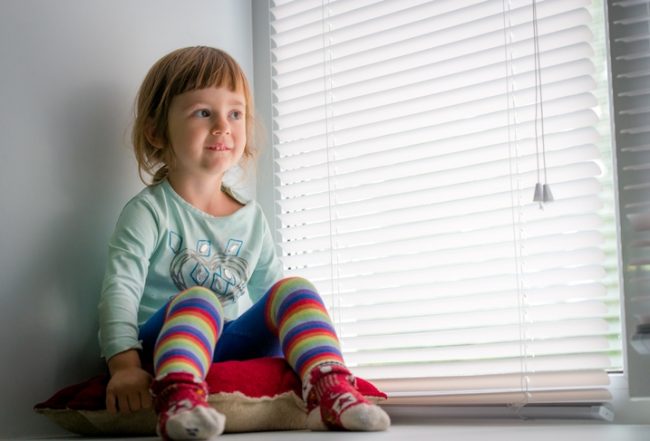
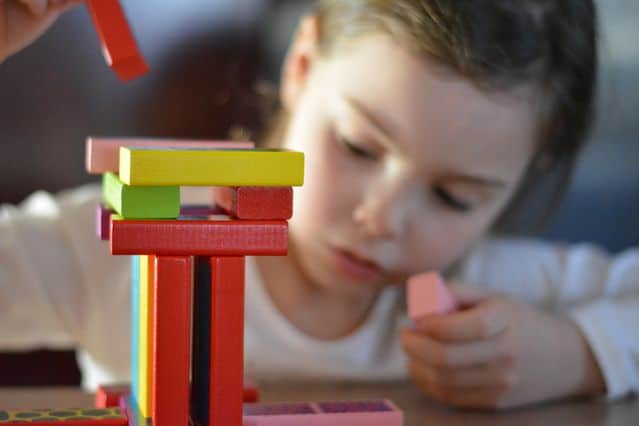
Fortunately for parents who would rather skip the chaotic crowds and endless checkout lines, fresh research out of Ohio's University of Toledo confirms that "an abundance of toys present reduced quality of toddlers' play." Young children given a smaller selection of playthings tend to concentrate more deeply and engage in richer imaginative scenarios, according to the upcoming journal article "The influence of the number of toys in the environment on toddlers' play," set to appear in Infant Behavior and Development. The takeaway: scaling back on toys supports healthier play patterns and stronger cognitive growth.
The investigative team watched 36 toddlers ranging from 18 to 30 months old during unstructured play periods. Each child participated in sessions offering either four toys or sixteen. "There was a significant difference in the quality of toddlers' play between the two toy conditions," the paper notes. "As measured by sustained play and variety of manners of play, toddlers had a greater quality of play in the Four Toy condition compared to the Sixteen Toy condition." In short, limited options encouraged more diverse and extended engagement with the available items.
These conclusions align with voices in the child-development community who have championed pared-down or even toy-free play spaces in recent times. Joshua Becker, author of Clutterfree with Kids, characterizes an overload of toys as an obstacle to genuine growth. "Imagine the impact that hundreds of toys in our homes may be having on our kids," he remarked following the latest findings.
Alexia Metz, a researcher involved in the Toledo project, points out that every participant experienced both the four-toy and sixteen-toy setups on separate days arranged in random sequence, ensuring the environmental shift drove the observed differences while accounting for individual variation. Under the sixteen-toy condition, Metz and her fellow researchers documented clear signs of distraction and reduced benefit: "The results of the present study suggest that an abundance of toys may create such a distraction. With fewer toys present [referring to the four toy group], participants engaged in longer epochs of play."
Children in the four-toy group demonstrated roughly one and a half times more interactions with their available items, suggesting that little ones "are more likely to play in more sophisticated, advanced ways with fewer toys present," as the study explains. This heightened engagement carries favorable consequences across multiple developmental domains, spanning pretend and imaginative play, self-expression, fine motor abilities, and problem-solving capacity.
None of this argues for emptying the toy box or removing playthings from gift lists entirely. Yet if you find yourself stretching your budget or stressing over what to buy for the youngest members of your family, it is worth pausing to reflect: Is this purchase truly necessary? Will it genuinely enhance their play, or will it end up forgotten after a brief fling?
Every parent has likely muttered, "They have a mountain of toys and ignore most of them." You have probably caught yourself saying the very same thing.
Shared memories carry far greater worth than wrapped gifts.
Rather than adding yet another object to the pile, think about establishing rituals and traditions your children will treasure when they look back. Schedule an annual film outing, host a yearly cookie-baking afternoon, or invite the kids into the kitchen to help prepare a festive meal.
Scientific evidence supports prioritizing experiences over things. Thomas Gilovich, a psychology professor at Cornell University, established that experiences deliver more enduring satisfaction than material acquisitions. He "discovered that people thinking about impending experiential purchases, such as ski passes or concert tickets, have higher levels of happiness than those who anticipate spending money on things."
Channel your spending into outings or simply enjoy no-cost pastimes, like cruising past homes lit up with holiday displays, shifting the season's emphasis from packages to togetherness.