Curly hair is stunning, yet many individuals with this unique texture either constantly straighten it or struggle with frizz, dullness, and lack of definition. However, it is never too late to rejuvenate your locks—simply try the renowned “Curly Method” by Lorran Massey. How can you bring curly hair back to life? Learn about the best curly hair care routine here.
Origins of the Method
Lorraine Massey is the bestselling author of Curly Girl: The Handbook, which serves as the starting point for countless women (and men) on their long restoration journey.
First published in 2001, the book arrived when straight hair dominated trends in many countries, with commercial pressures encouraging straightening via flat irons or chemical treatments.
Only a decade later did curly hairstyles gradually regain popularity, championed by celebrities like Yara Shahidi, Solange Knowles, Viola Davis, and Sarah Jessica Parker. Lorraine seized the moment and re-released her curly handbook in 2012, helping people see their curls in a new light.
What the Method Entails
This approach consists of a set of “dos” and “don’ts.” By following them daily, you adapt to a new hair care routine and noticeably improve your hair’s structure. Note that if your hair has suffered from frequent coloring or chemical straightening, recovery will take at least thirty days.
What to Eliminate
The first step is removing shampoos and conditioners containing sulfates, silicones, and harsh alcohols. While these ingredients may benefit straight hair, they weigh down curls and prevent them from forming. If you are unsure what to avoid, a detailed list is provided at the end of this article.
To keep curls beautiful and avoid frizz in the mirror, you must also give up:
- Terry towels (instead, use a soft cotton T-shirt to gently squeeze hair, removing excess moisture and adding volume. See an example in Lorraine’s post with kids);
- Combs (surprisingly, combs destroy curls and increase frizz. The only time to use a comb is when applying conditioner);
- Heat styling with blow-dryers and flat irons (does this mean abandoning hair dryers? No! You can dry curly hair—just switch from “hot” to “warm or cool” settings. Use a diffuser attachment, or if unavailable, use your hand: squeeze curls section by section, tilt your head, hold the dryer perpendicular, and dry. Faster drying yields better results);
- Hair dyeing (if you value healthy curls, avoid coloring. If you must change something, opt for open dyeing techniques—without foil—that create highlights on curls).
Embracing Your Curly Hair
Ultimate Curly Hair Care Routine
Now for the exciting part: Lorraine suggests switching to a co-washing system—washing hair with silicone-free conditioner only. Do this as infrequently as possible, two to three times per week. Naturally, after using products with harsh chemicals, your scalp may become oily initially, regardless of your skin type. Do not panic; find a solution. For instance, before fully transitioning, rinse with a deep-cleansing shampoo to remove embedded silicones and sulfates (if unavailable, add a few drops of vitamin C to your sulfate-free shampoo). If oiliness persists, use this method occasionally.
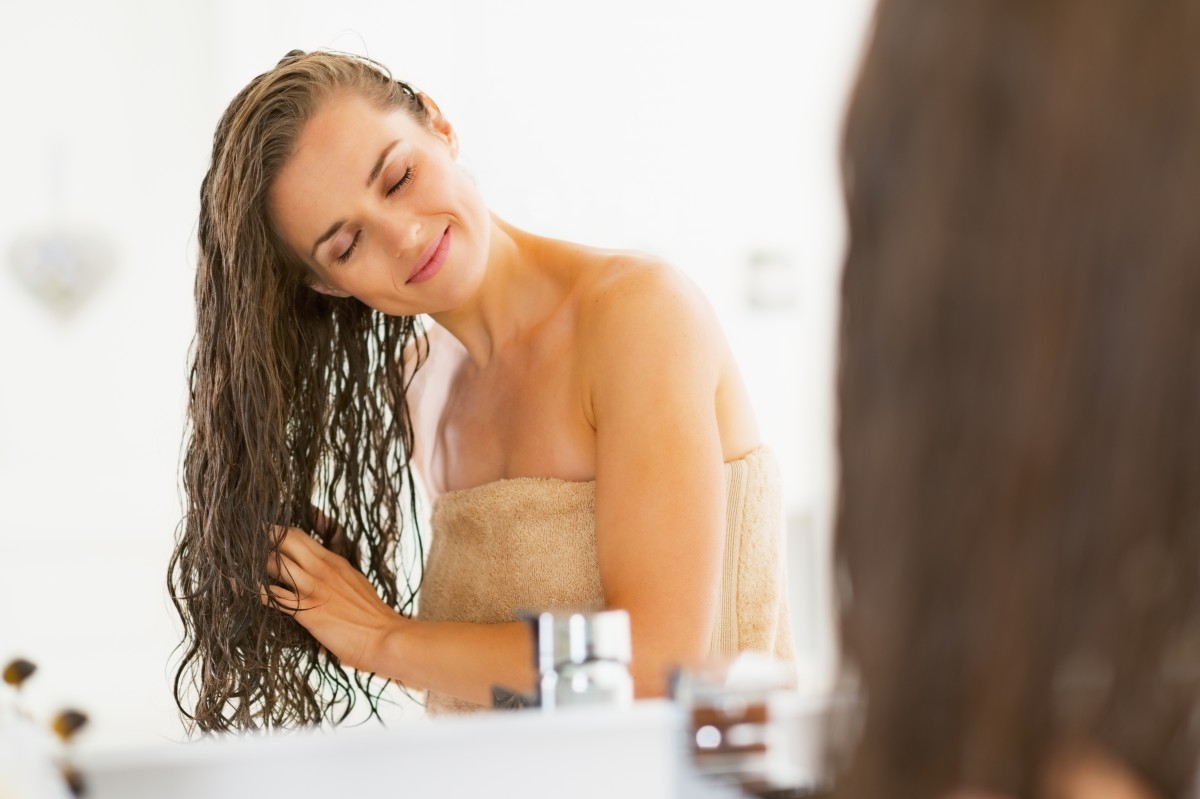
What matters most during washing? Infusing curly hair with moisture! Use warm water with a gentle flow to avoid straightening curls. Pour conditioner into your palms, distribute it with your fingers through sections, combing gently while gradually adding water. When hair feels heavy and smooth, rinse. The key is not to disrupt the curl pattern.
Bloated Beauty: Why Did Women Scratch, Bite, and Pierce Their Lips for Centuries?
Styling
Ultimate Curly Hair Care Routine: Drying
This step is debated because each curl type requires specific care.
- If your hair dries with undefined or poorly formed curls, use the plopping technique. Gently squeeze hair, apply a specialized curly hair gel, gather it into a microfiber cap (or a cotton T-shirt), and let it air-dry into shape.
- For naturally defined curls, simply take a small amount of curly hair gel and distribute it evenly. You can even use a blow-dryer!
Winter Curly Hair Care
As you know, curly hair craves moisture, which is scarce in winter due to rapid water evaporation. To prevent dryness, use nourishing, deep-conditioning products containing aloe, glycerin, and natural oils.
Also, protect your scalp—blood vessels feed hair follicles. For extra nourishment, massage your scalp weekly with tea tree, peppermint, or rosemary oils, provided you have no allergies or scalp conditions.
How to Cut Curly Hair?
DevaCut is a technique rarely taught to stylists, as straight hair still dominates. This haircut originated at the Devachan salon, owned by—you guessed it—Lorraine Massey!
What sets it apart? DevaCut involves cutting dry curly hair—crucial for achieving the right shape by observing curls in their natural state. No comb is used; only scissors and the stylist’s hands, who avoid pulling curls to maintain a smooth form.
Such specialists are rare—if you find one, treasure them.
Promised List of Ingredients to Avoid
Sulfates:
Alkylbenzene sulfonates
Alkyl Benzene Sulfonate
Ammonium laureth sulfate
Ammonium lauryl sulfate
Ammonium xylenesulfonate
Sodium C14-16 Olefin Sulfonate
Sodium cocoyl sarcosinate
Sodium Coco Sulfate
Sodium laureth sulfate
Sodium lauryl sulfate
Sodium myreth sulfate
Sodium Xylenesulfonate
Tea-lauryl sulfate
Ethyl PEG-15 cocamine sulfate
Dioctyl sodium sulfosuccinate
Magnesium Lauryl Sulfate
Sodium C12-15 Alkyl Sulfate
Sodium Cetearyl Sulfate
Silicones:
Dimethicone
Bisaminopropyl dimethicone
Ketearyl methicone
Cetyl dimethicone
Cyclopentasiloxane
Stearoxy dimethicone
Stearyl dimethicone
Trimethylsilylamodimethicone
Amodimethicone
Dimethicone
Dimethiconol
Behenoxy dimethicone
Phenyl trimethicone
Aminopropyl triethoxysilane
Critical Alcohols:
Denatured alcohol
SD alcohol 40
Witch hazel
Isopropanol
Ethanol
SD alcohol
Propanol
Propyl alcohol
Isopropyl alcohol