All-in-one VR devices mark a massive step ahead for the industry, with Google, Facebook, and HTC among the early movers in this space.
A self-contained VR headset consolidates every component required to convince your brain that you have stepped into another reality directly into the headband. It functions as one unified piece of equipment, much like a smartphone or tablet.
Earlier VR headsets sold to consumers needed several parts working in tandem to operate. That list includes the Rift, Vive, Gear VR, Daydream View, Cardboard, PlayStation VR, and Windows-driven VR systems. By contrast, a single device built from the ground up solely for virtual reality ensures the experience is always within reach. Quick standby states will become standard, leaving these goggles primed around the clock.
These self-contained units are cable-free. It is worth clarifying, though, that not every wireless VR product qualifies as a standalone. Certain setups pipe data wirelessly from a nearby computer or console, while others rely on tethered packs that attach to apparel or tuck into a pocket. Some enthusiasts envision a genuine standalone housing the processor, graphics chip, screen, storage, and tracking sensors within the headband, unlocking extra modes for greater adaptability. Perhaps an external battery pack could extend session length, or perhaps a nearby PC linked wirelessly could render richer, more detailed virtual realms.
The earliest self-contained headsets differ widely from one another. Certain models only permit seated or stationary use. Other all-in-one VR products allow greater locomotion yet fall short on collision avoidance or manual interaction. Eventually a platform will merge intuitive hand input with protective functions such as object recognition, but at present, here is a breakdown of what has been revealed.
Bear in mind that the costs outlined below are not strictly equivalent, since some account for tax and others do not.
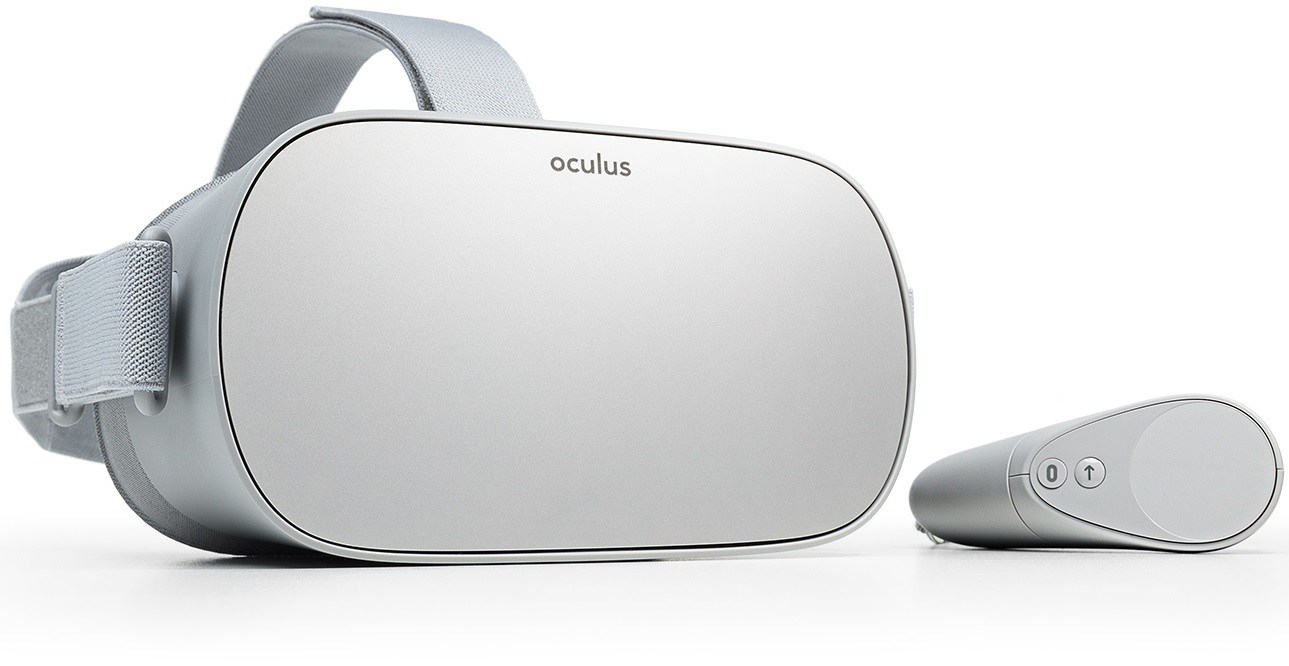
Oculus Go ($200)
Features: Stationary or seated use only, one-handed pointing controller without reach capability, LCD screen.
We have not yet had the opportunity to test this visor, but the remarkably accessible entry price steals the spotlight. A surfaced photograph hints at another significant advantage — a deep content catalog migrated from Gear VR boasting more than 1,000 apps, games, and films.
Lenovo Mirage Solo ($400)
Features: Locomotion freedom inside a confined zone, no obstacle avoidance, one-handed pointing controller without reach capability, LCD screen.
This Google-driven setup brings physical movement to Daydream applications, though that movement is capped at a radius of 1.5 meters. The image cuts out entirely once you stray beyond that perimeter. I sampled the Lenovo Mirage Solo for a short spell at CES, and the ability to walk around felt refreshing. Yet which experiences truly shine when your head can roam freely but your hands remain planted?
Vive Focus ($635)
Features: Locomotion freedom across a 2-meter zone with the choice to disable the safety boundary for broader areas, no obstacle avoidance, one-handed pointing controller without reach capability, OLED screen.
I also sampled the Vive Focus briefly at CES, and its visuals proved engaging enough that dodging incoming projectiles felt natural and pleasant. Pair the Focus with a MicroSD card loaded with ample storage, and it could double as a personal cinema for regular airline or rail commuters. That same scenario could easily apply to the Mirage Solo and Oculus Go as well.
Oculus Santa Cruz (TBD)
Features: Locomotion freedom, dual point-and-reach hand controllers, obstacle avoidance undetermined, screen type undetermined.
This prototype unit, unveiled at Oculus Connect 4, stands as the strongest standalone encounter I have experienced so far. Facebook's strategic positioning of cameras lets the hardware periodically maintain sight of the controllers when they drift into awkward angles. This cuts down on instances where hand tracking might drop out. Oculus has confirmed that developer kits will ship in 2018.
Pico Neo ($750)
Features: Locomotion freedom with a default play boundary at 0.8 meters and the option to widen it, dual point-and-reach hand controllers, LCD screen. Pico maintains that a safety boundary can additionally be applied at the software layer with obstacle avoidance.
We assessed the prior Pico Goblin, and although it was the first widely available standalone, it fell short on having a major, well-known content marketplace such as Oculus Home or Steam to support its ambitions. The Pico Neo strives to reclaim that first-mover status, this time shipping dual point-and-reach controllers inside a consumer standalone. During our hands-on session at CES, we observed a sharp screen, though we harbor concerns regarding the reliability of controller tracking. The Pico Neo will additionally tap into the Viveport-driven Vive Wave store, along with other platforms, to ease worries about content availability for buyers.
This story originally appeared on Uploadvr.com. Copyright 2018