Published: Oct 31, 2019 · Updated: Nov 1, 2019 by Jenny · This site generates revenue through affiliate partnerships, advertisements, and sponsored material.
Budget-friendly and packed with nourishment, bone broth ranks among the most wholesome staples you can whip up in your own kitchen. Loaded with protein and boasting a rich, savory profile, it forms the backbone of countless soups, stews, and sauces. Equally, you can drink it straight from a mug as a healing tonic.
Defining Bone Broth
Bone broth describes the liquid produced when you slow-simmer bony cuts and connective tissue in water across many hours. Beyond bones and cartilage, the pot typically receives vegetables, herbs, spices, and sometimes wine or apple cider vinegar.
The vegetables, herbs, and spices contribute taste, though some cooks toss in therapeutic botanicals such as reishi or ashwagandha to deliver distinct healing qualities.
The acidic component — wine or apple cider vinegar — works to dismantle proteins in collagen and connective tissue, yielding a gelatinous, protein-dense liquid. That protein content is precisely the prize when you consume broth.
Though it shines as a foundation for soups, stews, sauces, and gravies, the traditional way to enjoy broth is by sipping it solo as a wellness elixir. Historically, folks drank broth to ease ailments such as colds or to bolster and preserve general vitality.
Broth vs. Stock vs. Bone Broth
These three liquids share much in common. Many cooks even swap one for another mid-recipe, yet meaningful distinctions set them apart. Specifically, each is crafted somewhat differently and finds its own ideal application.
- Broth generally relies on meat and simmers briefly. It offers a delicate taste and is often enjoyed alone as a healing tonic.
- Stock comes from meaty joints and bones, cooks for a moderate stretch, and serves as the base for dishes such as sauces, soups, and stews.
- Bone broth draws on assorted meaty joints and bones, simmers for many hours, and is usually consumed solo as a healing tonic.
Nutritional Profile
A great many people start sipping or crafting bone broth at home after hearing it might aid digestion, reinforce immunity, or soften the visible marks of aging. Though bone broth is a stellar collagen source and genuinely nourishing, its precise advantages remain somewhat fuzzy.
- Bone broth delivers a protein known as gelatin, formed from broken-down collagen. Collagen originates in connective tissue. Protein content shifts based on water volume, bone selection, and cook time, yet most servings provide around 10 grams of protein per 8-oz cup.
- It supplies generous amino acids, notably glycine and proline. Glycine functions as a vital neurotransmitter with anti-inflammatory effects and bolsters immunity (1). Proline, alongside essentials like vitamin C, encourages joint wellness and collagen synthesis (2).
- Bone broth delivers B vitamins such as niacin and riboflavin, both central to metabolic function. They also assist your body in converting carbohydrates, proteins, and fats into usable energy (3, 4).
- Bone broth provides glucosamine and chondroitin, compounds that nurture joint health (5).
- Bone broth offers only trace mineral content. Despite widespread belief, it is not a meaningful source of calcium, phosphorus, or other minerals. Discover more about bone broth and minerals here.
Selecting the Right Bones
Quality bone broth owes its signature gelatinous body to collagen, which originates in the connective tissue, ligaments, and bone surfaces. Therefore, to craft a broth that's flavorful as well as rich in protein and gelatin, gather a diverse mix of bones — some with joints, others with ample meat.
- For beef bone broth and beef stock, reach for knuckle bones, neck bones, shanks, and oxtails. Marrow bones also work, though use them sparingly — excess marrow muddies flavor, leaves a greasy mouthfeel, and prevents gelling.
- For chicken bone broth, consider a whole chicken, chicken feet, a roasted bird's carcass, or chicken backs and wing tips. Using chicken feet alone also works beautifully.
- For turkey bone broth, rely on a roasted turkey carcass, turkey backs, wing tips, and feet when you can source them.
- For pork, choose ham hocks and pork neck bones. Should you locate them, pork trotters make a wonderful addition.
Essential Bone Broth Techniques
Crafting bone broth is refreshingly uncomplicated. Anyone who can fire up an oven or boil water can produce a respectable batch. That said, a handful of key pointers will ensure consistent, excellent results.
Laying the Foundation
- Begin by roasting your bones. Heat caramelizes surface proteins and renders out some fat, producing deeper, bolder flavor.
- Incorporate wine for balanced acidity. A splash of wine rounds out flavors more elegantly than apple cider vinegar.
- Add just enough water to cover the bones — no more. Bone broth gels and packs protein in part because it uses less water than standard broths and stocks.
- Skim off any foam or scum that surfaces. While mostly protein and perfectly edible, it can cloud the broth and dull its taste.
Achieving a Solid Gel
- Bring water to a boil first, then drop the heat to a gentle simmer. Lower temperatures yield clearer, tastier, less greasy broth. Temperature control also determines whether your broth sets properly.
- Simmer for several hours, not days. Over-simmering may break down gelatin and release histamines, which trouble certain individuals. A moderate simmer still extracts abundant protein and flavor while conserving energy.
Building Complex Flavor
- Drop medicinal and culinary spices in at the start. Black pepper, woody herbs like dried bay, and dense roots such as astragalus need time to unfold their character, so introduce them alongside the bones.
- Add roasted garlic and onions from the beginning. Tossing onion halves and garlic in with the bones during roasting yields exceptional depth.
- Stir vegetables in near the end. Carrots and celery can brighten broth, yet they risk turning it sweet, metallic, or vegetal if overcooked. Add them during the final 20 to 30 minutes for optimal taste.
- Fold in delicate leafy herbs at the end. Parsley, savory, and basil contribute vivid flavor, but wilt and lose vibrancy if added too early. Introduce them in the final 10 minutes, or once the pot leaves the heat.
Finishing Touches
- Pour the hot broth through a strainer into glass jars, leaving at least 1 inch of headspace (or 2 inches if freezing).
- Remove the fat either by letting the broth rest and spooning off the surface layer, or by chilling it so the fat solidifies on top. Lift off the solidified fat with a spoon or fork to keep the broth from feeling greasy and heavy.
Putting Your Broth to Work
The classic approach is sipping bone broth solo, perhaps with herbs and a pinch of sea salt. In this format, it acts primarily as a restorative. Still, it works wonderfully wherever you'd use traditional stock or meat broth.
- Enjoy bone broth straight, or dress it up with salt, spices, and herbs. It makes a protein-rich snack or elegant starter.
- Transform it into soups and stews, such as Mushroom Stew, Turkey and Wild Rice Soup, or Potato Leek Soup.
- Reduce it into sauces, including gravy, pan sauce, or other reduction-style preparations.
- Cook rice or grains in bone broth for added flavor and protein — exceptional in mushroom risotto.
Foundational Bone Broth Recipe
Prep Time: 5 mins
Cook Time: 8 hrs
Total Time: 8 hrs 5 mins
Servings: 8 servings (2 quarts)
Calories: 58kcal
Print Recipe
Ingredients
- 3 pounds bones (chicken, beef, pork, lamb, etc.)
- 2 tablespoons extra virgin olive oil
- 1 cup white wine
- 12 cups water
- 2 bay leaves
- 1 tablespoon black peppercorns
- fine sea salt
Instructions
- Preheat the oven to 400°F and line a baking sheet with parchment paper.
- Spread the bones across the baking sheet, drizzle with extra virgin olive oil, and roast for 30 minutes, or until lightly browned. Flip them halfway through for even coloring.
- Use kitchen tongs to move the bones into a heavy stockpot. Pour in the wine and water, then add the bay leaves and peppercorns.
- Bring the pot to a boil over medium-high heat, then immediately reduce to low. Simmer uncovered for 8 to 16 hours, skimming any foam that forms on the surface.
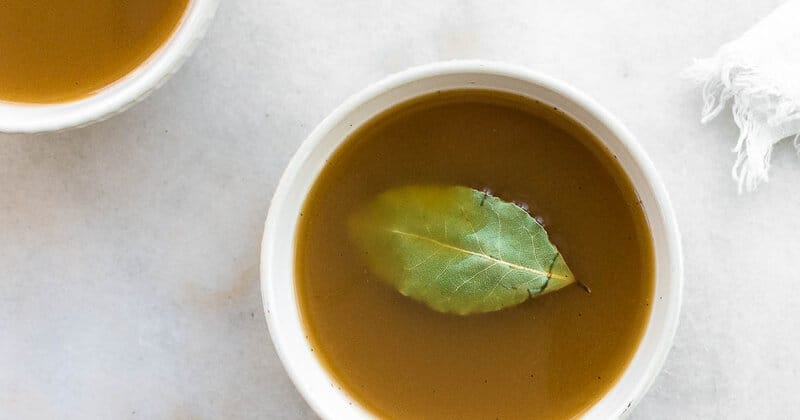
- Strain the finished broth and season with fine sea salt to taste. Serve right away, or transfer to jars and refrigerate up to 1 week, or freeze up to 6 months.
Notes
On Timing: Smaller bones such as chicken cook faster, while larger bones like beef need extended simmering.
Nutrition
Calories: 58kcal | Carbohydrates: 1g | Protein: 10g | Sodium: 91mg | Potassium: 21mg | Sugar: 1g | Calcium: 3mg | Iron: 0.1mg
Going Further
Want to elevate your bone broth even more? Explore these resources.
- Zhong, Z., et al. (2003) L-Glycine: a novel antiinflammatory, immunomodulatory, and cytoprotective agent. Current Opinion in Clinical Nutrition and Metabolic Care. 2) Wu, G., et al. (2011). Proline and hydroxyproline metabolism: implications for animal and human nutrition. Amino acids. 3) Bradford, A. (2018) Niacin (Vitamin B3): Benefits & Side Effects. Live Science. 4) Bradford, A. (2015) Vitamin B2 (Riboflavin): Sources, Benefits and Dosage. Live Science. 5) Tang, H. & Pang, S. (2016) Proline Catabolism Modulates Innate Immunity in Caenorhabditis elegans. Cell Reports. 5) Toweed, T. et al. (2005) Glucosamine therapy for treating osteoarthritis. Cochrane Database of Systematic Reviews.