by Akis Petrezakis
Authentic Greek Pork Gyro at Home
Ingredients
- 1 pork tenderloin 400 g
- 1 medium onion
- 3 sprigs rosemary
- 3 sprigs oregano
- 2 cloves of garlic, crushed whole
- 5 tablespoons olive oil
- 5 + 2 tablespoons white wine vinegar
- coarse salt
- pepper
- 1 teaspoon honey
- tzatziki sauce
Method
Use a sharp knife to strip away the silvery membrane running along the upper surface of the tenderloin. Getting rid of this layer is essential, since it stays chewy regardless of cooking time.
Slice the pork into uniform, thin diagonal cutlets measuring roughly 0.5 cm across.
Drop the sliced meat into a deep bowl.
Cut the onion into fine rings and toss them in with the pork.
Strip the leaves from the rosemary and oregano stalks, mince them finely, and scatter over the meat.
Pour in the olive oil, 5 tablespoons of the vinegar, a generous pinch of salt, pepper, and the honey. Stir everything together with a wooden spoon until the slices are well coated. (Resist the urge to add extra honey, as it will darken the meat excessively during cooking and create a charred appearance even when nothing is actually burnt. You will also notice the meat turning pale once the marinade hits it; this reaction comes from the vinegar and is completely normal.)
Cover and chill in the fridge for 6 hours, or leave it overnight for a deeper flavor.
Place a non-stick skillet over high heat and let it heat up until it begins to smoke. Swirl in 2 tablespoons of olive oil, then lay the pork slices in three separate rounds. Cramming too many pieces in at once will bring the temperature down, causing the meat to steam rather than develop a proper sear.
Flip each slice once the underside has developed a golden crust, then sear the opposite side.
Splash 1 tablespoon of vinegar over the cooked batch, give it a quick toss, then transfer to a plate before starting the next round.
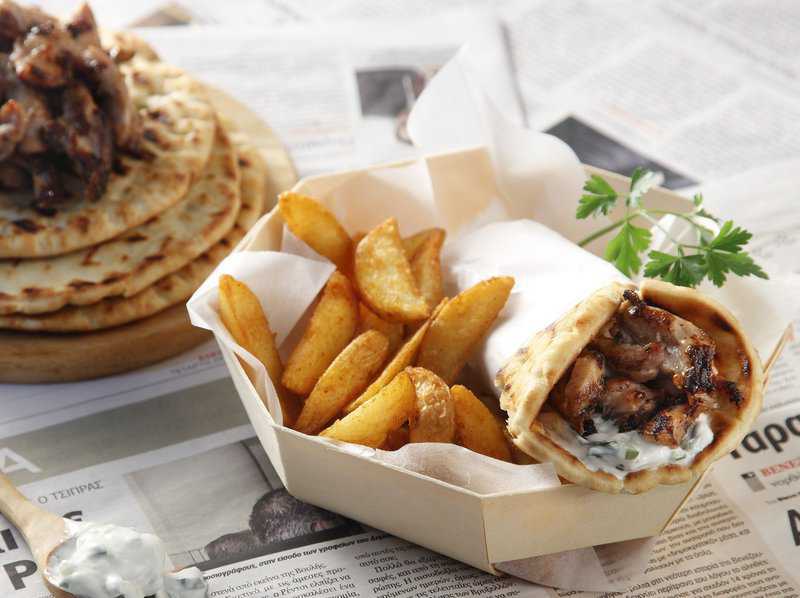
Pile the finished gyro onto warm, toasted Greek pita and finish with a generous spoon of tzatziki. Feel free to build your own version by layering on tomatoes, lettuce, potatoes, tzatziki, or whatever combination suits your taste!
Tip
Proper marination is what makes all the difference! That final splash of vinegar delivers the unmistakable tangy note that defines a true gyro, so be sure not to leave it out!