My first encounter with one of Portugal's numerous Capelas dos Ossos took place in Faro, the administrative center of the Algarve. This southernmost part of the nation is famous for its sun-drenched shores and vibrant entertainment scene. Discovering a chapel adorned with human skeletons only a brief car ride away from beach chairs and karaoke establishments certainly caught my attention.
Its peculiar nature was enough to secure a spot on my travel plans, and I noted it down before casually browsing through other attractions in Faro. Only when I stood inside that chapel, scanning the surroundings, did the full weight of what I had traveled to see hit me: a structure composed of literally thousands of human remains.
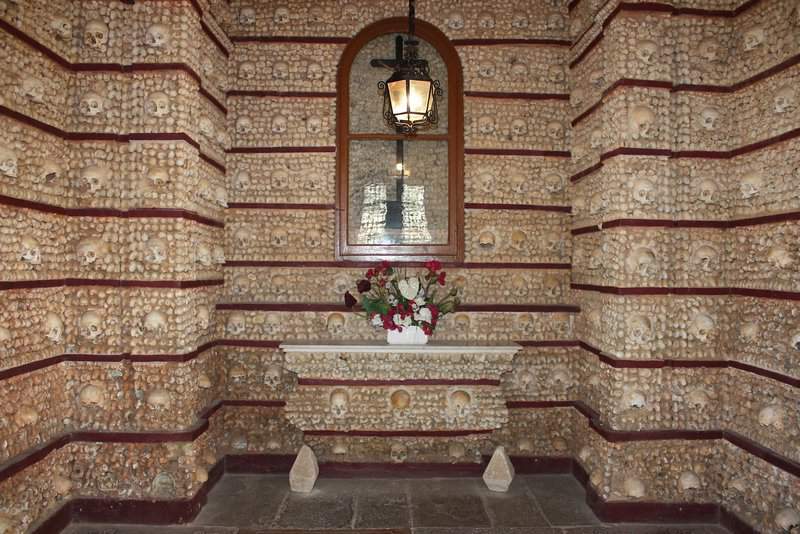
Every inch of wall bore a skull, a femur, or even a finger bone. I checked carefully. I had encountered skeletons previously, but solely in museum settings (or the ever-present Kiehl's shops found on many main streets, though that might not qualify). Never before had I witnessed such a vast collection of bones simultaneously, and that gave this chapel an added intensity. In every direction, bones filled my view.
Yet these are not mere bones, are they? That's the crucial point. They belong to human beings. They are the remains of individuals who once lived and now are gone. People who trod the same medieval lanes I traversed en route to the chapel, who offered prayers in the church I had just visited.
My gaze darted across the space, seeking a spot to settle—a place where I wouldn't be confronted by hollow eye sockets. However, no such refuge existed.
This is precisely the intended effect the 19th-century Carmelite monks, who created the Faro chapel, aimed to evoke. Above the entrance, the inscription reads: "Pára aqui a considerar que a este estado hás-de chegar" (pause here and reflect that you too will reach this condition). The bone chapel in Évora, the grandest among Portugal's ossuary chapels, bears a comparable message: "Nós ossos que aqui estamos pelos vossos esperamos" (We bones that are here await yours). Quite a reminder of mortality, isn't it?
Portugal's Macabre Ossuary Chapels
The Origins of These Ossuary Chapels
The story begins in Évora, which houses Portugal's biggest ossuary chapel. During the 16th century, burial grounds within and around the city grew excessively crowded. An urgent remedy for the overflowing cemeteries was required. Unwilling to merely relocate the remains elsewhere, the Franciscan monks of Évora chose to bestow upon the deceased the dignity of contributing to a greater cause.
In that era, Évora was a prosperous town. The monks believed that this affluence was diverting residents from spiritual matters and causing them to overlook life's transience. Therefore, to address both issues simultaneously, they disinterred over five thousand corpses from the congested burial site. They incorporated these remains into the new chapel, binding them with mortar.
To drive their message home, they suspended two bodies from the wall—including that of a child. They were not known for subtlety, though they evidently had an eye for decoration. They even fashioned a chandelier from some of the bones. This practice quickly proliferated throughout Portugal, leading to the construction of additional ossuary chapels, such as the one in Faro.
Being inside these chapels is simultaneously distressing and consecrating. The monks undoubtedly achieved their goal, for it is unavoidable to contemplate life's brevity when gazing into the vacant eye sockets of a 16th-century Portuguese individual.
Choosing a Bone Chapel to See
The Évora chapel is substantially bigger than its Faro counterpart, with five times the number of bones decorating its walls (precisely: 5,000 in Évora compared to 1,000 in Faro). Besides being larger and older, it is also the more renowned of the two, often featured on Instagram and Pinterest. Nonetheless, I found the Faro chapel to be significantly more impactful.
My earlier visit to Faro likely gives me a preference for it, but I believe I appreciated it more due to its far lower tourist traffic. In Faro, I was the sole visitor inside the chapel, allowing me to fully immerse myself in the moment and absorb the eerie spectacle. In Évora, at least twenty other individuals shared the space, elbowing for room.
There is an undeniable potency in being the lone occupant of the chamber, enveloped in a silence reminiscent of a tomb. This is far more achievable in Faro or one of Portugal's lesser-known ossuary chapels. However, the diminished impact in Évora wasn't solely due to the presence of others.
The Ironic Scene
Upon entering the Évora chapel, I found every visitor frozen in place, one arm extended forward, attempting to capture the ideal selfie. As I stepped through the entrance beneath its foreboding inscription, I had to weave through clusters of tourists standing motionless. The contradiction between the words above the door and the activity inside was entirely unnoticed by everyone.
No one was truly present or contemplating life's ephemeral quality. All were preoccupied with the number of likes their photos would garner on Facebook, Instagram, and Snapchat. The allure of the perfect image outweighed the macabre surroundings and the monks' 16th-century message.
Witnessing all those individuals posed in that manner is a surreal memory that has lingered with me—perhaps even more than the bones. I frequently use my phone and am usually the last to criticize others for being absorbed in theirs, yet the contrast between the chapel's somber message and these people behaving like automatons was profoundly disconcerting.
As distinctive as that encounter was, I advise opting for a smaller chapel over Évora if possible. Naturally, I suggest the Capela dos Ossos in Faro, or the nearby chapel in Alcantarilha—another lesser-known choice.
Should you choose to visit the Évora chapel, arriving early is advisable to escape the crowds. When I arrived, over fifteen people were already inside. As I departed, a tour group of about twenty additional visitors appeared. This site ranks among the top tourist draws in Évora, perhaps even in Portugal, and during spring and autumn, it can become extremely congested.
Locating a Bone Chapel
Portugal boasts at least six distinct ossuary chapels, with several more scattered across Europe. The chapels in Évora and Faro are the most well-known and most tourist-friendly due to their accessible opening times. I have attempted to visit the chapels in Lagos and Alcantarilha on multiple occasions, but they were closed upon my arrival. Besides Évora, Faro, Alcantarilha, and Lagos, additional bone chapels exist in Campo Maior and Monforte.
James is the author of the travel blog Portugalist, dedicated to Portugal and everything Portuguese. He has resided in Lisbon, the Algarve, and northern Portugal, and has journeyed widely across the nation. He frequently finds himself fantasizing about his forthcoming Portuguese destination.