If you haven't come down with the flu yet, chances are someone in your circle has. According to the CDC, this season is on track to be the most severe since the 2009 swine flu pandemic, with hospitalization rates hitting a ten-year high.
So how can you tell whether you're battling influenza or just a standard cold?
Beyond visiting a physician for a formal diagnosis, a useful "flu algorithm" has been making the rounds on Twitter, offering some professional insight.
Essentially, if you have the flu, you'll be well aware of it.
Both influenza and the common cold are respiratory illnesses, but they stem from different viruses.
Although their symptoms can overlap, cold symptoms are generally far milder. For instance, a cold might bring a runny nose, congestion, and a mild headache. In contrast, this year's flu can leave you feeling completely drained.
Joking aside, the flu can lead to severe health complications, including death. So far this season, more than 50 children have died from the virus.
A proper diagnosis is necessary before any treatment plan can begin.
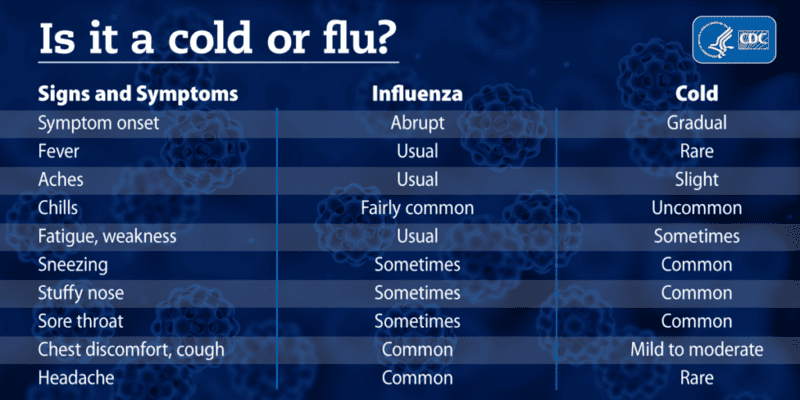
Even so, distinguishing a cold from the flu based solely on symptoms can be tricky—and sometimes nearly impossible. However, a CDC table provides a more scientific approach to telling them apart:
That's helpful, but how can people avoid catching the flu in the first place?
The CDC and nearly every healthcare professional agree: Get vaccinated.
Science As Fact is our sister site, covering politics, debunking, fact-checking, and humor. For more content like this, head over to Science As Fact.