by Linda Parham
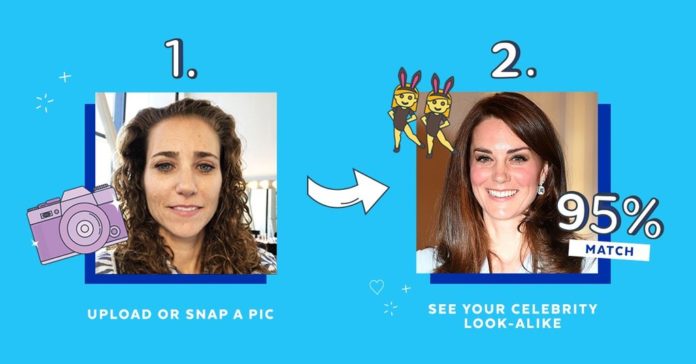
Convinced you’re Kate Middleton’s double, or has your mother always insisted you remind her of a young Katharine Hepburn? Now you can put those flattering comparisons to the test by visiting PopSugar’s latest celebrity twinning tool at #Twinning. The app scours a collection of Hollywood actresses, punk rock musicians, and old-school political figures to find your match. Much like Google’s Arts and Culture Face Match, it aims to reveal your lookalike—but instead of browsing classic paintings, @Twinning searches a database of celebrity images to pair you with your pop culture twin.
Snap a selfie or upload a photo from your library. The tool then generates five matches and displays a “twinning percentage” for each top contender.
The outcomes can be hilariously inaccurate. Change your angle or hairstyle, and you’ll likely see wildly different results. Lighting and makeup also produce a broad range of matches. Hair color appears to heavily influence the app’s picks. Swap your dark locks for a wig, and your twin might shift from Katharine Hepburn to Brigitte Bardot.
Moreover, #Twinning seems prone to telling women they resemble men. In my tests, it delivered noticeably more male matches than Google’s Arts and Culture Face Match. Perhaps I was having an off makeup day. I’ve always considered Axl Rose of Guns N’ Roses one of the prettier hard rockers—no complaints there. But Gary Oldman? Really? I take solace in being matched with Pink and Christina Applegate. Yet Donald Trump? Jeff Bridges?
The New York Times recently reported that artificial intelligence software is only as intelligent as the data it’s trained on. That article cited a study estimating one widely used facial recognition dataset to be over 75 percent male and more than 80 percent white. That insight may explain why so many grizzled men appear as my twins. After reading the Times piece, I feel better about the male matches PopSugar assigned me.
By this week, nearly 50,000 people had already tried the #twinning database. Join them—even if the software doesn’t agree you’re a dead ringer for Gigi Hadid. Your ego might still get a boost when #Twinning declares you look just like a notable French actress, film director, and screenwriter. Hats off to Nicole Garcia—I’m flattered! Like Google’s Arts and Culture Face Match, this app is highly addictive. I may keep returning until I finally match with Greta Gerwig from Lady Bird.
youbeauty.com
%22%20%2F%3E%0A%20%20%20%20%20%20%3Cstop%20offset%3D%22100%25%22%20stop-color%3D%22hsl(121%2038%25%2069%25)%22%20%2F%3E%0A%20%20%20%20%3C%2FlinearGradient%3E%0A%20%20%3C%2Fdefs%3E%0A%20%20%3Crect%20width%3D%221200%22%20height%3D%22750%22%20fill%3D%22url(%23bg)%22%20%2F%3E%0A%20%20%3Ctext%20x%3D%22600%22%20y%3D%22286.5%22%20text-anchor%3D%22middle%22%20fill%3D%22hsl(130%2052%25%2036%25)%22%20font-family%3D%22Inter%2C%20ui-sans-serif%2C%20system-ui%2C%20sans-serif%22%20font-size%3D%2224%22%20font-weight%3D%22700%22%20letter-spacing%3D%220.22em%22%3ETECH%3C%2Ftext%3E%0A%20%20%3Ctext%20text-anchor%3D%22middle%22%20fill%3D%22hsl(327%2038%25%2020%25)%22%20font-family%3D%22Georgia%2C%20'Times%20New%20Roman'%2C%20serif%22%20font-size%3D%2250%22%20font-weight%3D%22700%22%3E%3Ctspan%20x%3D%22600%22%20y%3D%22351.5%22%3EYouTube%26apos%3Bs%20So-Called%20%26apos%3BOpen%3C%2Ftspan%3E%3Ctspan%20x%3D%22600%22%20y%3D%22410.5%22%3ELetter%26apos%3B%20on%20Logan%20Paul%20Is%3C%2Ftspan%3E%3Ctspan%20x%3D%22600%22%20y%3D%22469.5%22%3EAnything%20But%20Transparent%3C%2Ftspan%3E%3C%2Ftext%3E%0A%3C%2Fsvg%3E)