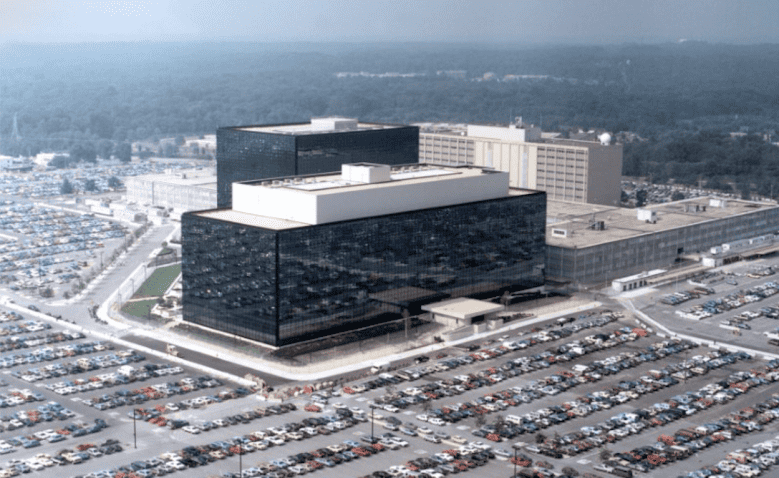
(Reuters) — The U.S. House of Representatives on Thursday cleared legislation renewing the National Security Agency's warrantless internet monitoring program, brushing past criticism from civil liberties advocates and uncertainty triggered by President Donald Trump's morning tweets that initially appeared to undermine the intelligence tool.
The bill passed 256-164 along largely partisan lines, concluding years of congressional wrangling over how expansive U.S. intelligence gathering should be — a debate fueled by former NSA contractor Edward Snowden's 2013 disclosures of classified surveillance files.
Senior House Democrats had pushed for the vote to be scrapped after Trump seemed to question the program's value, but Republicans moved forward regardless.
Trump initially posted on Twitter that the surveillance program — originally established in secrecy following the September 11, 2001, attacks and later legally sanctioned under Section 702 of the Foreign Intelligence Surveillance Act (FISA) — had been wielded against him, before reversing course and declaring it necessary.
A coalition of libertarian-leaning Republicans and liberal Democrats sought to attach stronger privacy safeguards. Their amendment, which would have required a warrant before the NSA or other intelligence agencies could examine an American's communications incidentally captured, failed on Thursday.
Thursday's outcome delivered a significant blow to privacy and civil liberties advocates, who just two years earlier had celebrated enactment of a law effectively curtailing the NSA's bulk collection of U.S. telephone records — another top-secret program exposed by Snowden.
The bill as approved by the House would extend the NSA's surveillance authorities for six years with only modest revisions. Several privacy organizations argued it would actually broaden the agency's spying powers.
Most lawmakers expect enactment, though Senate passage and Trump's signature remain necessary. Republican Senator Rand Paul and Democratic Senator Ron Wyden immediately pledged to filibuster the measure, though it was unclear whether they could rally enough colleagues to force changes.
The Senate will hold a procedural vote on the legislation next week following its recess, U.S. Senate Majority Leader Mitch McConnell said Thursday.
"The intelligence community and the Justice Department depend on these vital authorities to protect the homeland and keep Americans safe," McConnell, a Republican, said in a statement.
The White House, U.S. intelligence agencies and Republican congressional leaders have maintained that the surveillance program is indispensable and warrants minimal or no revision.
Before the vote, a tweet from Trump had contradicted the White House's official stance and revived unsubstantiated allegations that former Democratic President Barack Obama's administration improperly monitored the Republican's 2016 presidential campaign.
"This is the act that may have been used, with the help of the discredited and phony Dossier, to so badly surveil and abuse the Trump Campaign by the previous administration and others?" the president wrote in a tweet.
Trump walks back criticism
The White House did not immediately respond to a request to clarify the president's post, but he issued a follow-up message under two hours later, following a telephone conversation with House Republican leader Paul Ryan.
"With that being said, I have personally directed the fix to the unmasking process since taking office and today's vote is about foreign surveillance of foreign bad guys on foreign land. We need it! Get smart!" Trump tweeted.
Unmasking concerns the largely separate question of how Americans' identities, normally concealed in intelligence reports, can be revealed.
Following Thursday's vote, Ryan, asked about his conversation with the president, said Trump's concerns related to other portions of the law.
"It's well known that he has concerns about the domestic FISA law. That's not what we're doing today. Today was 702, which is a different part of that law. … He knows that and he, I think, put out something that clarifies that," Ryan told reporters.
Asked by Reuters at a New York conference about the president's tweets, Rob Joyce, the White House's top cyber official, said there was no ambiguity within the Oval Office about the program's worth and that no cases of political misuse had occurred.
Trump's surveillance tweets marked the second occasion this week that he appeared to diverge from his administration's position. During a Tuesday bipartisan meeting on immigration, he initially voiced support when Democratic Senator Dianne Feinstein floated a "clean" bill protecting undocumented immigrants brought to the United States as children.
House Majority Leader Kevin McCarthy noted that a "clean" bill would exclude the border security provisions and wall funding Trump has insisted upon as part of any immigration package.
Press secretary Sarah Sanders told reporters the president's surveillance tweets did not contradict administration policy and that he was expressing broader concerns about FISA.
Without congressional action, the legal foundation for Section 702 expires next week, though intelligence officials indicate operations could continue through April.
Section 702 authorizes the NSA to intercept vast quantities of digital communications from foreigners living abroad through U.S. companies such as Facebook, Verizon Communications, and Alphabet's Google.