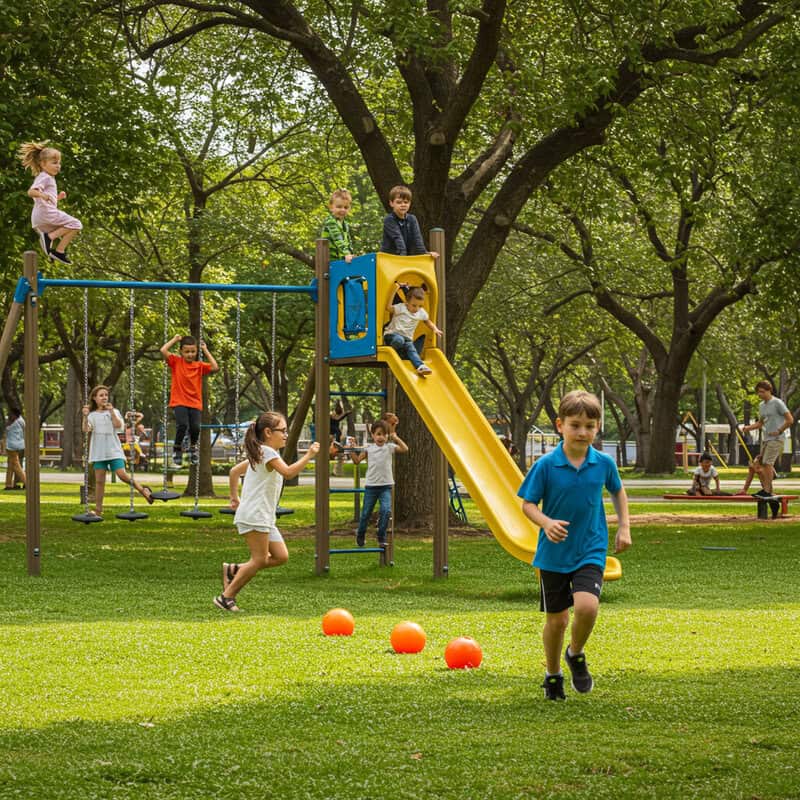
In today's high-tech era, chances for children to engage in outdoor activities are becoming scarcer, yet the importance of such experiences for their development has never been more critical. Outdoor play does more than just promote physical exercise; it also supports emotional, social, and intellectual growth, establishing a strong base for a healthy life.
Current research indicates that spending time in nature can enhance focus, imagination, and the ability to bounce back from challenges. This piece examines the wide-ranging advantages of outdoor play and provides actionable advice for families aiming to help children rediscover the natural world for more harmonious and well-rounded growth.
The Advantages of Playing Outdoors
Children laughing and running together outside, enhancing brain function and physical fitness through energetic, joyful activity. | Generated by Google Gemini
Playing outside delivers a comprehensive boost to a child's development. On a physical level, it improves muscle strength, agility, and general wellness through active motion. In social contexts, outdoor settings encourage collaboration, verbal exchange, and the ability to resolve disagreements among friends. Emotionally, natural surroundings lower anxiety and boost joy, aiding children in developing resilience and self-assurance.
From a cognitive perspective, unstructured play promotes inventiveness, analytical thinking, and the ability to maintain focus. Recognizing these diverse benefits highlights why it is essential to make outdoor activities a central part of every child's development and overall health.
Design a Secure and Welcoming Outdoor Space
A bright garden play zone featuring soft grass, sturdy fences, and colorful toys offers a protected and inviting backyard haven. | Generated by Google Gemini
Creating a safe and appealing outdoor area encourages children to explore and gain confidence. Make sure play zones are clear of dangers, offer gear suited to various ages, and check regularly for potential hazards. Add natural features such as sand, water, and vegetation to spark curiosity and sensory discovery.
Adult oversight is crucial to allow positive risk-taking while avoiding accidents. Ensure the space is accessible to all kids, including those with disabilities, to promote equal participation. For further advice on outdoor play safety and inclusive design, consult the CDC’s Outdoor Play Safety page.
Promote Free and Unstructured Play
Children laughing and chasing one another through tall grass, transforming a sunny meadow into their own imaginative playground. | Generated by Google Gemini
Giving children plenty of unstructured time outdoors is essential for nurturing creativity and self-reliance. In contrast to scheduled activities, free play allows kids to create their own games, tackle challenges, and make choices independently. This freedom encourages inventiveness, toughness, and flexibility.
Unstructured play also boosts executive function abilities, which are key for self-control and school achievement. By loosening strict schedules and embracing impromptu outdoor adventures, parents and caregivers can help children build confidence and acquire vital life skills that structured activities alone cannot offer.
Incorporate Nature and Sensory Activities
Fascinated youngsters pause on a leafy nature path, carefully observing small bugs while looking after their bright garden plots. | Generated by Google Gemini
Involving children in outdoor activities rich in sensory input deepens their bond with nature and supports sensory processing. Simple pursuits like gardening, walking in natural areas, or playing with water and sand stimulate touch, vision, hearing, and smell, boosting brain growth and soothing the nervous system.
These experiences also cultivate curiosity and ecological consciousness, establishing a basis for a lasting respect for the environment. To find more ideas and the research behind sensory play, check out materials from the National Geographic Family. Adding nature to everyday routines makes outdoor time both instructive and restorative.
Encourage Social Engagement and Collaboration
An energetic bunch of children join in an outdoor team sport, laughing and cooperating beneath the open sky. | Generated by Google Gemini
Group games and cooperative outdoor activities provide crucial chances for children to develop social abilities. Playing together helps kids practice communication, understand sharing, and build empathy by seeing things from others' viewpoints. Activities such as team sports, relay races, and group problem-solving exercises also teach how to manage disputes and negotiate.
These experiences contribute to emotional intelligence and the capacity to handle relationships throughout life. According to Verywell Family, outdoor play strengthens bonds of friendship and fosters a feeling of community, making social growth a natural and enjoyable part of everyday life.
Achieve a Healthy Mix of Screen Time and Outdoor Play
Happy children put down their tablets as the family heads outside, ready for an afternoon of outdoor enjoyment together. | Generated by Google Gemini
Reducing reliance on screens starts with setting clear routines that prioritize daily outdoor time. Schedule specific periods for outdoor activities, and get the whole family involved by showing enthusiasm for being outside.
Make outdoor play attractive by offering exciting options like scavenger hunts, bike rides, or creative art projects in natural settings. Encourage children to bring friends along, making outdoor time more social and appealing than digital options. For more suggestions on managing screen time and encouraging active lifestyles, refer to the American Academy of Pediatrics’ guidance.
Get the Whole Family Involved
Three generations laugh and discover together as parents and grandparents play with children on a sunny forest path. | Generated by Google Gemini
Taking part in outdoor activities as a family not only strengthens bonds but also shows children the value of an active lifestyle. Family hikes, games in the backyard, or trips to community parks create shared experiences and memories, building deeper connections.
When parents and caregivers join in, children are more likely to see outdoor play as fun and meaningful. Making outdoor adventures a regular family habit can inspire lasting healthy behaviors for everyone. For more advice on getting families active together, explore resources from The American Heart Association.
Final Thoughts
A cheerful group of children play together in a sunny park, celebrating achievements with their supportive, flourishing family close by. | Generated by Google Gemini
Outdoor play is a fundamental element of healthy development, supporting physical strength, mental growth, social abilities, and emotional balance. By recognizing its advantages and taking concrete actions—like establishing safe spaces, encouraging free play, and involving the entire family—parents and caregivers can raise happier, more resilient children.
Finding a balance between screen time and time in nature helps build a foundation for lifelong health and satisfaction. For more reading on the life-changing impact of outdoor play, explore the insights from Children’s Alliance. Begin today and see your family thrive through the pleasures of outdoor discovery.