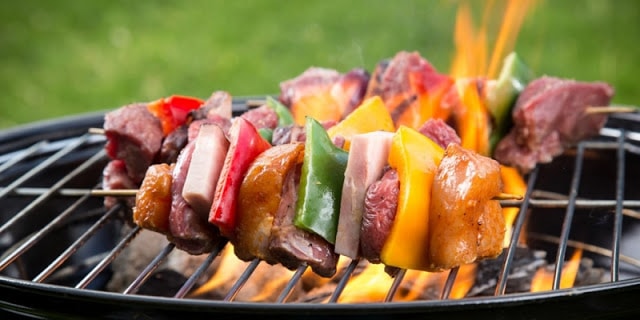
By Michelle Schoffro Cook; Care2 As barbecue season arrives, those prone to high blood pressure or heart disease should take note. Recent research reveals that frequent grilling may elevate blood pressure beyond the typical effects of meat consumption. A study published in the medical journal Circulation found that regularly eating grilled meat raises blood pressure independently of the amount of meat consumed. Researchers at the Department of Nutrition, Harvard T. H. Chan School of Public Health in Boston, Massachusetts, linked this increase to compounds formed when meat is cooked at high heat or over an open flame.
These compounds—heterocyclic aromatic amines, or heterocyclic amines (HAAs)—have previously been associated with cancers of the stomach, esophagus, lung, prostate, colorectum, pancreas, and a markedly higher risk of death from breast cancer. However, their impact on blood pressure was previously unconfirmed. Another study in the Journal of the National Cancer Institute found that heavy consumption of grilled meat raised the risk of all-cause mortality by a striking 23 percent—a significant increase in death risk from any disease tied to a single dietary factor. For women with a prior cancer diagnosis, that risk climbs to 31 percent if they continue eating large amounts of barbecued meat. Additional research has linked high consumption of meats cooked at elevated temperatures to non-alcoholic fatty liver disease and insulin resistance. Fatty liver disease impairs liver function, contributes to weight gain, and causes digestive issues. Insulin resistance—a condition where the body responds poorly to insulin in regulating blood sugar—is a precursor to diabetes. Does this mean you must abandon your grill? Surprisingly, no. You can take several steps to lower your risk.
- Reduce how often you fire up the grill. The precise safe amount remains unknown, so cutting back on barbecued meat as much as possible is advisable.
- Opt for lean cuts of meat, as HAAs form when fat is subjected to high heat.
- Trim away any excess visible fat, since dripping grease onto flames causes flare-ups that boost HAA formation.
- Incorporate more vegetables into your grilled meals. Vegetable kebabs or cast-iron cookware filled with your favorite veggies make this easy.
- Keep the barbecue temperature low. Heterocyclic amines develop at high heat. Adopt the motto “low and slow” to keep your grilling healthier. Ensure poultry reaches an internal temperature of 165°F for thorough cooking.
- Dice meat or poultry into smaller pieces and cook them in a cast-iron frying pan on the grill. This reduces charring, which produces high levels of HAAs.
- Never leave the barbecue unattended, and keep a cup of water nearby to douse flames as they flare up. Flare-ups increase HAA formation.
- Eat cruciferous vegetables with every grilled meal. Research in Food Chemistry shows that isothiocyanates, formed during digestion of vegetables like broccoli, cabbage, Brussels sprouts, and cauliflower, help eliminate HAAs from the body.
- Clean the grill before each use. Leftover food scraps and debris promote HAA formation.
- Cut off charred portions of meat, as they are typically loaded with HAAs.
Dr. Michelle Schoffro Cook, PhD, DNM, publishes the free e-newsletter World’s Healthiest News, serves as president of PureFood BC, and is an international bestselling author of 20 books, including Cancer-Proof: All-Natural Solutions for Cancer Prevention and Healing.
Check out: 50 Rules to Live By If You Want A Positive Life ★ Elayna Fernandez ~ The Positive MOM ♥
Also see: Why Are You Seeing Charcoal in So Many Foods, & Is It Any Good for You?
What Happens To Our Brain When We Experience Complete Silence & Peace of Mind