"As any half-awake materialist knows – that which you hold, holds you." – Tom Robbins
I stuffed two garbage sacks with clothing. These weren't your ordinary kitchen-sized sacks with those little orange drawstrings and a faint trace of air freshener. These were oversized, black contractor-grade bags—the variety you'd normally pack with autumn leaves from your entire front yard and haul to the curb for trash day.
I crammed them with church dresses and tailored blazers, crisp button-up shirts, and denim—so much denim. None of it qualified as actual "garbage," since every piece remained in good condition and reasonably stylish (from the perspective of a 40-year-old mother of three, anyway). Nevertheless, into the bags they went, no longer destined to be mine.
A few weeks back, a church friend (let's call her Edith) handed me a basket containing several blouses and a pair of lounge pants. She was aware we'd lost garments in the flood and figured some of it might suit my needs. Once I arrived home and unpacked the basket, I examined each item to see whether it worked for me. To my delight, several of the blouses matched my taste and fit comfortably. I genuinely adored these pieces—so much so that if I'd spotted them online (I do all my shopping online, after all) tomorrow, I would have snapped them up immediately and worn them into the ground.
Still, I was somewhat puzzled…why would she part with them? I treasure them, so she must have as well.
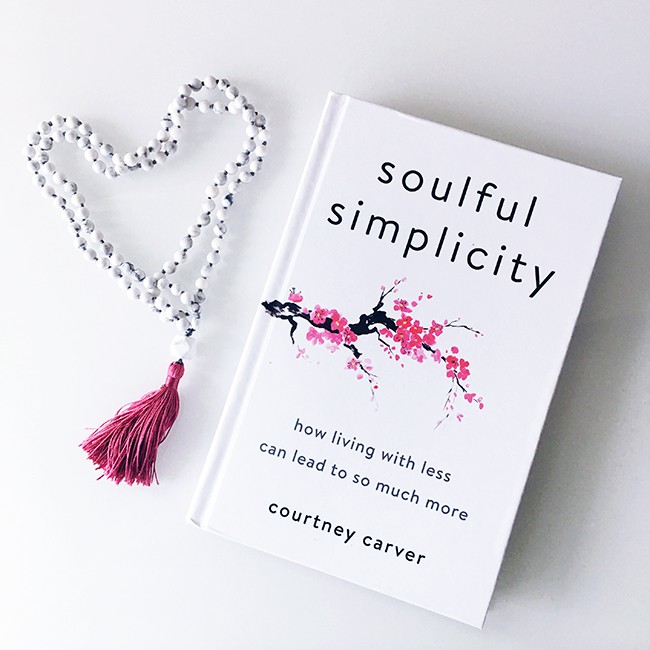
The following weekend, I sat beside Edith at a gathering and thanked her once more for her generosity, telling her how much I adored the clothes (and happened to be wearing one of the blouses at that moment). Using that indirect Southern manner of gathering intel without ever posing a direct question, I coaxed out of her that she was on a mission to strip her life of excess, and a major piece of that effort involved a fairly ruthless wardrobe purge. She was devouring a book titled Soulful Simplicity: How Living with Less Can Lead to So Much More and was actively working to streamline her existence as she prepared to step away from her career in two months (and let me emphasize—she is nowhere near typical retirement age).
Saying I respect Edith doesn't quite capture the full picture. She's among the sharpest minds I've ever encountered, possessing a rigorously analytical intellect and a gift for cutting straight to the core of any matter. Her competence inspires complete confidence in whatever she undertakes. Yet what I admire most about her is the deliberate way she navigates her life. Somehow, she's sidestepped the existence most of us settle into—one where we drift along tackling obstacles and extinguishing fires, constantly on the defensive and simply surviving in perpetual reaction mode. She knows exactly what she wants her life to look like, she devises a strategy to steer her in that direction, and then she follows through on the occasionally uncomfortable steps required to arrive there. So when Edith tells me a book has reshaped how she's living, I pay attention. And when I catch my own gripes in the frustrations she voices about her current circumstances, and recognize my own aspirations in her hopes for what lies ahead, I purchase the book.
Courtney Carver's Soulful Simplicity isn't focused on emptying your closet; it's about stripping excess from your entire existence, creating space for what genuinely matters—living with less so that you might embrace so much more, so to speak. The underlying notion (which ought to be self-evident but, astonishingly, still warrants stating) runs like this: when you own fewer material possessions, you devote less time to earning the cash to purchase them, less time to acquiring them (to satisfy a void the rest of your life hasn't filled), less time to maintaining, organizing, and cleaning them, and ultimately less time to drowning beneath them at the expense of your actual life, of what holds significance for you, and of those you cherish. Release the "stuff," abandon the contest The World insists you must compete in until your last breath, and you'll discover space and time to live your life with purpose.
There was a stretch when I navigated my own life with purpose. Not the long-range, strategic purpose Edith demonstrates, but purpose in the sense that I recognized my core values and was prepared to make sacrifices and take action to weave those values into my family's daily existence. My professional life bore the brunt of that purpose. But since the flood, the hours haven't multiplied themselves to accommodate the demands of restoring an entire house, nurturing children who've weathered too much change and upheaval, and reassembling a life—all while preserving the supremacy of the people I love. For five months now, I've been operating in a reactive state, lost my grip on "presence," and have invested an absurd amount of energy into "stuff."
And honestly, the stuff, the stuff, the stuff…the sheer hours consumed in chasing it and maintaining it…it's enough to make me queasy. This cannot possibly be what living is supposed to look like.
Sorting through your closet is one of the initial tactics Courtney Carver employed in her quest to simplify, to clear out the clutter and create room for greater love. The reasoning goes like this: when you pare down your clothing selections, you reclaim the minutes you once spent deliberating over outfits each morning, you stop squandering money on garments you don't absolutely adore, you liberate the square footage you previously devoted to housing them, and ultimately, you minimize the importance you assign to clothing as a defining characteristic of who you are. Your wardrobe becomes one fewer charade you must pour energy into sustaining. The ultimate aim is Project 333, a capsule wardrobe concept that restricts you to 33 items for a span of 3 months. I'm not quite prepared for Project 333 yet, but every journey commences with a first step, so I'm kicking things off with a closet clean-out.
The book advises emptying your entire closet onto your bed and categorizing items into four heaps: Love, Maybe (you wish to keep it but can't articulate why), Donate (no longer suits your physique or way of life), and Trash (damaged beyond use). Considering my cramped quarters (five of us, plus two dogs and a cat, are presently residing in 850 square feet, and I'm sharing my bedroom and closet with two of my children post-Harvey), I streamlined this exercise somewhat. I left everything on its hanger and worked through my closet piece by piece, forming two stacks: Keep and Donate (the Trash category had already been addressed).
However, I'm a sentimental soul and struggled to rein in the "Keep" stack.
"I recall the last occasion I wore this; it was such a wonderful day. I can't bear to part with it."
"This looked stunning on the woman in that blog/magazine/grocery store. Perhaps I simply haven't figured out how to style it properly. I'll hold onto it a bit longer."
"I shelled out a fortune for this; donating it feels like such a waste."
"I might need this again if I shed 5 pounds," and its wicked cousin "I might need this again if I gain 5 pounds."
So I went hunting for additional direction and uncovered a sorting approach that clicks better for me. The four-heap method may suit you perfectly, but I'm drowning neck-deep in sentimental, guilt-laced, idealistic materialism and require something with a bit more bite.
That's when I encountered Marie Kondo's criterion. Marie Kondo, the guru of minimalist existence, recommends picking up each object and posing the question, "Does this spark joy?" I find the word "spark" somewhat lofty and muddles the concept, so I opted for the more down-to-earth phrasing, "Does this bring me joy?"
And just like that! I blitzed through that closet in no time, without casting a single regretful glance at anything in my Donate stack. A particular blouse might be genuinely lovely on its own, but when I hold it and inquire whether it brings me joy, the reality that I'm constantly fidgeting with the neckline and that it's a touch snugger around the middle than I prefer made parting with it remarkably straightforward. Admiring it brings me pleasure, but actually wearing it brings me misery.
Give it a try…it is astonishing how effortless decision-making becomes when you pose that question, and I suspect that principle extends well beyond closet decluttering.
Once I wrapped up, the heap of garments strewn across my floor was mildly mortifying. Not because it was enormous, but because seeing it left me feeling melancholy. Why had I clung to all of these items, some for 15 years? (Indeed, I had jeans in my closet dating back 15 years.) When I pivoted to survey what remained in my closet, I understood why. A wave of anxiety washed over me as a tiny panicked voice in my head whispered, "What if you don't have enough?"
Enough for what, though?
Enough to maintain a certain image? Is that genuinely how I want to invest my fleeting hours on this earth?
Enough to ensure variety in my wardrobe so that nobody suddenly assumes we've hit financial disaster? Do I really want to pour my time, energy, and money into shaping others' opinions of me through my clothing?
Naturally, I have more than enough. I only require enough to cover myself and dress appropriately for whatever the occasion demands. That's the entirety of what I need.
And perhaps the garments in this Donate heap might end up in someone else's Love pile, much like the blouses Edith passed along to me.
This morning, when I stepped into my closet to choose an outfit, I was greeted with a wardrobe containing ONLY pieces I LOVE wearing. Nothing from some past version of my body was there to guilt-trip me into skipping the donuts. Nothing I'd splurged on but rarely wore was burdening me with remorse. Nothing uncomfortable or burdensome was threatening to make the day an exercise in torturous tugging or itching.
My field of vision consisted solely of items that bring a smile to my face.
What a different way to greet the day.
I'm eager to explore the remaining techniques in Soulful Simplicity and seek out ways to strip my life of clutter, waste, and distraction so that I can pack it fuller with the moments and people I cherish. While this was a relatively tangible step toward simpler living, I'm excited to engage with the deeper philosophical decisions that emerge from deciding what you want your life to resemble and being willing to take the necessary steps to get there.
Come along on this journey with me! You won't regret it.