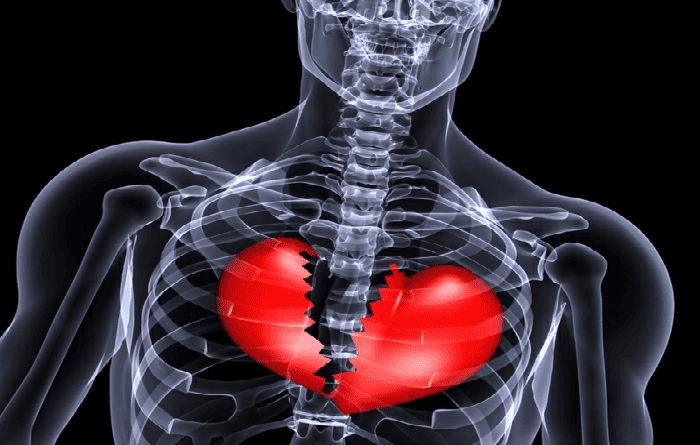
For centuries, artists and writers have pondered the question: can time really mend all wounds?
Charles Dickens explored whether Miss Havisham could ever move past her wedding day betrayal, while historians often point to Queen Victoria's perpetual mourning attire as a symbol of her unending grief after Prince Albert's passing.
However, recent research suggests that time alone may not be enough—a new investigation has found that a broken heart can inflict permanent harm.
Scientists at the University of Aberdeen have determined that the condition known as broken heart syndrome can cause lasting physical scarring that does not heal.
The research, funded by the British Heart Foundation, tracked 52 patients aged 28 to 87 over a four-month period, all diagnosed with takotsubo syndrome.
This relatively obscure condition was first identified in Japan in 1990, taking its name from the Japanese word for an octopus trap—a shape that mirrors a damaged left ventricle.
Takotsubo syndrome occurs when the heart muscle becomes abruptly stunned, altering the left ventricle's shape, usually triggered by severe emotional or physical strain.
The condition impairs the heart's pumping capacity, and the British Heart Foundation notes that no cure currently exists.
Approximately 3,000 individuals in the UK develop this rare syndrome annually, with women being predominantly affected.
Professor Metin Avkiran, associate medical director at the BHF, stated that the study revealed heart function abnormalities persisting for up to four months in some takotsubo patients. He expressed concern over visible scarring, suggesting that full recovery may take significantly longer or might never happen with current treatments, underscoring the urgent need for more effective therapies.
The Aberdeen research team employed ultrasound and cardiac MRI scans to examine heart function in the participants.
Findings indicated that the syndrome caused lasting impairment to the heart's pumping action and slowed the wringing motion characteristic of a healthy heartbeat.
Additionally, the heart's squeezing movement was compromised, with scar tissue forming in some areas of the heart muscle, reducing elasticity and hindering proper contraction.
Dr. Dana Dawson, a reader in cardiovascular medicine at the University of Aberdeen and lead researcher, noted that previous assumptions held that takotsubo cardiomyopathy patients would fully recover without treatment. However, the study demonstrates that the condition inflicts significantly more persistent damage on the heart than previously understood.
Statistics indicate that 3% to 17% of individuals diagnosed with the condition die within five years.
Approximately 90% of patients are women, and a stressful trigger—frequently the sudden loss of a loved one—is identifiable in about 70% of cases.
Nevertheless, in most instances, the left ventricle recovers normal function within days, weeks, or months.
Medical practitioners typically monitor patients with routine echocardiograms, and unless an underlying cardiac issue exists, no additional treatment is required.
The British Heart Foundation emphasizes the need for further studies to determine if takotsubo cardiomyopathy has a genetic component.
Following Debbie Reynolds's death in December, which occurred just one day after her daughter, Star Wars actress Carrie Fisher, passed away, some journalists questioned whether a broken heart was the cause.
However, her son Todd Fisher stated that she simply wished to join her daughter.
The findings appear today in the Journal of the American Society of Echocardiography.
Peter Walker, The Telegraph