darlingmagazine.org
Few of us like being pitched costly products loaded with baffling terminology and trendy “new” herbs, all without a shred of context for why they matter.
So when I landed on the Moon Juice site, I was genuinely relieved to find founder Amanda Chantal Bacon's backstory laid out so openly. Bacon spent years battling her own health challenges, including a long list of hypothyroid symptoms, before taking matters into her own hands. Her research eventually introduced her to adaptogens—herbal allies now celebrated for supporting hormonal equilibrium and adrenal resilience in women.
As awareness around endometriosis, polycystic ovarian syndrome, adrenal burnout, and thyroid dysfunction grows, a fresh wave of women has grown weary of the standard advice to pop a pill and diet harder. There has to be a broader path to whole-body wellness, and Bacon was among the early pioneers in this particular commercial space. Moon Juice is flourishing and scaling as a brand, and I couldn't wait to sit down with the woman driving the movement.
Teresa Miller Archer: Let's start with the basics—what exactly are adaptogens, and how did you first discover them?
Amanda Chantal Bacon: Adaptogens are finally entering mainstream awareness, and more people are beginning to feel their effects firsthand through these remarkable herbs and mushrooms. They're non-stimulating, non-habit-forming plants that gently nudge your body toward its own natural equilibrium. I was dealing with severe hypothyroid symptoms—enough that in my early twenties my periods had become irregular and eventually stopped altogether. On top of that, I'd hit these crushing waves of physical fatigue, mid-afternoon crashes where I couldn't keep my eyes open or think clearly; functioning at a job, or really living, became nearly impossible.
I was in my early twenties, which should have been my peak window for energy, health, vitality, and fertility. My hair and skin started shifting, and my weight would swing dramatically with no connection to what I ate or how I moved—suddenly my clothes wouldn't fit, all within seven to ten days. Clearly something was off. I visited endocrinologists and general practitioners throughout my late teens, and was told I had hypothyroidism, that a synthetic pill would replace the thyroid hormones I wasn't making enough of, and that would be that.
I did try it briefly in my late teens, and it didn't fully resolve anything. I felt a little off, but more than that, it pushed me to dig into the root cause—what was happening in my body during my early teens that was severe enough to derail my mood, my energy, my appearance, and my menstrual cycle. That's when I went deep into studying the endocrine system and all the things that influence it.
TMA: I'm familiar with the endocrine system, and it's incredibly disruptive when you're trying to bring it back into balance. That feeling of being so disconnected from your own body.
ACB: There's no quick fix—you won't find it in a synthetic medication, an allopathic doctor, or a surgical procedure. It genuinely requires you to go inward, to really examine how every part of your life affects you. Endocrine disruption can stem from many stressors, and stress isn't purely emotional—it includes temperature shifts, loud noise, fumes, toxins lurking in food and beauty products, all of which pile up in our systems. I believe that the widespread endocrine struggles among women, in particular, are going to compel all of us—whether in politics or the workplace—to pause, look closer, and pay attention. When there's a systemic problem, something fundamental isn't working, and we need to rethink everything. An endocrine or autoimmune condition forces that kind of reckoning in much the same way.
For me, adaptogens made a tremendous difference. Take maca, for instance—I started blending a tablespoon of it into a smoothie with protein, a frozen banana, and some cacao powder, and within weeks my cycle had returned. Loading up on seaweed to flood my thyroid with iodine also helped; not only did I feel better, but blood work later confirmed I was sitting within a normal thyroid range, all from maca and seaweed.
That's not to say, "Just take maca and eat seaweed and your life will turn around," because that wasn't my full story either. But those shifts were significant enough to move the needle, and combined with cutting out wheat, reducing grains, ditching white sugar and alcohol, and weaving in a few simple additions, I figured out how to make it taste great and actually look forward to taking them. That radically reshaped my life, and that was really the seed Moon Juice grew from.
TMA: A recent Harvard Business Review issue highlighted disruptive companies that spot a gap and say, "There's simply nothing addressing this, so I'm going to build the product that does." When you launched Moon Juice, was it a business strategy—identifying a hole in the market—or more of a mission to share a message?
ACB: I never went to university; I don't hold a degree in anything, and I didn't even know what marketing meant until quite recently. There was never any formal marketing behind Moon Juice until the past few months. It really came out of pure excitement. All I wanted to do was talk about it and whip up superfood-packed shakes for my friends. I just wanted to pour my energy and enthusiasm into simple, delicious approaches that could genuinely transform lives.
That was eight years back, so the landscape has shifted considerably. I'm only now beginning to reflect on who I was and where I stood when Moon Juice first took shape, and how the world and the people around me looked at the time. Looking at my own arc, nearly ten years later, I find myself thinking, "Wow, I'm a mother, the founder and CEO of an actual company operating in the real world, with bigger companies and business commentators describing us as a meaningful player in the marketplace." Until now, none of that was ever something I gave much thought to. It was simply a heartfelt passion project I poured myself into, working seven days a week and giving it everything I had.
I just wanted to put my life's force and energy behind simple and delicious ways that could actually change your life.
TMA: It's fascinating because there's clearly a spotlight on women in business right now—and plenty of scrutiny, perhaps fairly so, especially when lifestyle advice is part of the offering. Do you wrestle with striking the balance between sounding like an expert and sounding like a true believer? How do you keep growing in that space so you can stay fully transparent about what you're doing?
ACB: I'm still on my own learning curve, deepening my understanding of myself, plants, medicine, and science. The silver lining is that as the platform and business grow, it opens up more chances to connect with doctors, specialists, and herbalists I wouldn't have had access to before. I'm not out there saying, "Hey everyone, I've got all these credentials and I know how to fix all of you." It's more like, "I'm not a doctor. I have zero degrees. What I do have is real experience with these plants."
The upside of growing this company is that I've invested so heavily in safety and efficacy. Because I personally depend on these plants for my wellbeing, and because I'm not coming from inside the supplement industry, I'm approaching every plant I source with the same curiosity and care a consumer would. Obviously, I'm a well-informed consumer, and I think that's actually a driving force behind how I run the business. At the end of the day, I'm still crafting a product I want for myself—I want the best, and I've sampled just about everything out there.
TMA: Is there a woman or industry you're excited to shine a light on right now?
ACB: Honestly, I feel genuinely fired up about teenage girls right now. When something sparks my excitement—when I think about something bright and promising on the horizon—my mind goes to teenage girls, or young women up to about 23.
For the most part, every single person 23 and under that I've crossed paths with has been remarkably smart, sharp, and passionate about the things that actually matter—and incredibly well-prepared to step out and make their voices heard. There's a passion and a vitality that's far more sophisticated than what I remember or what I've witnessed before. The young women I've talked to have goals and a sense of self-worth that goes well beyond beauty trends or whatever is being projected onto them or expected of them. Maybe the same is happening with young men, but I haven't had as much time spent with them. I have a six-and-a-half-year-old son, and it's actually made me want to have a whole bunch of daughters now. The women coming up today are just operating on a different level.
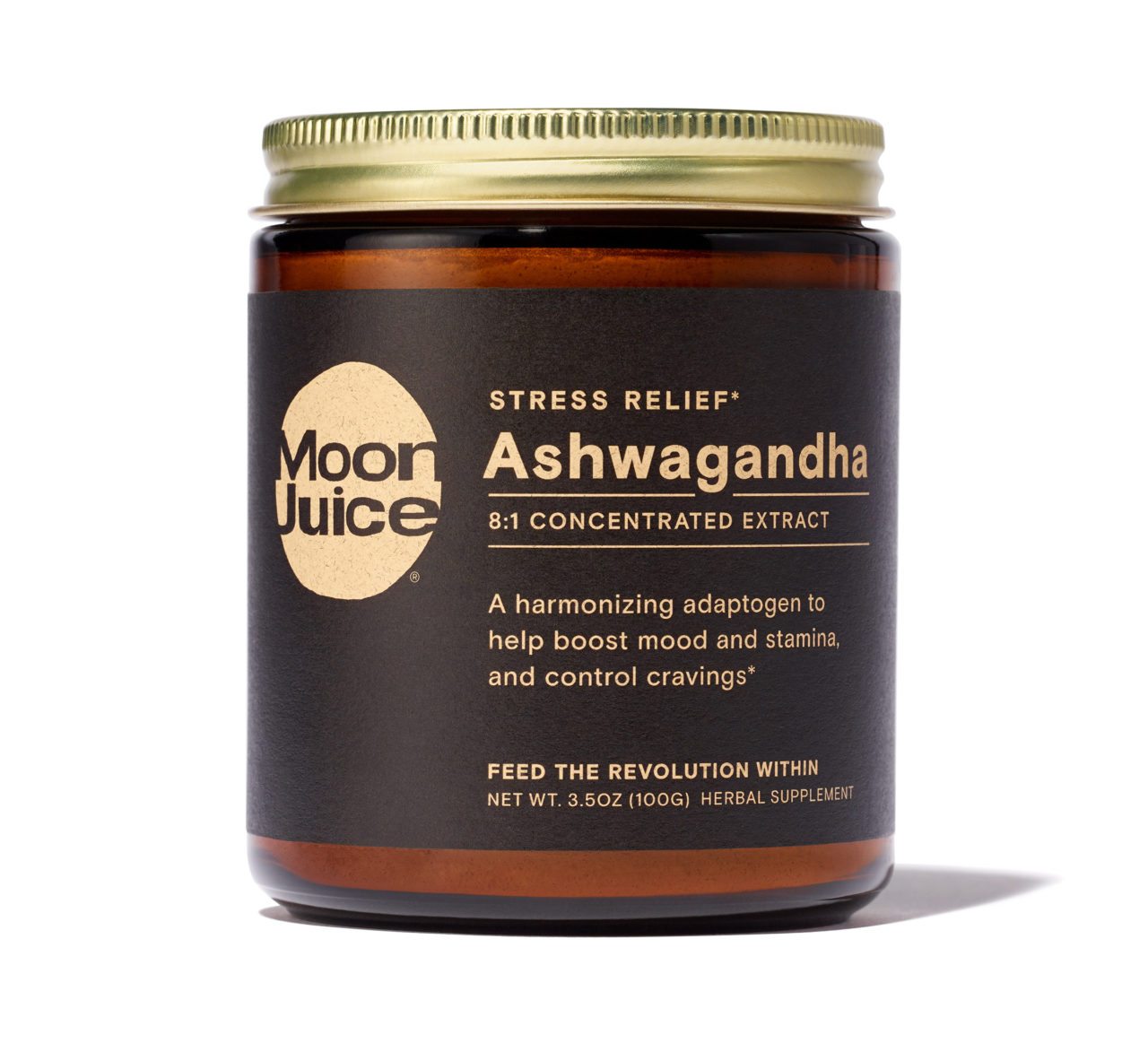
Images via Moon Juice